


The Virginia Museum of Transportation is located at 303 Norfolk Avenue Southwest in Roanoke, VA.
The museum has lots of interesting exhibits focusing primarily on the north-eastern US railroads, road transportation and aviation, as well as occasional visiting exhibits. I have visited several times and the photos on this page are from various different times.
The museum is open from Monday-Saturday 10.00am-5.00pm as well as Sunday 1.00pm-5.00pm, but is closed Easter Sunday, on Thanksgiving, Christmas Eve and Christmas Day, New Years Eve and New Years Day.


The museum began as a partnership between the Norfolk & Western Railway and the City of Roanoke in 1963. The Roanoke Museum of Transportation, as it was then called, occupied an old N&W freight depot at Wasena Park near the Roanoke River.
The collection displayed various transportation related artefacts including NW #611, which was donated by the N&W. It was designated the official transportation museum of the Commonwealth of Virginia by the state's General Assembly in 1983.
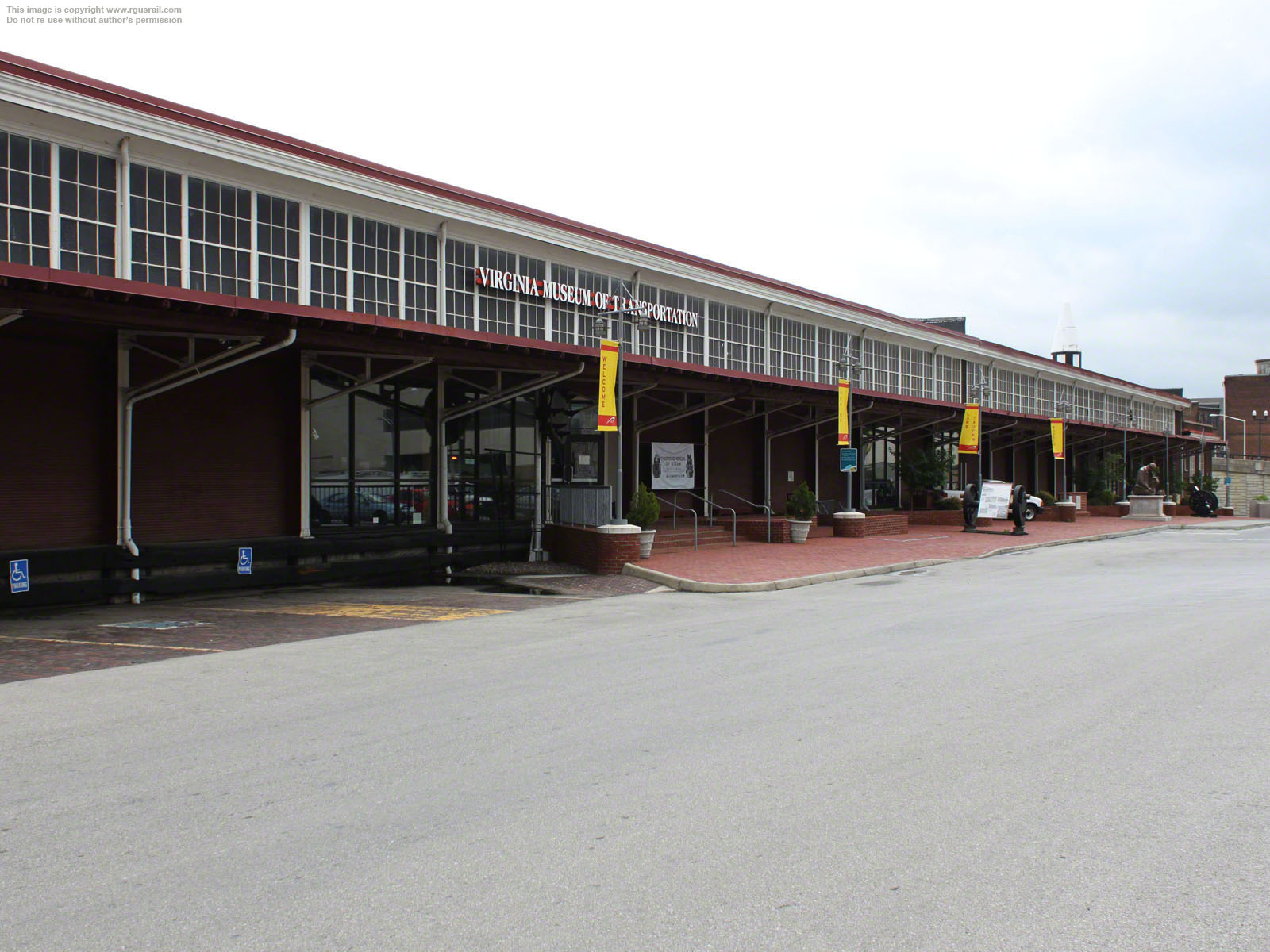
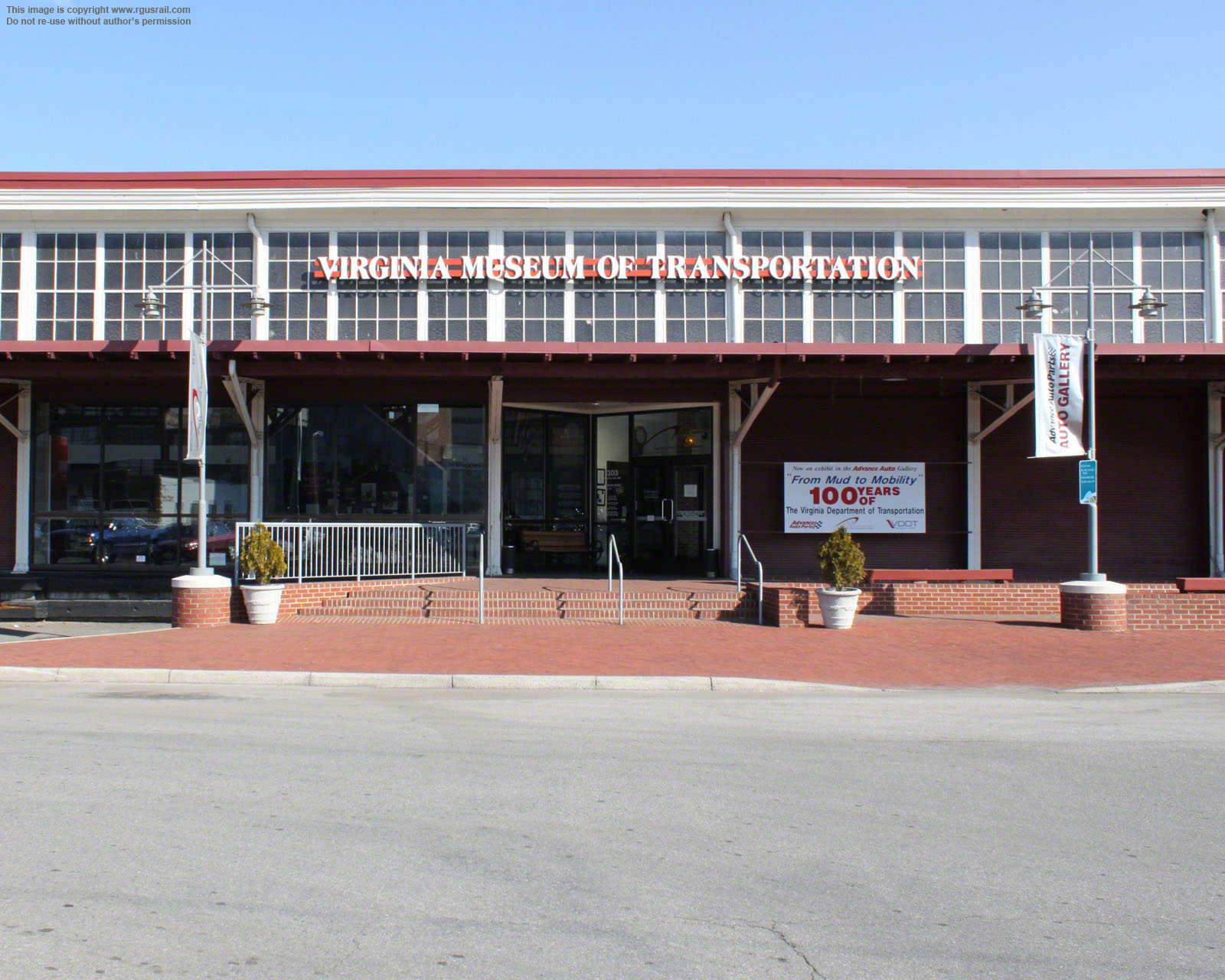
The Railwalk extends from the museum to the O. W. Winston Link Museum. It is named after David R. Goode, President, Chairman and CEO of the Norfolk Southern from 1992 to 2006, and his wife Susan. During Goode's tenure, Norfolk Southern donated a number of artefacts from the old Farmville line for use in the railwalk.
The walk parallels the old Norfolk & Western rail tracks. It is well signposted and provides interesting insights into Roanoke's long involvement with railroads.
The Wasena Park site was flooded out in 1985, however, damaging much of the collection, and the museum moved to its current site in downtown Roanoke the following year in an ex-Norfolk & Western freight station built in 1918.
The freight station and associated grounds were donated by Norfolk Southern, successor to the Norfolk & Western, and the museum re-opened in July 1986 as the Virginia Museum of Transportation. The museum building is at the western end of the David R. and Susan S. Goode Railwalk.


The Robert B. Claytor & W. Graham Claytor Jr. Pavilion houses the two largest exhibits at the museum, Norfolk & Western J Class #611 on the left of this photograph and A Class #1218 in the centre, as well as a number of other pieces of equipment. Norfolk & Western G1 #6 built in 1897 is on the centre right.
The pavilion is named in honour of Roanoke born Robert Buckner Claytor, who became President of the N&W in 1981. He pushed for N&W's merger with Southern Railway and became President of the new company, the Norfolk Southern, in 1982, although the Norfolk & Western continued to exist on paper until 1997. Robert Claytor retired in 1987, but continued to serve on Norfolk Southern's board until 1992. He died in 1993.
William Graham Claytor was Robert's brother. After a distinguished military career, he joined the Southern Railway as an officer in 1963, and became president in 1967. He retired in 1977 but returned to railroad administration in 1982, heading up Amtrak from 1982 to 1993. William G. Claytor died in 1994.

Right, the bullet nose of #611 shines in the sunlight.
It is one of fourteen J class Northern type locomotives (4-8-4) designed and built by the Norfolk & Western Railway in Roanoke, VA, for the increasing volume of passengers during WWII.


The Js were the pride of the N&W.
They hauled the railroad's varnish passenger services, such as the Powhatan Arrow, Pocahontas and Cavalier, as well as Southern Railway's Tennessean, Birmingham Special and Pelican.
Js were designed to haul passenger trains at high speed, although their 70" drivers were comparatively small for a locomotive that could reach a speed of 100 mph. As a consequence, the wheelbase was made extremely rigid, lightweight rods were used, all wheels and rods were fitted with roller bearings and the counterbalancing was very carefully set.
The first five Js, #600-#604, were built between 1941 and 1942 with streamlining. They were maintained at Shaffers Crossing Roundhouse in Roanoke, VA, out of which they initially operated to Norfolk, VA, and Williamson, WV.
In 1943, the N&W decided to extend the locomotives' run west as far as Cincinnati, OH, and, as a result, six more Js were constructed (#605-#610). They were outshopped without the streamlining because of restrictions on the use of materials during the war, as well as without lightweight rods.
Initially classified as J-1, they were retro-fitted with streamlining and lightweight rods in 1944 and reclassified as J class. #611 was one of the last three of the class built by the N&W in 1950 (#611-#613). It began service on 29th May 1950, having cost $251,544.
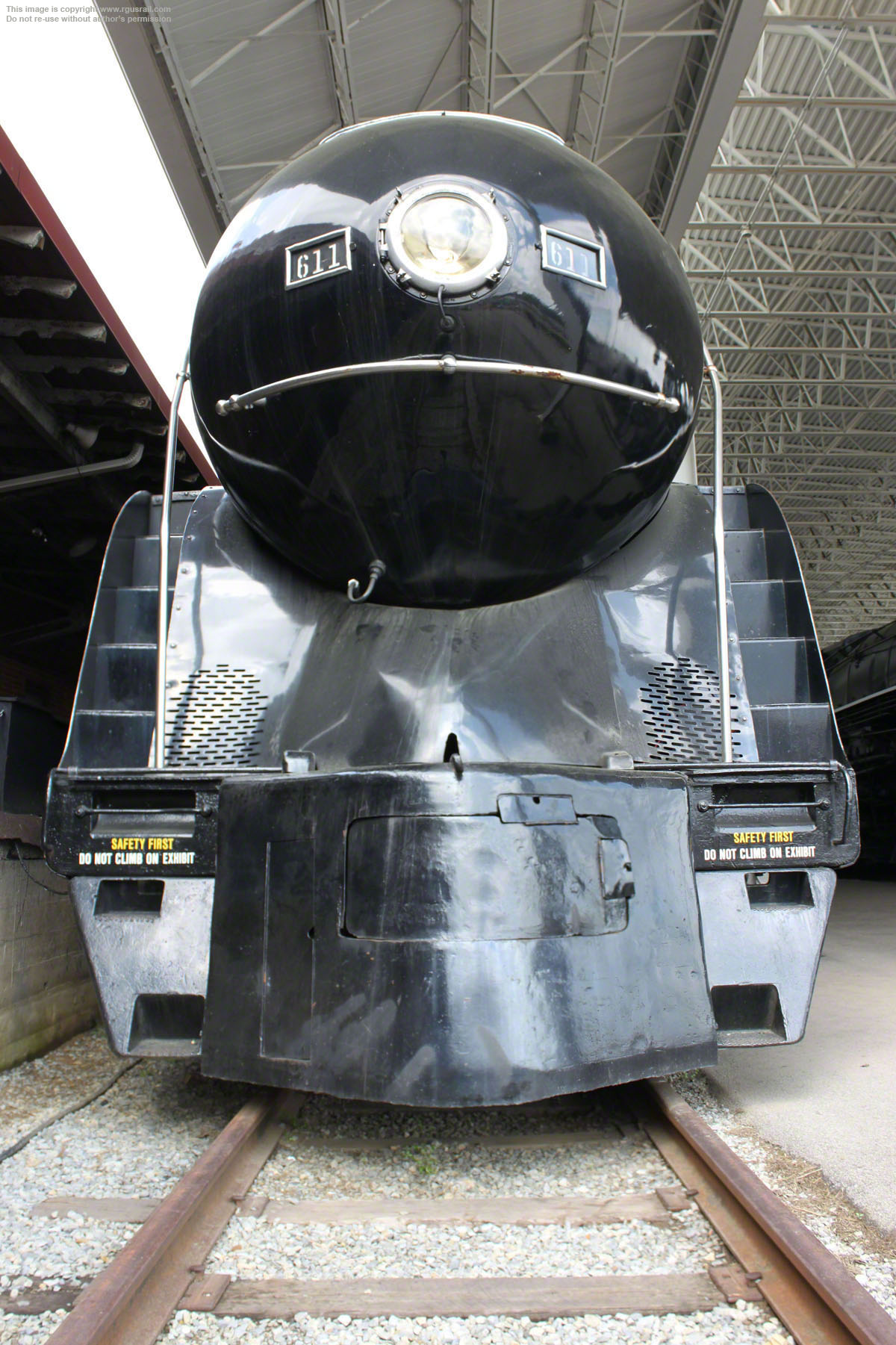


I am not a great fan of streamlining on steam locomotives. I think this too often cloaks the inherent power of steam, and many designs are simply too "clunky" in appearance. Still, I have to admit the beetle-browed, torpedo-nosed J class with its Tuscan Red skirting, gold trim and lettering conveys a clean, authoritative power that I cannot help admiring. The streamlining was designed in-house.
Similarly, the looming, bull-nosed jacket on Chesapeake & Ohio's 4-6-4 L1 "Yellow Belly" has my vote. You can see #490 on the B&O Museum Yard and Car Shop page of this website.


The 378,600 lbs tender has a capacity of 22,000 gallons of water and 26 tons of coal.
94,000 lbs with a 107.7 sq ft grate, 578 sq ft firebox and 7,448 sq ft heating surface, including 2,177 sq ft superheating, it operates at a boiler pressure of 300 psi delivering 77,899 lbs tractive effort.

In the late 1950s, the Norfolk & Western began investing in diesels, which were cheaper to run and maintain than steam locomotives, but the Js continued in mainline passenger service until 1958, after which they served briefly on some freight services until 1959.
In 1958 and 1959, the N&W also ran several farewell to steam excursions, with #611 pulling the last on 24th October 1959, from Roanoke, VA, to Bluefield, WV, after which it was retired. Then, through the efforts of enthusiasts, including the photographer O. Winston Link (there is a page on this website on the O. Winston Link Museum in Roanoke, VA), the railroad was persuaded to donate #611 to the museum in 1960, where it sat for more than two decades on display.
In 1981, the then president of the N&W, Robert B. Claytor, leased #611 from the museum and sent it to Southern Railway's Norris Yard Steam Shop in Birmingham, AL, for overhaul to join a proposed N&W steam programme. Ironically, this was during the last few months of the N&W's existence before merging with the Southern Railway to form Norfolk Southern.
In 1982, #611 started twelve years of excursion services on the Norfolk Southern system, the last on 3rd December 1994, from Birmingham, AL, to Chattanooga, TN. #611 then steamed to Roanoke and returned to the museum where, except for running cold with #1218 to the NS's old Roanoke Shops in 2007 to celebrate the shops' 125th anniversary, it remained on static display.
In 2013, a committee was established to investigate and report on the feasibility of returning #611 to operation. The engine moved to the North Carolina Museum of Transportation in Spencer, NC, in May 2014 and, on 31st March 2015, was fired up for the first time in over twenty years. On 21st May 2015, #611 made a brief test run from Spencer to Greensboro, NC, pulling the museum's "Powhatan Arrow" passenger cars. On 30th May, it hauled its first excursion from Spencer, NC, to Roanoke, VA. You can see photos of #611 standing cold at Spencer on the North Carolina Transportation Museum page of this website.

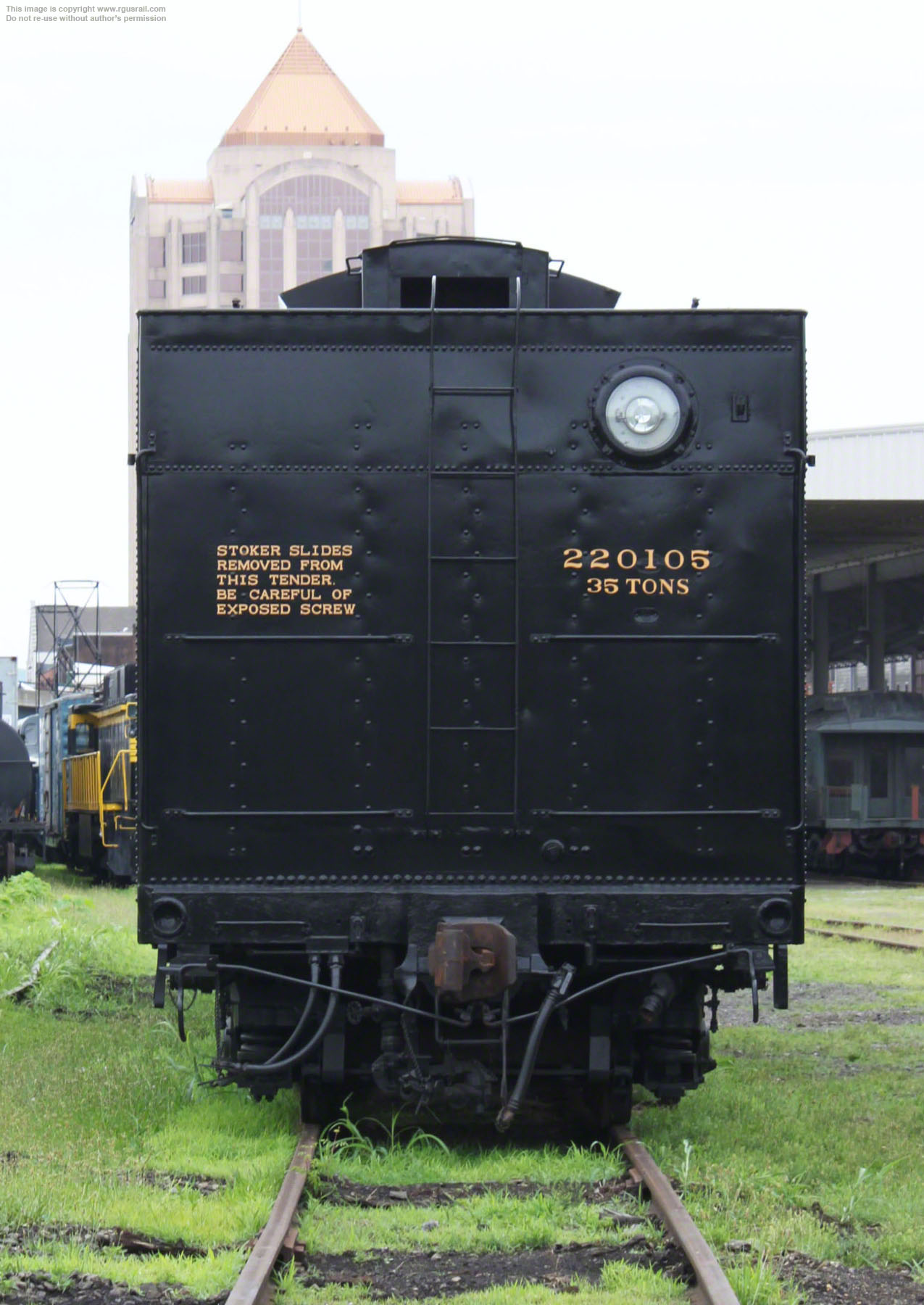


#1218 is a four-cylinder, A Class, simple articulated locomotive with a 2-6-6-4 wheel arrangement. The first two, trial As, #1200 and #1201, were outshopped from Norfolk & Western's Roanoke, VA, shops in May 1936.
The A Class was designed to haul fast freight at sustained speeds on all parts of the N&W system, and effectively pushed to the limit of the railroad's operating envelope. It was almost at the maximum for track and curvature clearances, with a wheel base that was as long as feasible but still able to use existing turntables.

Eight more of the class were built in 1936-1937 (#1202-#1209) and another twenty-five during WWII (#1210-#1234). Unlike the earlier engines, these were fitted with multiple bearing light weight Alligator crosshead guides in place of the single guide. The final eight were outshopped between 1949 and1950 (#1235--#1242).
The A weighs 573,000 lbs, 433,350 lbs on its 70" drivers. The engine wheelbase is 69' 5" and each driver wheelbase is 12' 4". The overall wheelbase (engine and tender) is a whopping 108' 3". The cylinders are 24” x 30”.


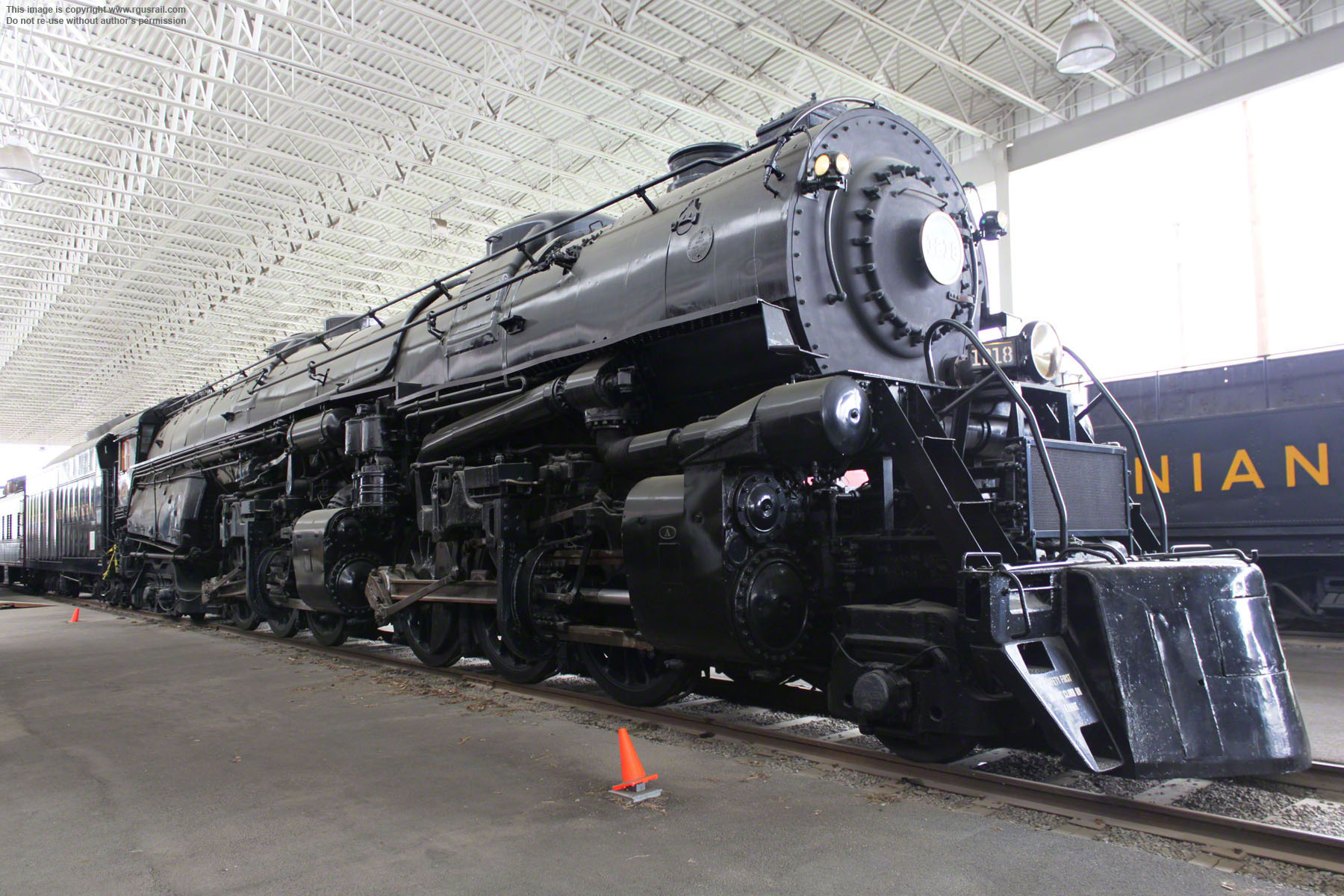
Above, the sleek lines, angled steam distribution pipe to the front cylinders, Baker valve gear eccentric and radius rod give the front end of the A an athletic, leaping thrust. The last five of the type had roller bearings on the side and main rods, the only articulateds to have such features.
Right, a distinctive feature is the A's ball jointed steam distribution pipe just above the front cylinders. These large, insulated pipes were fitted with internal spherical connections to permit lateral motion.


The grate is 122 sq ft and the 587 sq ft firebox had 57 sq ft of arch tubes. With a total heating surface of 6,639 sq ft, including 2,703 sq ft superheating, the locomotive operated at a boiler pressure of 275 psi delivering125,897 lbs tractive effort.
During WWII, the first ten As regularly handled extra passenger services as well as fast freight, and the increasing war time traffic convinced the N&W to build twenty-five more of the class, including #1218, which were delivered between 1943 and 1944. #1218 was built in 1943 at a cost of $163,872, emerging from the N&W's Roanoke Shops on 2nd June that year. This second version operated at a boiler pressure of 300 psi, and had lagging applied to the firebox sides.
After WWII, all forty-three As were fitted with the streamlined retractable coupler used on N&W's J class locomotives, which replaced the original boiler tube pilots.
The sand pipes were also covered by new boiler jacketing, hiding the previously exposed piping. All tenders were also modified, raising the previously round top water cisterns to the usual N&W flat top versions. The capacity of #1200-#1209's tenders were also increased from 26 to 30 tons of coal. The last nine were built in 1949-50, the final five equipped with Timken light weight reciprocating parts.
All the As were retired by the N&W between 1958 and 1959. Except for #1218, all the engines were later scrapped.


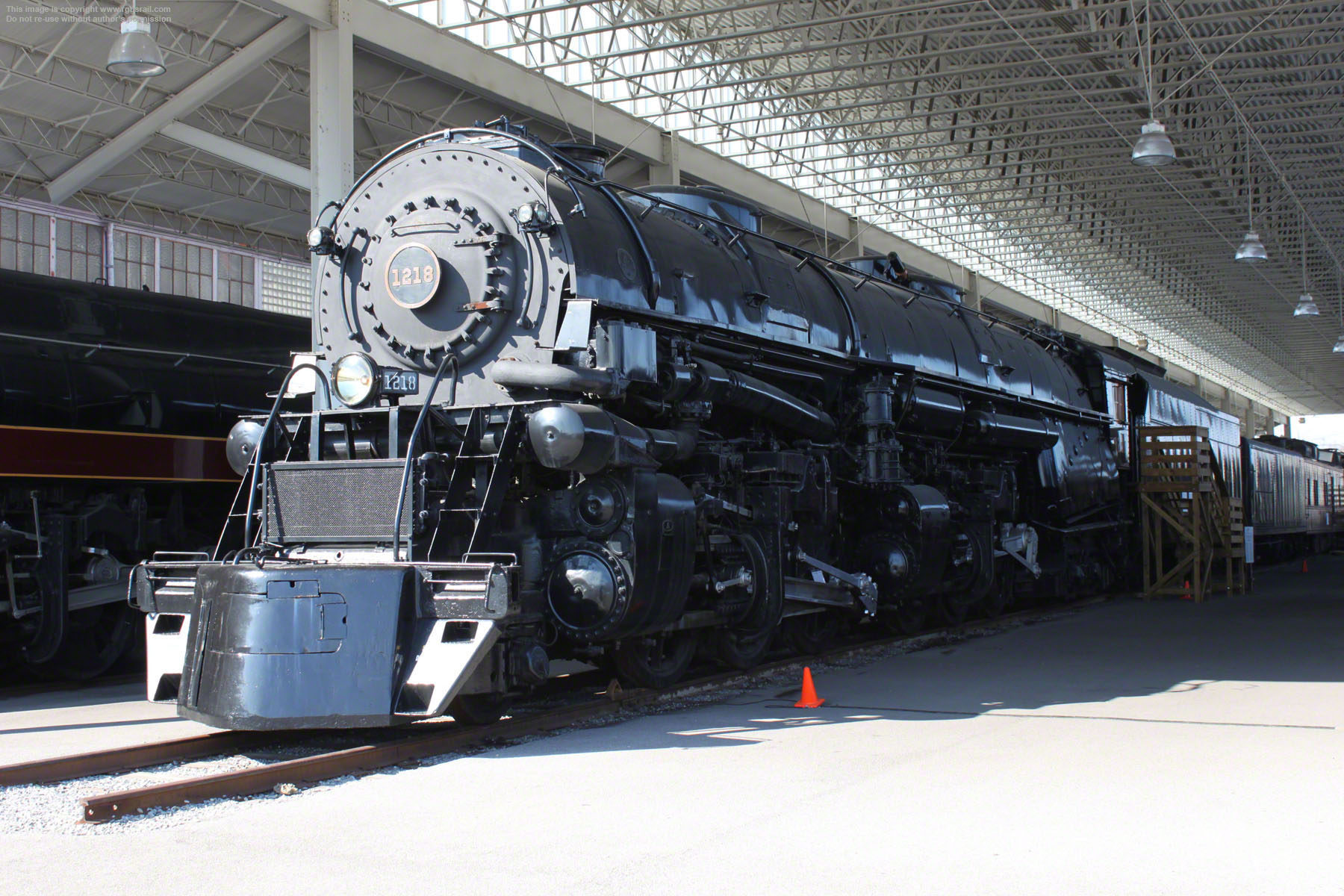
After retirement in 1959, #1218 was used by Union Carbide as a backup boiler in one of its industrial plants. In 1965, F. Nelson Blount bought it for his Steamtown collection but then sent it to Roanoke, VA, where it went on display and eventually became the property of the city.
In 1985, Robert B. Claytor, then president of the Norfolk Southern, arranged for #1218 to be restored for the company's steam programme and, on 16th January 1987, it was fired up for the first time in nearly thirty years. It then hauled many excursions until the end of the 1991.
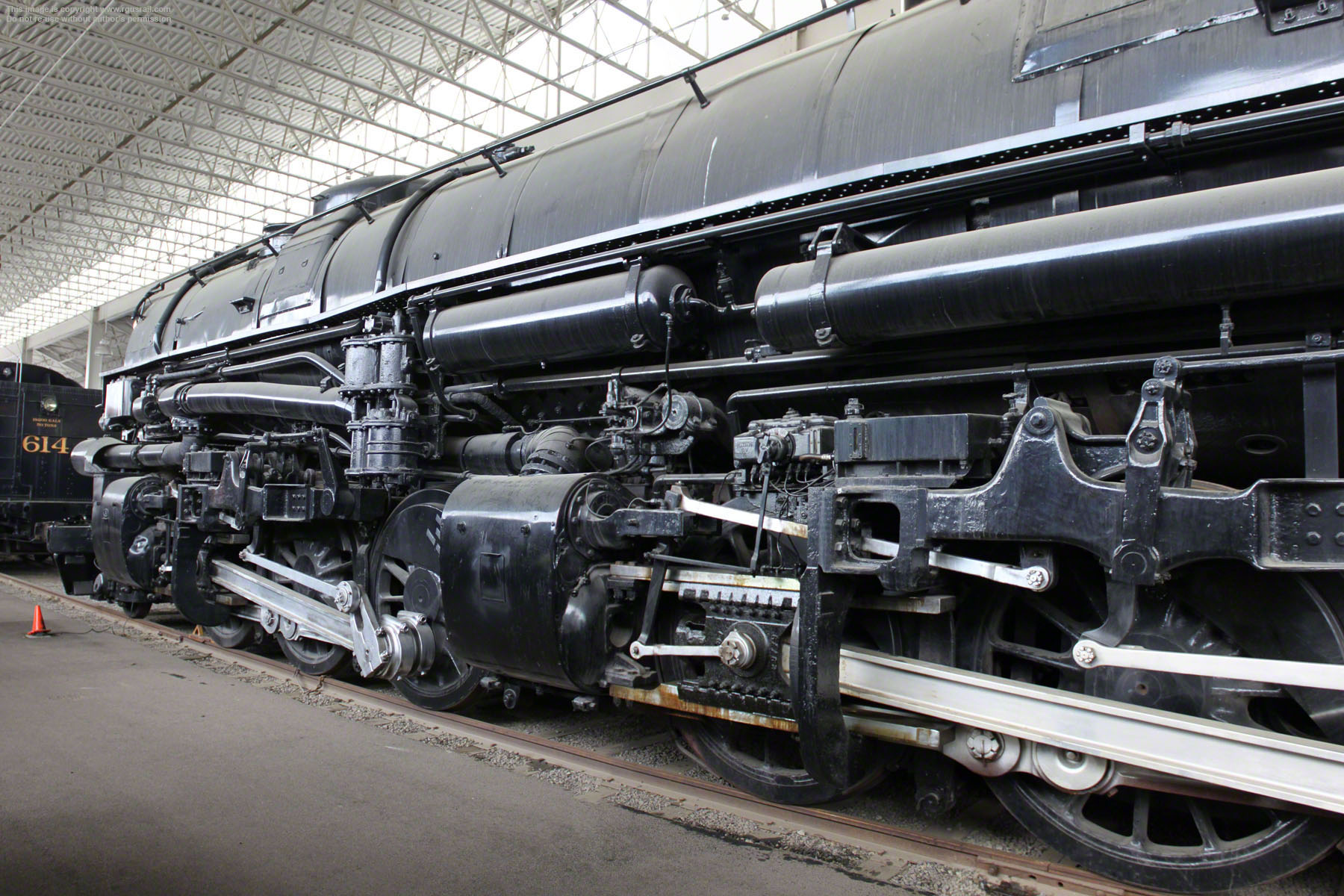

After finishing the 1991 excursion season, #1218 went for overhaul, which was still in progress when Norfolk Southern cancelled its steam programme in late 1994 and, as a consequence, the engine went into storage.
#1218 reappeared for a feature in Vanity Fair Magazine with the renowned photographer
O. Winston Link in 2001 and was then returned
to the Virginia Museum of Transportation in Roanoke, VA, on 14th June 2003 where it now resides with its boiler gutted, and flue sheets and tubes removed.


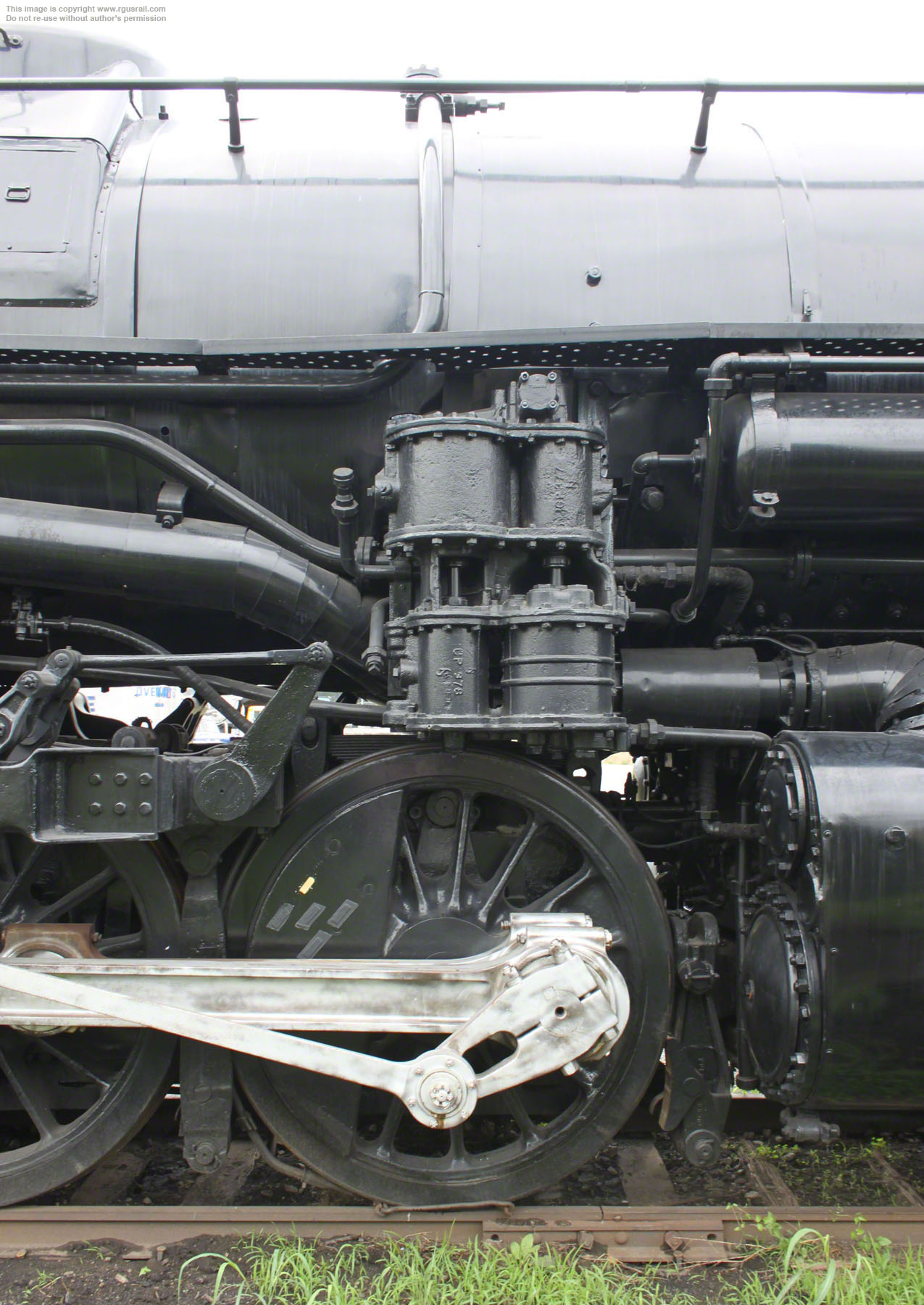
#1218 is the only N&W A class locomotive to have survived, and
only surviving 2-6-6-4 steam locomotive in
the world.
During its excursion career, it was also the most powerful operational steam locomotive in the
world.


When I visited in 2011, Chesapeake & Ohio
(4-8-4) #614's running gear was being dismounted ready for its move to Clifton Forge, VA.
It was part of the "Thoroughbreds of Steam" Exhibition and was then moved to Clifton Forge.

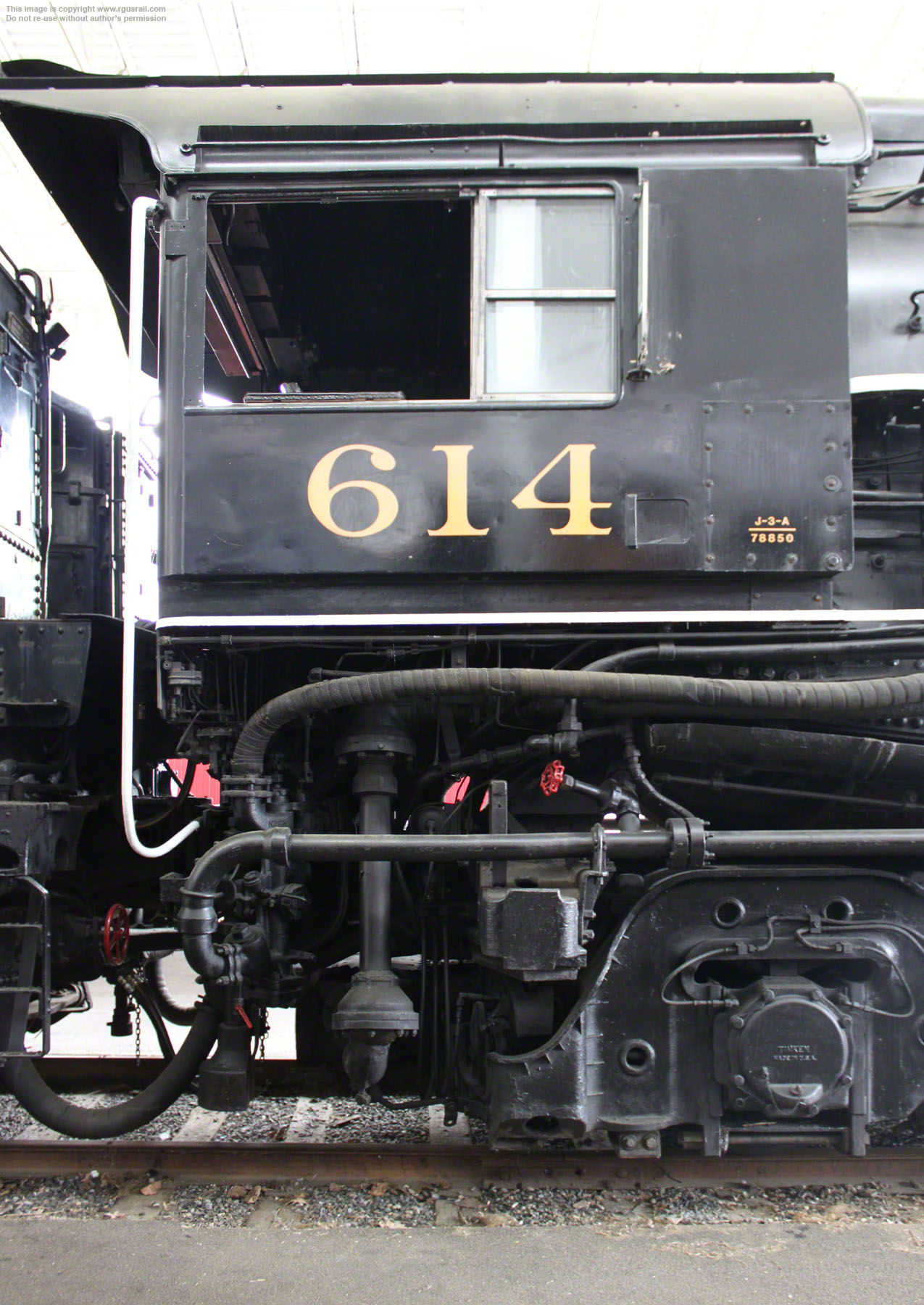
Although usually
known as a Northern types, the C&O decided to give its 4-8-4s a different name.
The railroad's Greenbrier Hotel in White Sulphur Springs, WV, then known for its luxury and prestige, formed the basis for
the name "Greenbrier".


In 1979, the museum traded #614 with Ross Rowland for ex-Reading Railroad #2101. From 1980 to 1981, the restored engine hauled the Chessie Safety Express. It then moved to Hagerstown, MD, until 1985 when it began an experiment as an alternative to rising oil costs by burning a type of coal known as ACE 3000.
In 1995, #614 went to the New Hope & Ivyland Railroad in Pennsylvania for overhaul. The following year, it moved to Hoboken, NJ, where, for three years, it ran a series of excursions to Port Jervis, New York. It has not steamed since.
#614 weighs 503,500 lbs, 290,000 lbs on its 72" drivers and has 27½" x 30" cylinders. With a 100.3 sq ft grate, 520 sq ft firebox and total heating surface of 7,800 sq ft, including 2,305 sq ft of superheating, it operated at a boiler pressure of 255 psi delivering 68,299 lbs tractive effort. The water bottom tender is fitted with two, three axle Buckeye Steel trucks, weighs 309,700 lbs light and has a capacity of 50 tons of coal and 18,200 gallons of water.
You can see more photos of #614 on the C&O Railway Heritage Center page of this website.
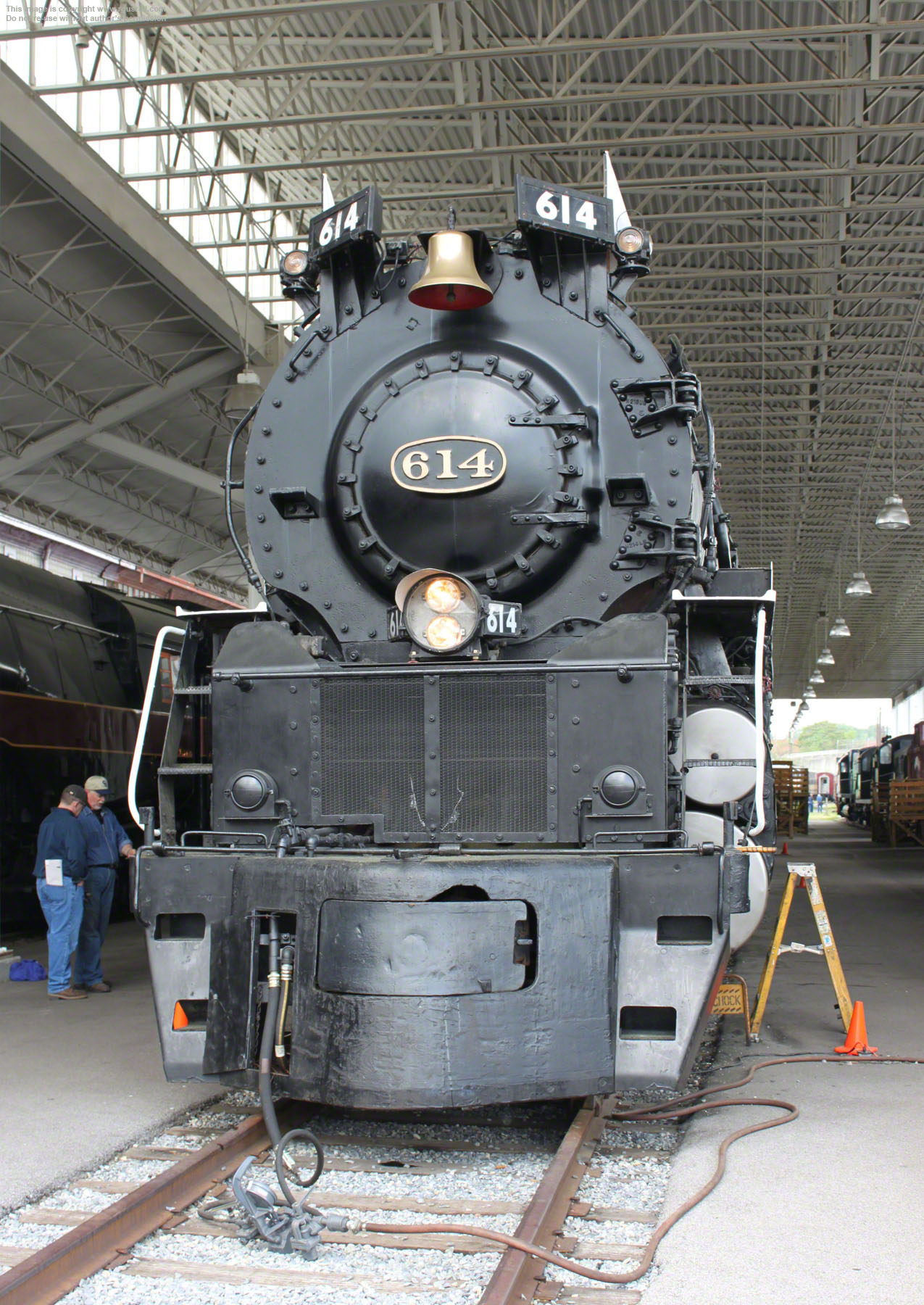


The C&O's first five 4-8-4s were built by Lima in 1935
(#600-604) and designated J-3. Two more were ordered from Lima in 1942 (#605-606) and, in 1948, the design was changed slightly and #610-614 were produced, designated J-3a. They were one of the largest 4-8-4s built in the US, and amongst the last steam locomotives delivered.
The J-3as had roller-bearings, light weight rods and Boxpok drivers, but their service life was brief. All twelve J-3s retired in 1955, although several (including #614) were reactivated in 1956. All but #614 were then scrapped. The locomotive went into storage in Russell, KY, until 1975, when it went to the Baltimore & Ohio Railroad Museum in Baltimore, MD.


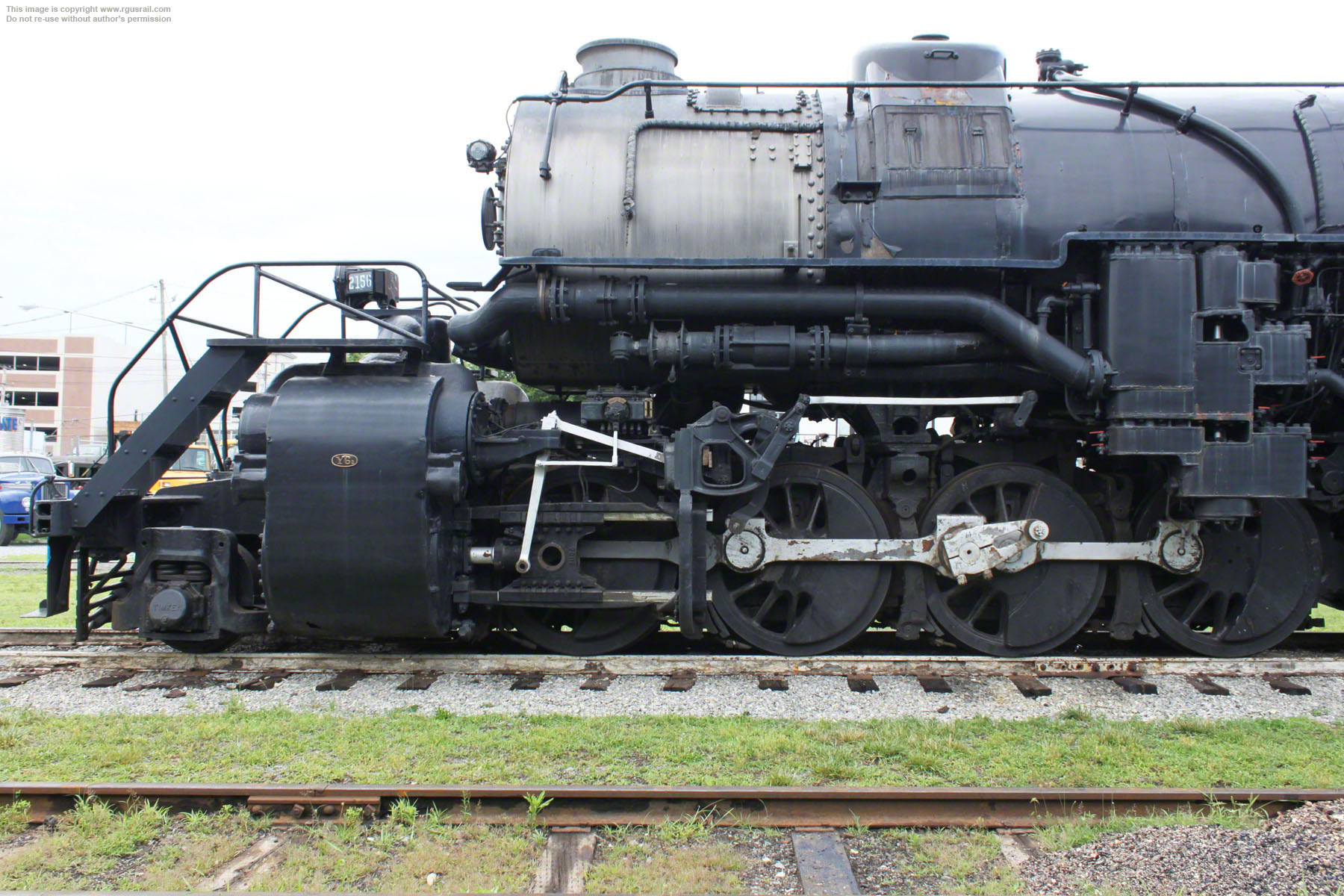
When I last visited, Norfolk & Western Class Y-6a 2-8-8-2 #2156 was on loan to the museum from its usual home in the National Museum of Transportation, St. Louis.
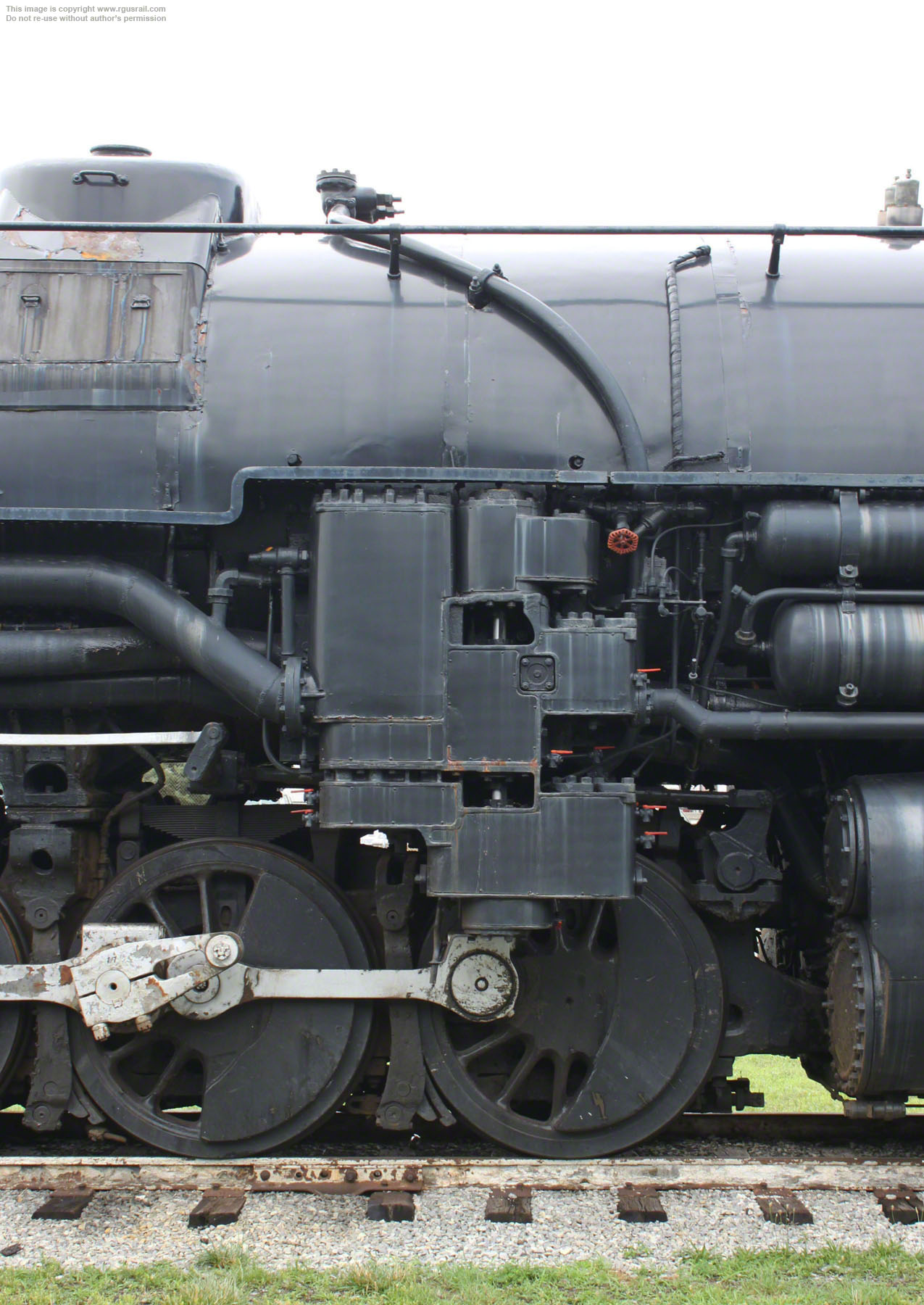
The Y-6 is my favourite steam locomotive. A host of features, from its forward skewed exhaust stack through a sleek boiler to its slanted cab profile, low slung front cylinders and side mounted pumps, all speak of superior grunt power. You can see more photos and find out more about #2156 on the National Museum of Transportation, St. Louis page of this website.


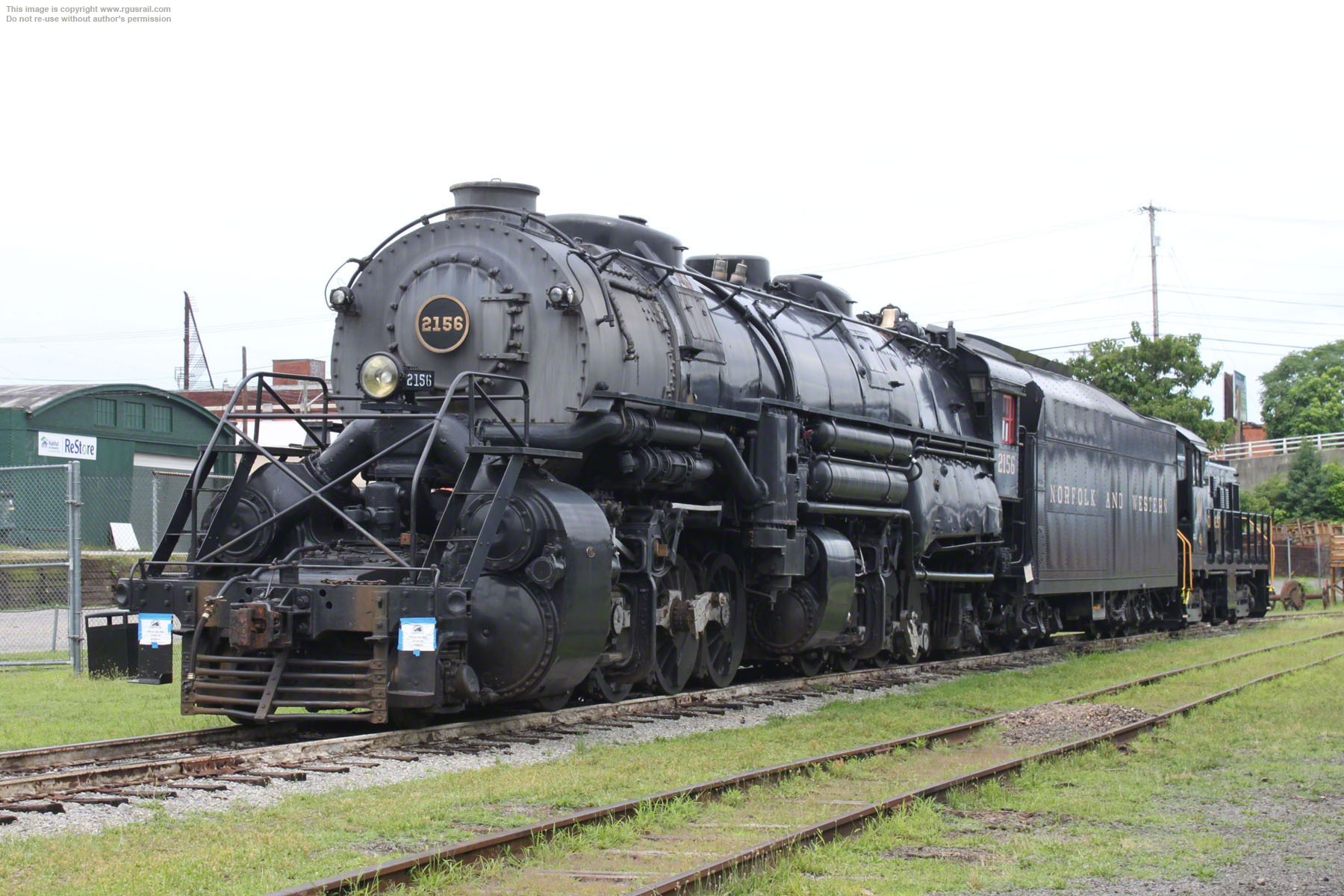


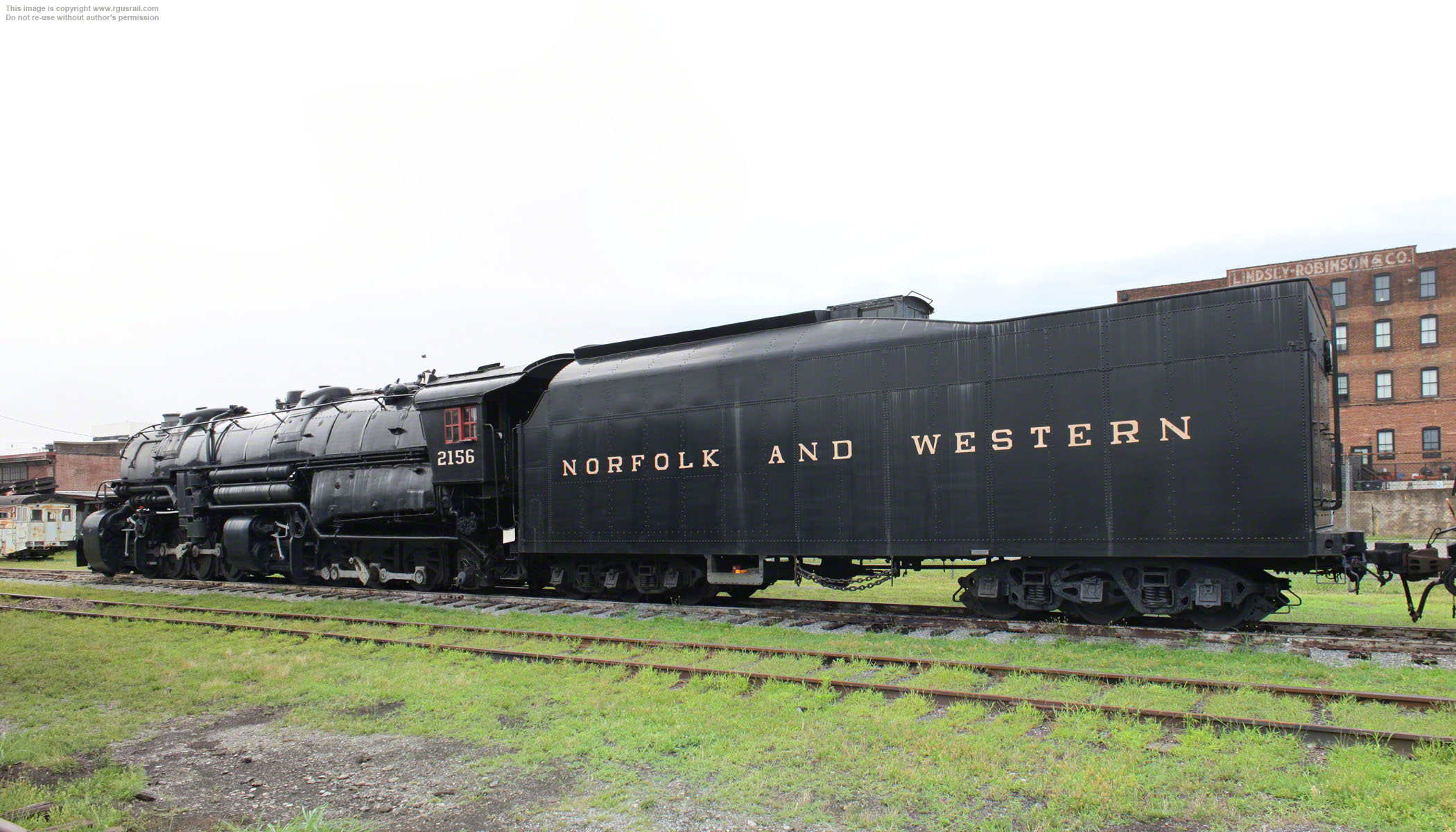

#2156 is the sole survivor of the N&W's Y5, Y6, Y6a, and Y6b classes, which were amongst the most powerful locomotives ever built. Originally rated with a tractive effort of 152,206 lbs, improvements in the 1950s resulted in most of these locomotives (including #2156) having their tractive effort increased to 166,000 lbs.
Like their predecessors, the Y-5s, the Y-6 class gained its distinctive look from the 8° forward slanted exhaust stack, which was designed to allow room for the front end throttle, a slightly off centre smoke box door, inverted "Y" exhaust and crossed handrails on the pilot deck, and the massive low slung front cylinders.




The view above on the right shows there was not much room for the fireman to work in the cab. The engine weighs 120,785 lbs, 107,000 lbs on its 50" drivers. It has a 31 sq ft grate, 161 sq ft firebox,
and 20" x 24" cylinders. With a heating surface of 1,812 sq ft and operating at a boiler pressure of
180 psi, #6 delivered tractive effort of 29,376 lbs. The tender weighs 116,630 lbs light and has a capacity of 13.8 tons of coal and 6,000 gallons of water.
Below, the locomotive was equipped with inside admission Stephenson valve gear.
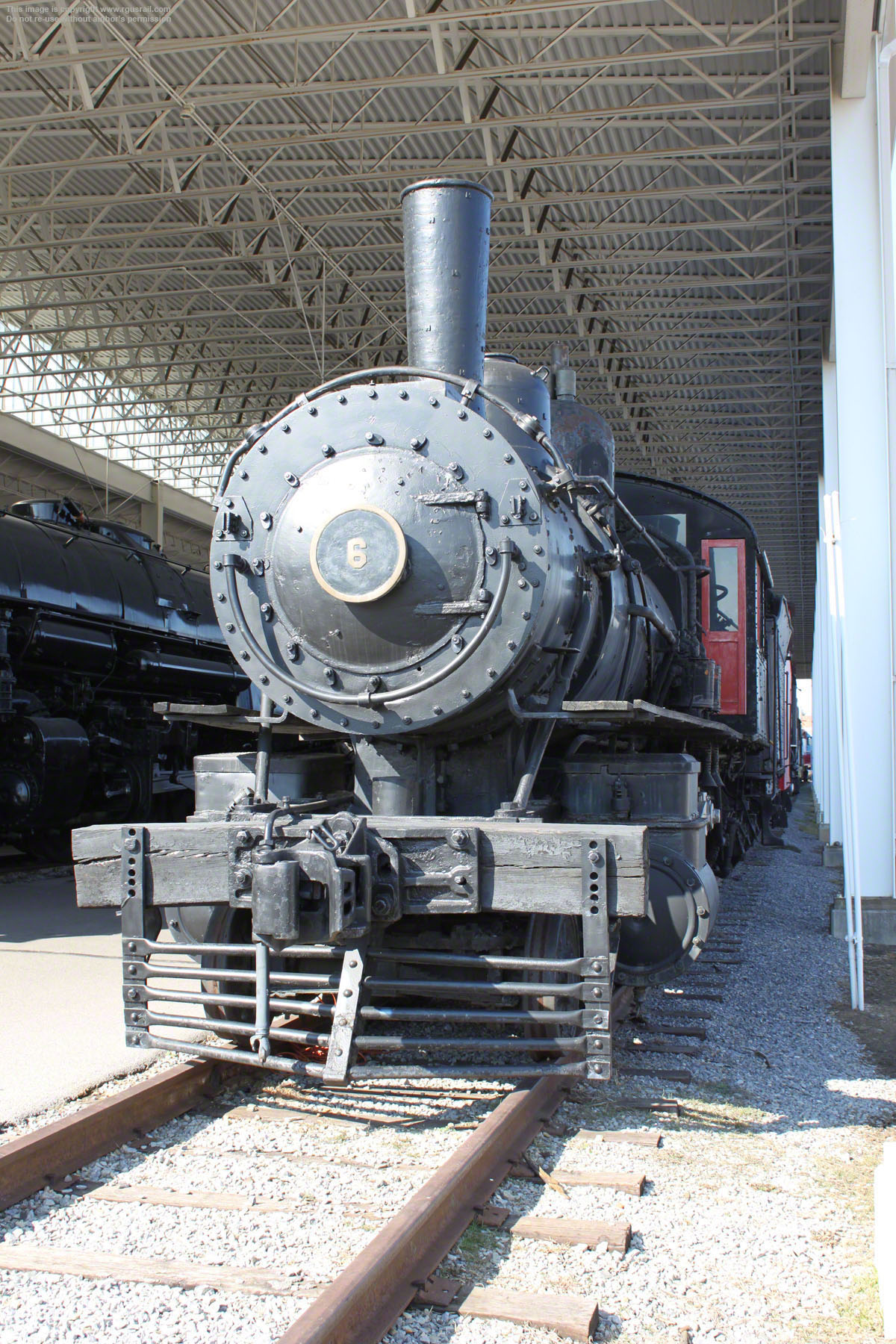
Norfolk & Western Class G1 #6 is a Consolidation (2-8-0) type locomotive, one of seven of this class built by Baldwin in 1897 as helpers on the railroad's Flat Top Mountain to Elkhorn Tunnel grade in Virginia. It cost $10,810. Originally, this locomotive was numbered #352 but, in May 1917, it was one of two sold to the Virginia Carolina Railroad (two had already been sold in 1914) and renumbered #6. When the N&W later acquired the Virginia Carolina in January 1920, it remained #6, and operated on the Clinch Valley line out of Bluefield, WV, with its twin #7.
#6 retired from active service in January 1955 and was subsequently donated to the museum. #7 was donated to the City of Bluefield, WV, in 1955 and is on display in Bluefield City Park. You can see some photographs of it on the NW G-1 #7 page of this website.



The cylinders are 22" x 28", and its small, 51" drivers are typical of this type of heavy switcher, thousands of which were built during the first part of the 20th Century. They operated in a wide range of settings, from Class I railroads to industrial yards.
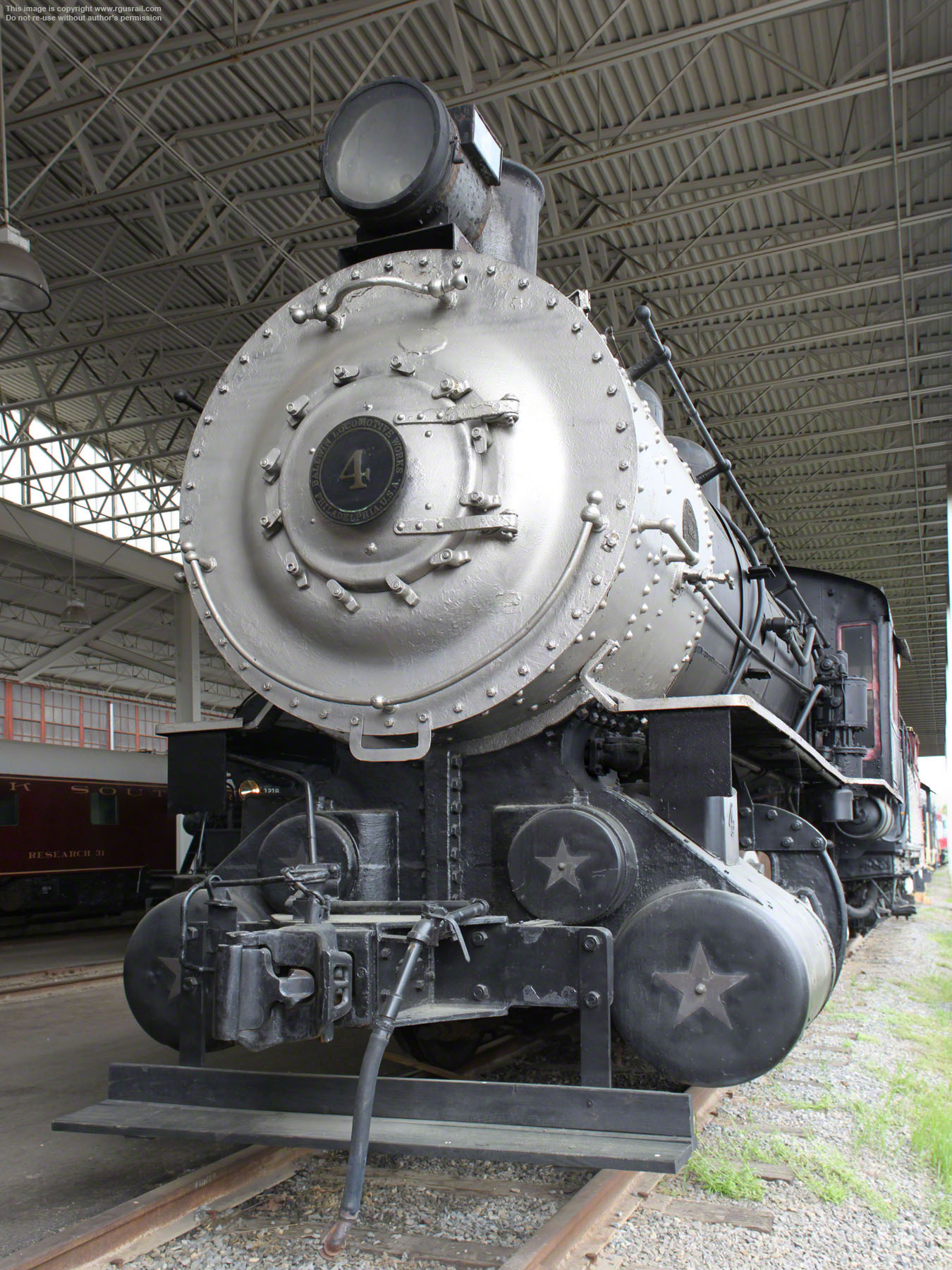
After retiring from service in 1957, #4 was gifted to the City of Princeton, WV, where it went on static display in front of the Mercer County Court House. Unfortunately, exposure to the weather and vandalism led to quite rapid deterioration in its condition.
Virginian SA class 0-8-0 #4, also known as "Four Spot", was delivered to the VGN in 1910, one of five of the class built between 1909 and 1910 (#1-#3 by Alco, #4 & #5 by Baldwin). It is the only Virginian steam locomotive to have survived.
#4 is 64' long and weighs 182,300 lbs. A coal burner, it has a grate area of 31½ sq ft and operated at a boiler pressure of 200 psi. Because of the nature of its work, its top speed was a mere 10 mph, but it could deliver a hefty tractive effort of 45,200 lbs.
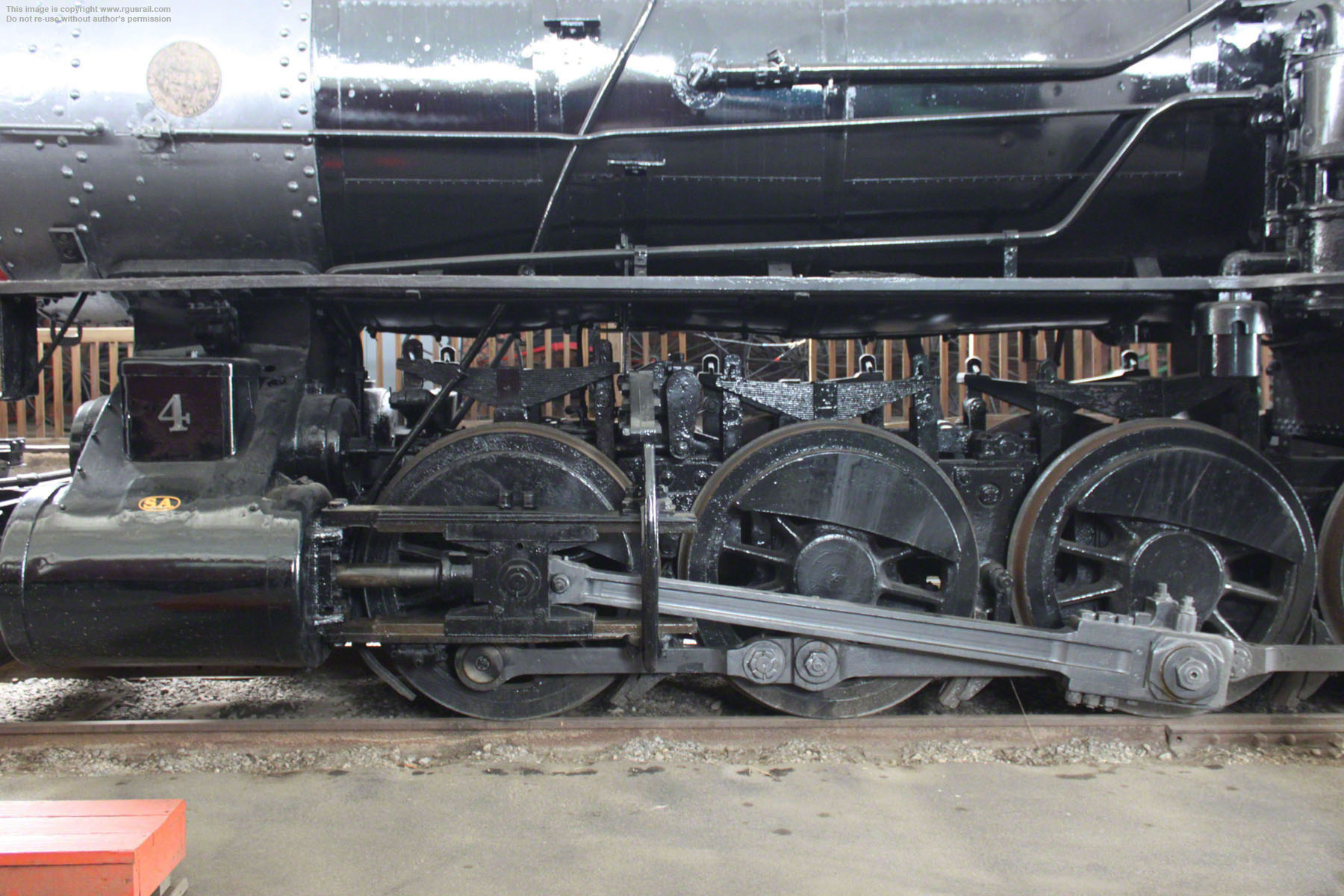


Following a disputed trade of a caboose by the Norfolk & Western in 1960 and a bout of litigation, #4 was refurbished in the N&W shops and donated to the museum in 1963. It finally joined the collection in 1967, just in time for the museum's dedication on 17th June that year.
The tender weighs 111,400 lbs fully loaded with a 10 ton coal and 5,000 gallon water capacity.


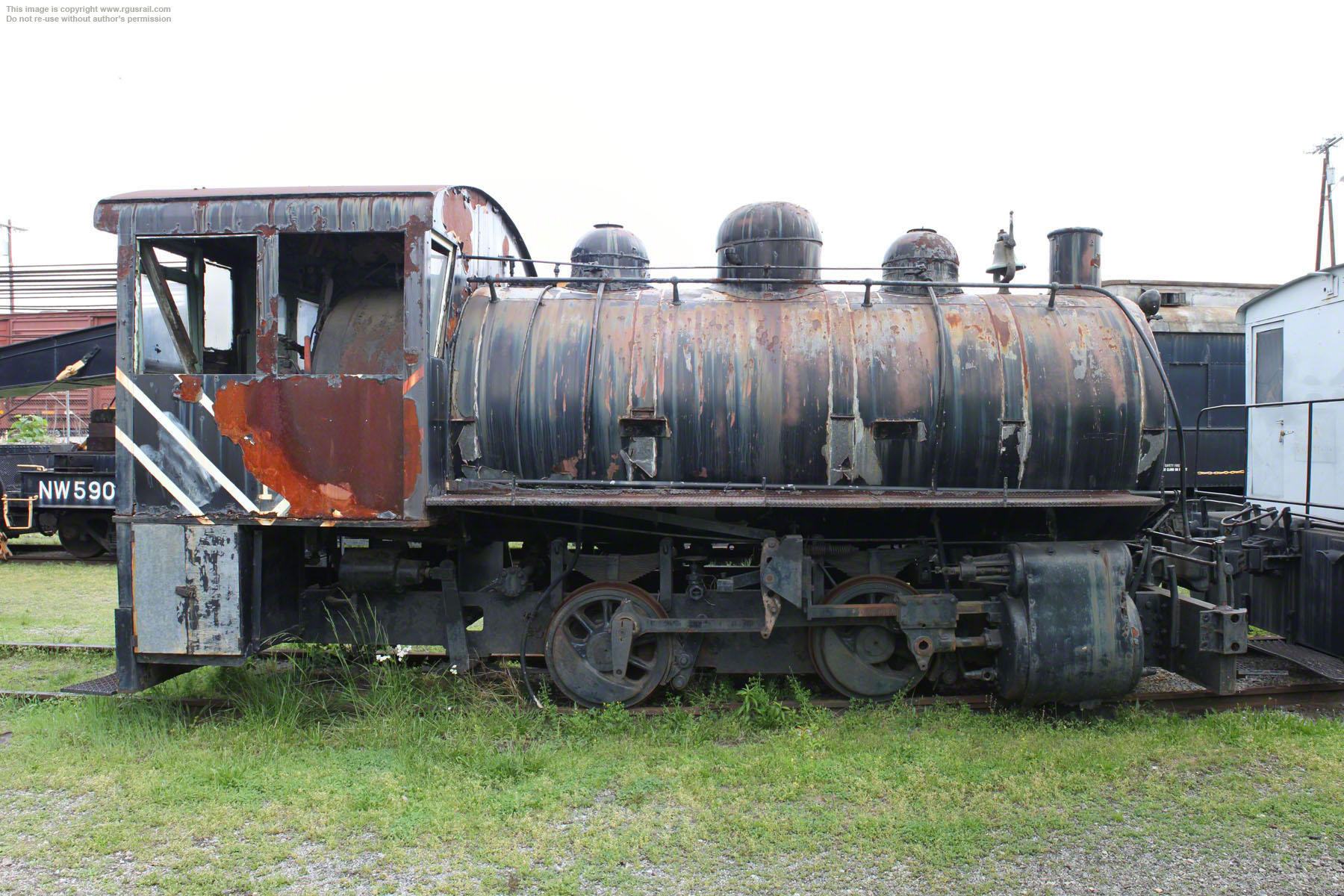
#1 is an 0-4-0F fireless locomotive built by the H. K. Porter Works in Pittsburgh, PA, in 1943.
It weighs 70,000 lbs, operated at a boiler pressure of 150 psi and delivered tractive effort of 12,700 lbs.


Celanese Fiber started out as "Cellonit
Gesellschaft Dreyfus and Co" in Basle, Switzerland, in 1912. In 1916, operations were extended to Britain and, two years later, to the US when the plant opened at Amcelle between Cumberland and Cresaptown, MD. That year, the British business changed its name to "British Celanese Limited", and the U.S. business adopted the name "Celanese Corporation of America" in 1927.
The company specialised in plastics and chemicals, particularly fabrics and yarns.
The locomotive's drivers are 31" and the cylinders 20" x 18". It last worked for a branch of the Celanese Fiber Company at Amcelle, MD, near Cumberland.
Powered from a reservoir of compressed air or steam, which is filled at intervals from an external source, fireless locomotives were typically employed for industrial switching at sites where a conventional locomotive was too noxious or risky, such as in a mine or a food or chemical factory like the Celanese plant.




Although the B&O transported freight and workers to and from the plant at Amcelle, there was also a sizeable network of rail lines on the property. Celanese was a major local employer and most families in Amcelle had relatives working for the company (at one point, 13,000 people worked there). The plant was closed in the 1960s and then torn down to provide space for a new Federal Prison.
Left, #1 was in rather poor shape when I first visited but, above, it has since been given a cosmetic make over and is looking good.


#1009 was the 10,000th diesel-electric built by EMD. Outshopped on 14th June 1951 for the Wabash, it hauled streamliners such as the Blue Bird and Banner Blue. In 1964 the N&W acquired the Wabash and donated #1009 to the museum on retirement.
#1009 weighs 315,000 lbs and is 70' 3" long. Two 1,125 hp, 12 cylinder 567B prime movers each drove a GM D27 generator to power four GM D37 traction motors. With a top speed of 85 mph it delivered 56,500 lbs starting tractive effort at 25% and 31,000 lbs continuous tractive effort at 11 mph.




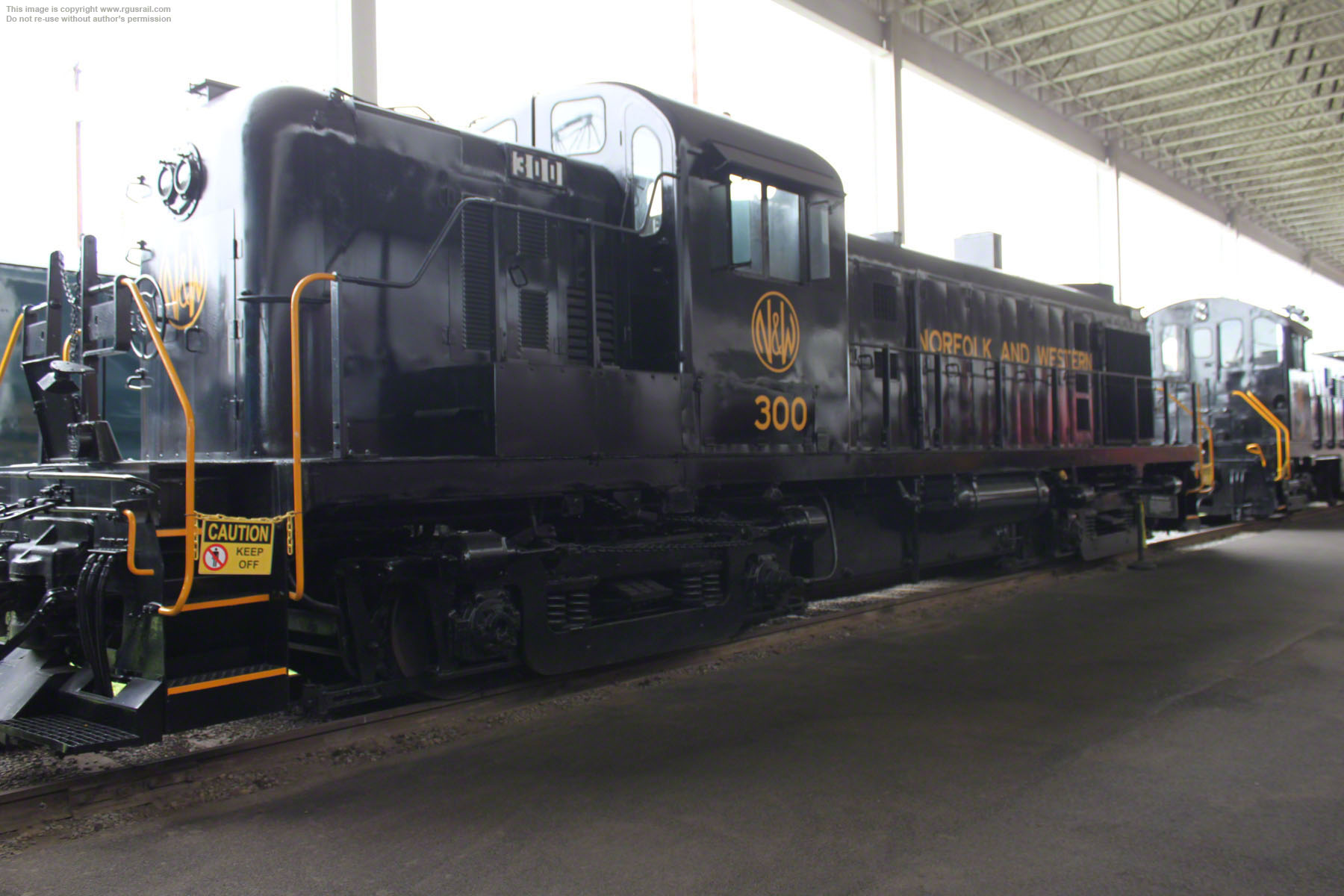
#300 is one of four Alco RS-3s delivered to the Norfolk & Western in 1955 (#300-#303). They were the first diesel-electric locomotives owned by the railroad. #300 operated on the N&W's Lynchburg, VA, to Durham, NC, branch. The railroad bought another four of the units the following year (#304-#307).
The RS-3 has an Alco 244 12 cycle 1,600 hp prime mover powering a GE 581 generator to drive four GE 752 traction motors, one on each axle. Weighing 229,000 lbs and 55' 11" long, they have a top speed of 65 mph.


One thousand, two hundred and sixty-five RS-3s were produced for US railroads, forty-eight for Brazil, ten for Mexico, six for Cuba and five for Algeria. Ninety-eight were built for Canadian railroads by the Alco subsidiary, MLW.
A number of RS-3s have survived. NN #109 still operates and you can see photos of it on the Northern Nevada Railroad Museum page of this website. You can also see WM #195 on the B&O Museum Yard and Car Shop, RDG #467 on the Steamtown Yard, LI #1555 on the Gold Coast Railroad Museum pages.


The most distinctive feature of the C-630 is its large aftercooler radiator housing above the roof line. These boosted performance when the locomotive was operating under a heavy load. Their top speed was 70 mph and they were used by the N&W to haul freight services. In the 1970s, some were also converted into "slugs".
Four C-630s have survived: RDG #5308 is owned by the Reading Technical & Historical Society. You can see UP #2907 on the Arkansas Railroad Museum page of this website and another is also in storage at Arkansas Railroad Museum.
#1135 was delivered to the Norfolk & Western in September 1967, one of ten C-630 units delivered to the railroad between 1966 and 1967, the only ones designed with the high short hoods that were mandated by N&W operating policy.
Seventy-seven C-630s were built by Alco from 1965 to 1967. In addition to the N&W units, three were built for the Atlantic Coast Line, four for the Chesapeake and Ohio, eight for the Louisville & Nashville, fifteen for PRR, twelve for the Reading, fifteen for Southern Pacific and ten for the Union Pacific. Fifty-four C-630M units were also built by Montreal Locomotive Works.


Chesapeake Western #662 was one of the first diesel locomotives ordered by this western
Virginia shortline. Along with DS-44-660s #661
and #663, these three Baldwin built first-
generation diesel locomotives completely transitioned the Chesapeake Western from steam to diesel power.
The three units were retired in 1964, replaced by Alco T-6 units, including CHW #10 shown earlier on this page and NW #41 shown later. #662 and #663 ended up in the Virginia Scrap Iron & Metal scrap yard in Roanoke, VA.


They sat there rusting for over forty years along with three N&W Class M steam locomotives which, collectively, became known as the “Lost Engines of Roanoke”. Virginia Scrap Iron & Metal donated the engines to the Virginia Museum of Transportation, which set up a series of partnerships to save all five engines from destruction.
The museum donated #663 to the Roanoke Chapter of the National Railway Historical Society in 2009 which, in exchange, agreed to carry out a cosmetic restoration of #662.

In August 2009, all three of the steam engines were also moved out of the scrap yard destined for restoration. #1118 went to the NRHS Roanoke Chapter's 9th Street Yard in Roanoke, VA. #1134 went to the Virginia
Museum of Transportation, and you can see photos of
it on the NW #1134 page of this website. #1151 also
went to the Virginia Museum of Transportation.
Although restoration had not started when I last visited, you can see photos of it in its "raw" condition later on this page.
Baldwin built one hundred and thirty-nine of the four
axle DS 44-660s at its Eddystone, PA, factory between 1946 and 1949. The "660" in the name referred to their 660 hp. At 240,000 lbs and 46' long, with a Baldwin 4-cycle Model 606 NA prime mover powering a Westinghouse WE480 generator to drive four Westinghouse WE362 traction motors, one on each axle, it delivered starting tractive effort of 49,625 lbs at 25% and 34,000 lbs continuous tractive effort at 6.8 mph with a top speed of 60 mph.
Three DS 44-660s have survived. You can see one of them, Sloss-Sheffield #30 on the Sloss Furnaces page of this website. The other, Napa Valley #51, is in the collection of the Western Pacific Railroad Museum in Portola, CA.


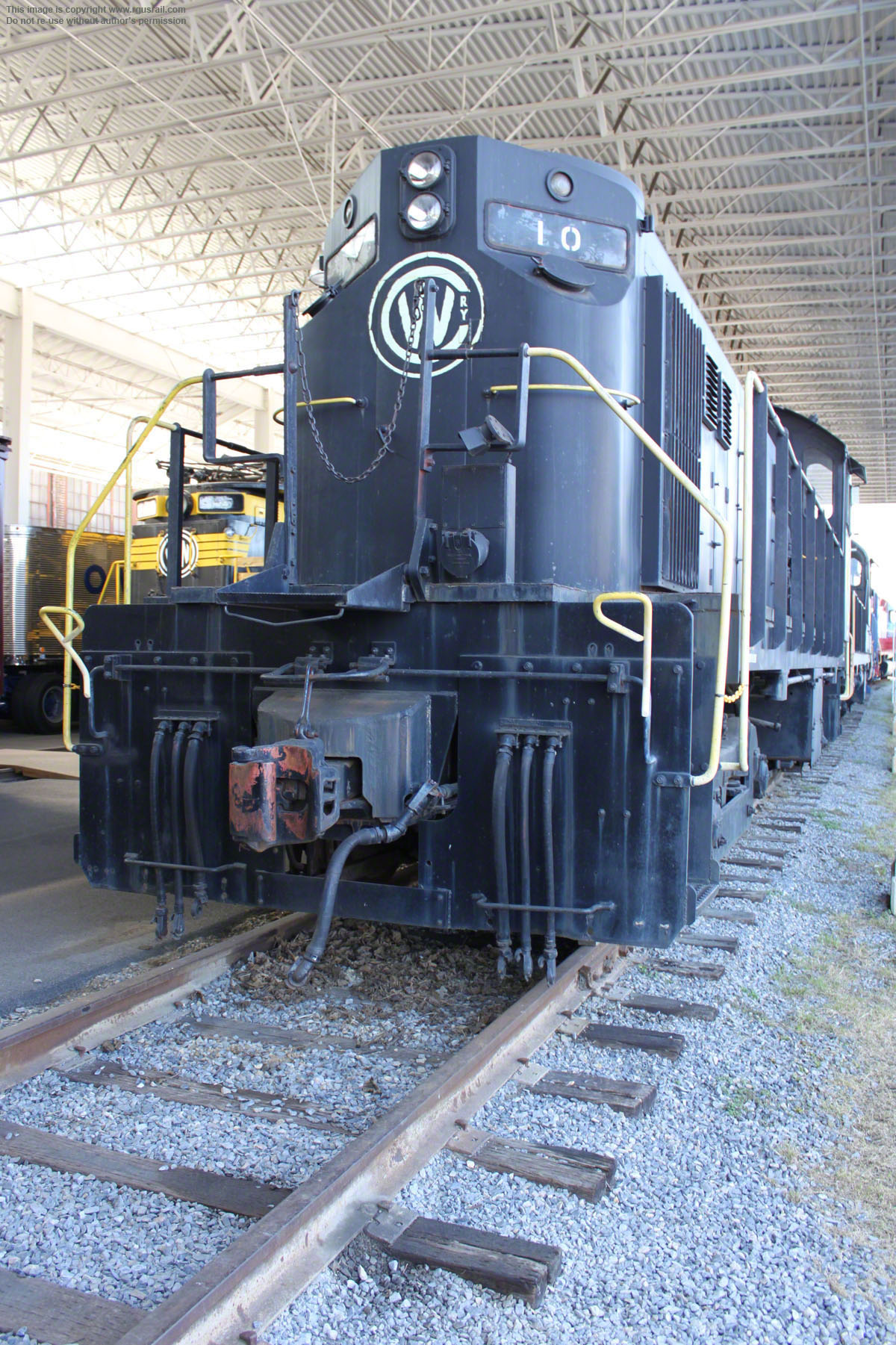


This switcher was delivered to the N&W in 1959. It is 46' 5" long and weighs 265,000 lbs. With a 251B 6L six cylinder prime mover powering a GE-GT584 generator to drive six GE 752 traction motors, it delivers starting tractive effort of 60,000 lbs at 25% and 46,000 lbs continuous tractive effort at 8 mph with a top speed of 60 mph.
Fifty-seven T-6s were built by Alco from 1958 to 1969, forty for the Norfolk & Western in 1959. The "T" stood for Transfer, meaning it was capable of faster transition and higher sustained speeds than Alco's regular "S" series switchers.

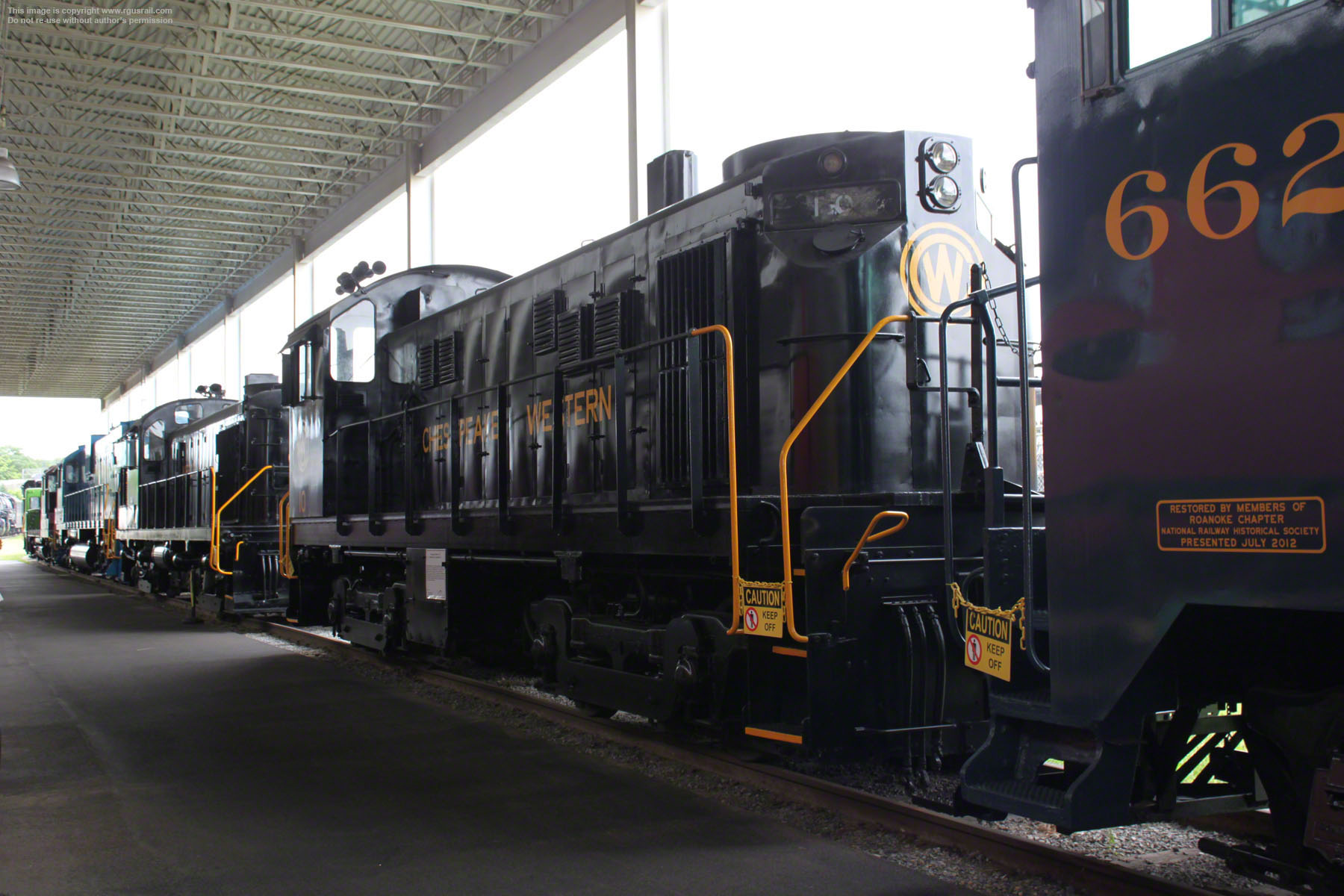
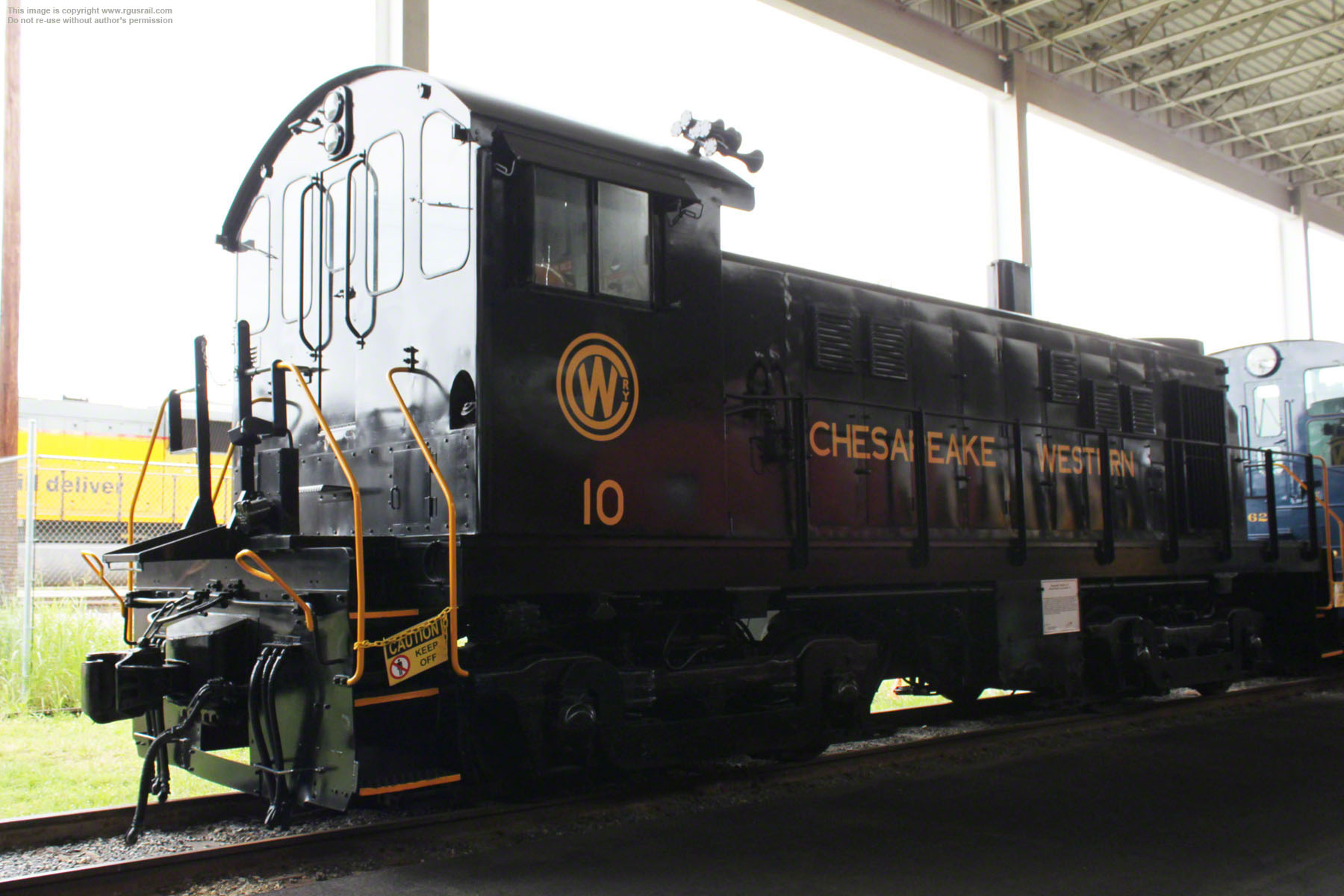
Left, when I last visited, #10 had had a recent make over.
Construction began on the Chesapeake Western in 1895 at Harrisonburg, VA. The line was bought by the General Manager, Don Thomas, in 1938 with the N&W's help, and the N&W took control in 1954. #40 was transferred to the Chesapeake Western Railway by the N&W, along with two other T-6s in 1964, including ex-N&W #41 shown next on this page. #40 was renumbered CHW #10. Retired in 1985, it was donated to the museum by Norfolk Southern in 1985.



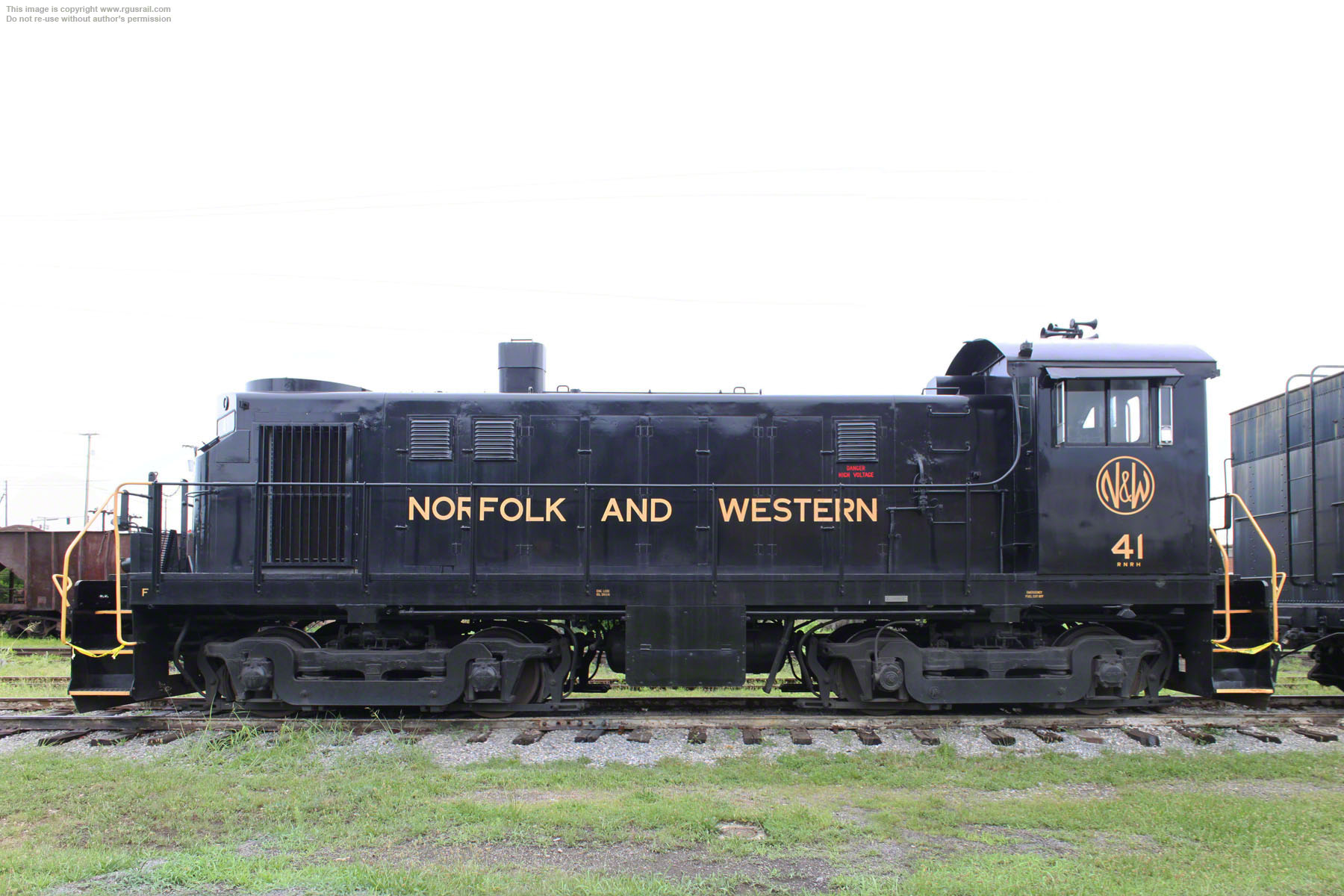
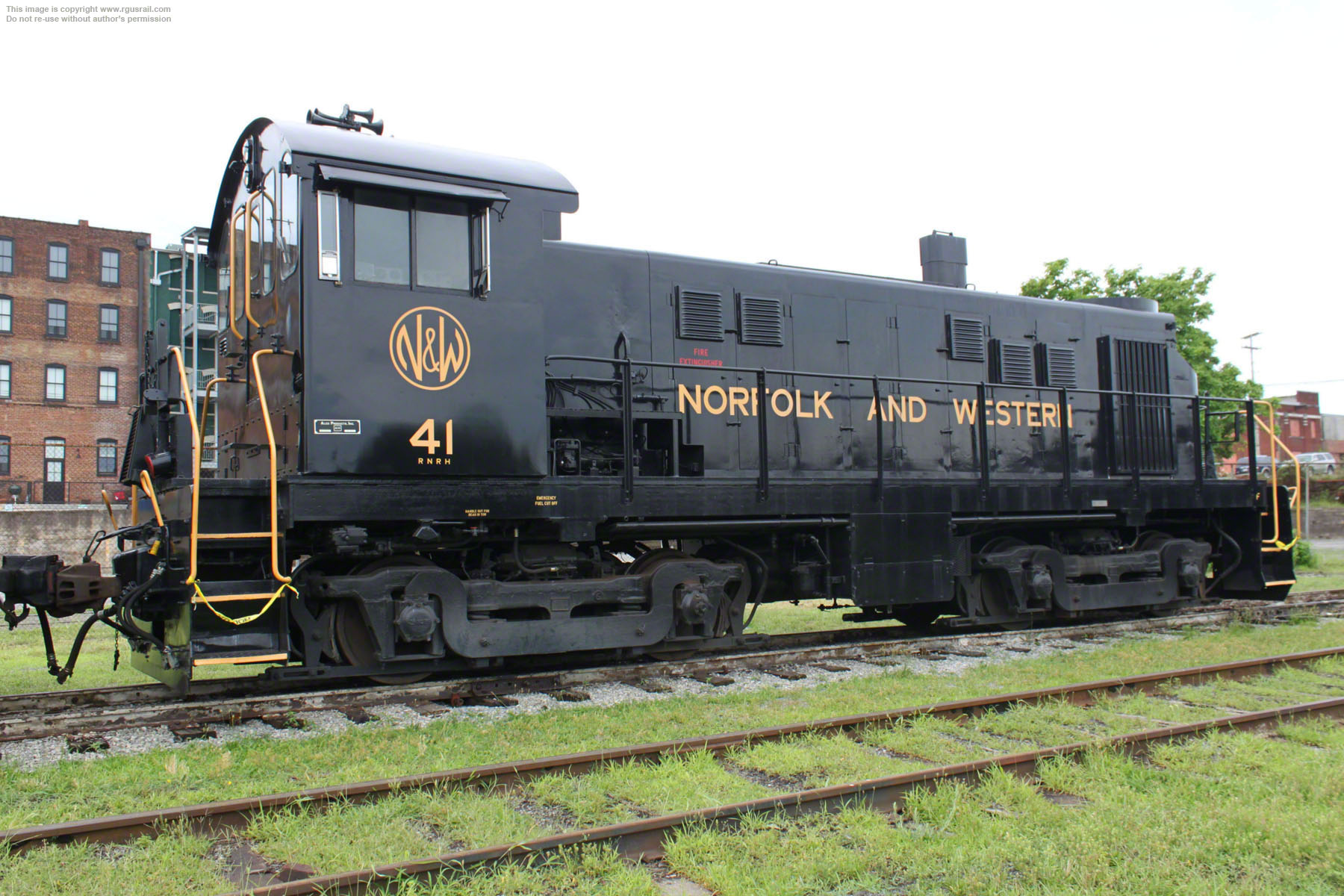
T-6 #41 was built by Alco for the Norfolk & Western in 1959. A 1,000 hp switcher, it delivered starting tractive effort of 60,000 lbs at 25% and 46,000 lbs continuous tractive effort at 8 mph with a top speed of 60 mph.
Like #40 shown earlier on this page, #41 was transferred to the Chesapeake Western Railway, along with two other T-6s in 1964 where it was renumbered #11. It was retired in 1985, bought by the Roanoke Chapter of the NRHS in 1988 and restored to its original N&W livery and number and returned to operation in 1990.






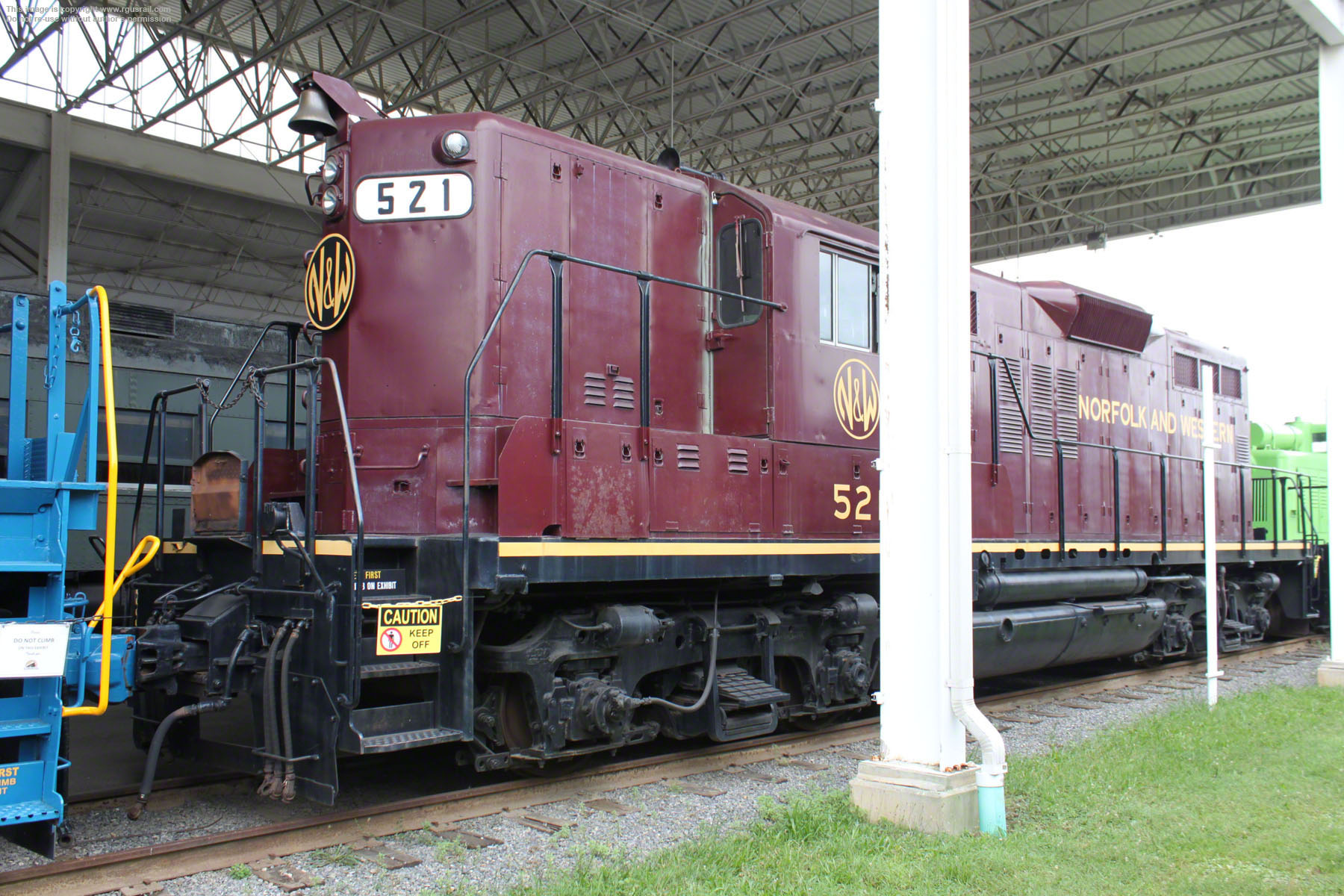
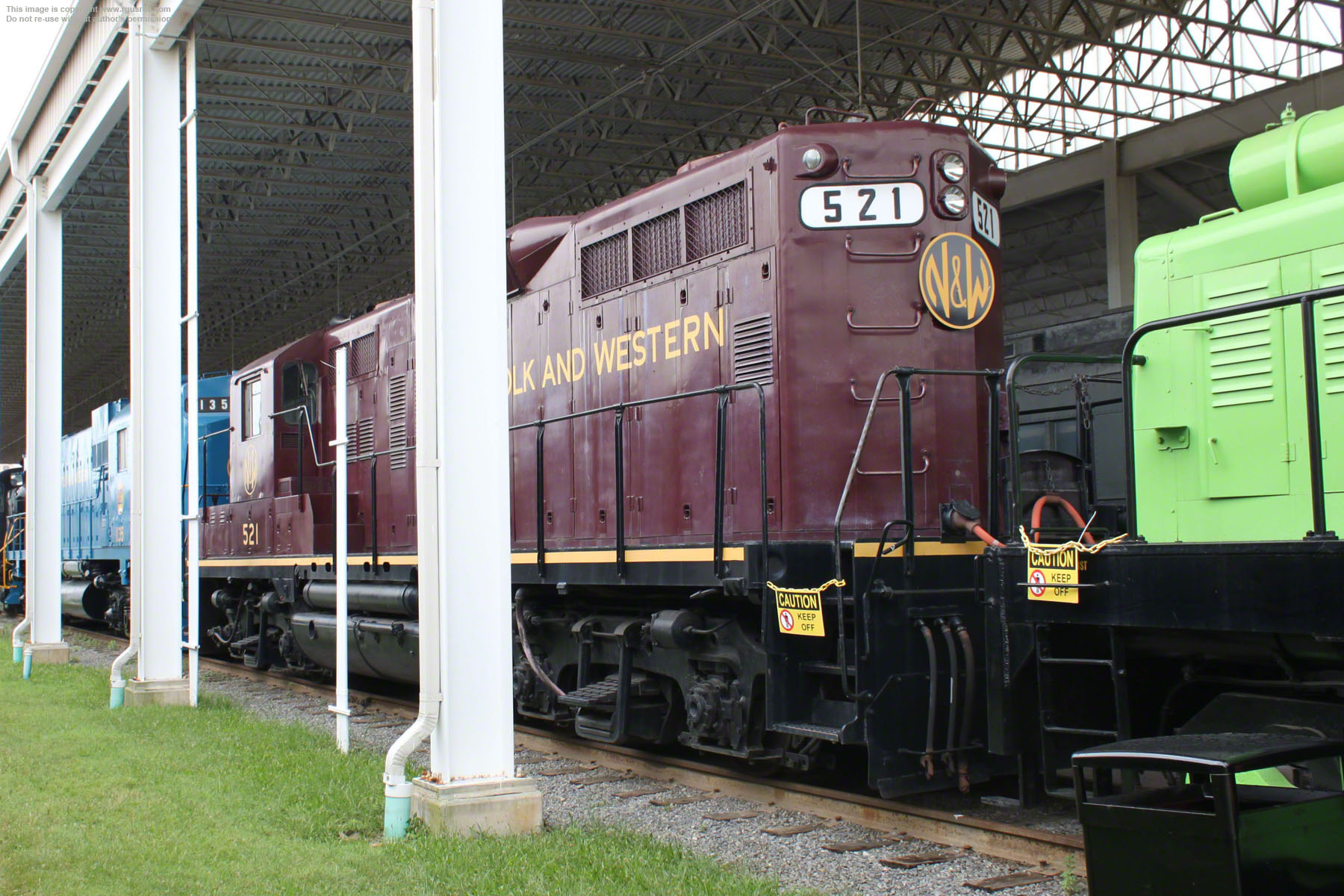
#521 is one of four hundred and sixteen GP9 diesel-electric units ordered by the N&W.
Three thousand, four hundred and forty-four GP9s were built between 1954 and 1963 by EMD for the US, Canada, Mexico, Brazil, Peru and Venezuela. US production ended in 1959, but thirteen more were built in Canada under the EMD subsidiary the Montreal Locomotive Works until 1963. The type was offered both with and without control cabs. Units without control cabs were designated GP9B, but only the Union Pacific and Pennsy took of any of these.

The GP9 was extremely popular and has proved very durable. Several GP9s still operate on shortlines, have been preserved in museums or are used on tourist lines.
You can see NKP GP9 #532 later on this page. NW #620 on the North Carolina Museum of Transportation page occasionally hauls passenger trains on the museum grounds, and NKP #514 is on the Steamtown NHS page. You can also see SRHX #102 on the Belton, Grandview and Kansas Railroad page and PRR #7006 on the Pennsylvania Railroad Museum Train Shed page.
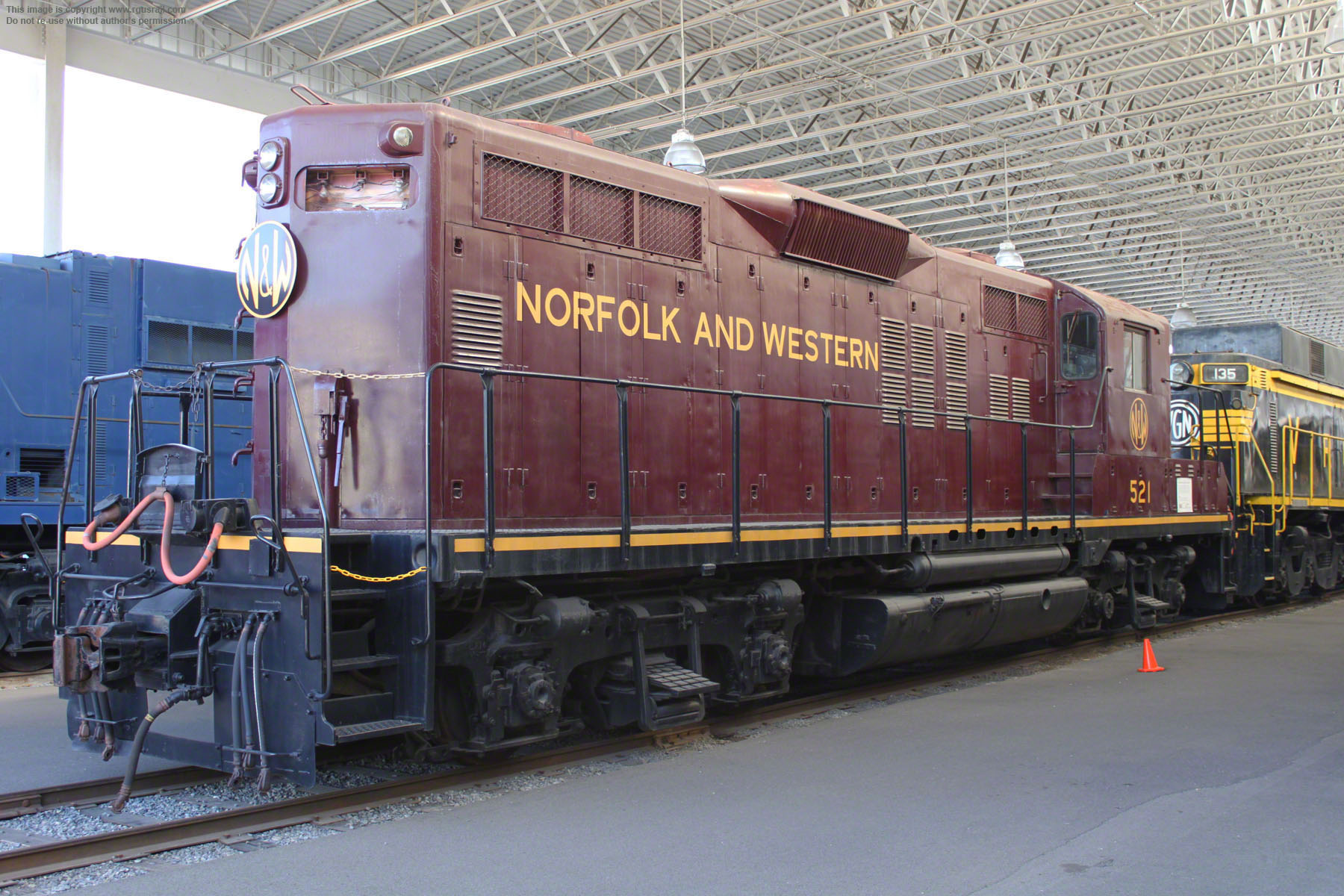
#521 was delivered in 1958. It was one of only twenty-one that the N&W equipped with steam generators so they could haul passenger services. The N&W GP9s were nicknamed "Redbirds" for their distinctive livery.
The GP9 weighs 249,000 lbs and is 56' 2" long. Power was provided by an EMD 567C sixteen cylinder prime mover powering a GM D12B generator to drive four GM D37 traction motors. It delivered starting tractive effort of 62,750 lbs at 25% and 44,600 lbs lbs tractive effort at 9.3 mph with a top speed of 65 mph.

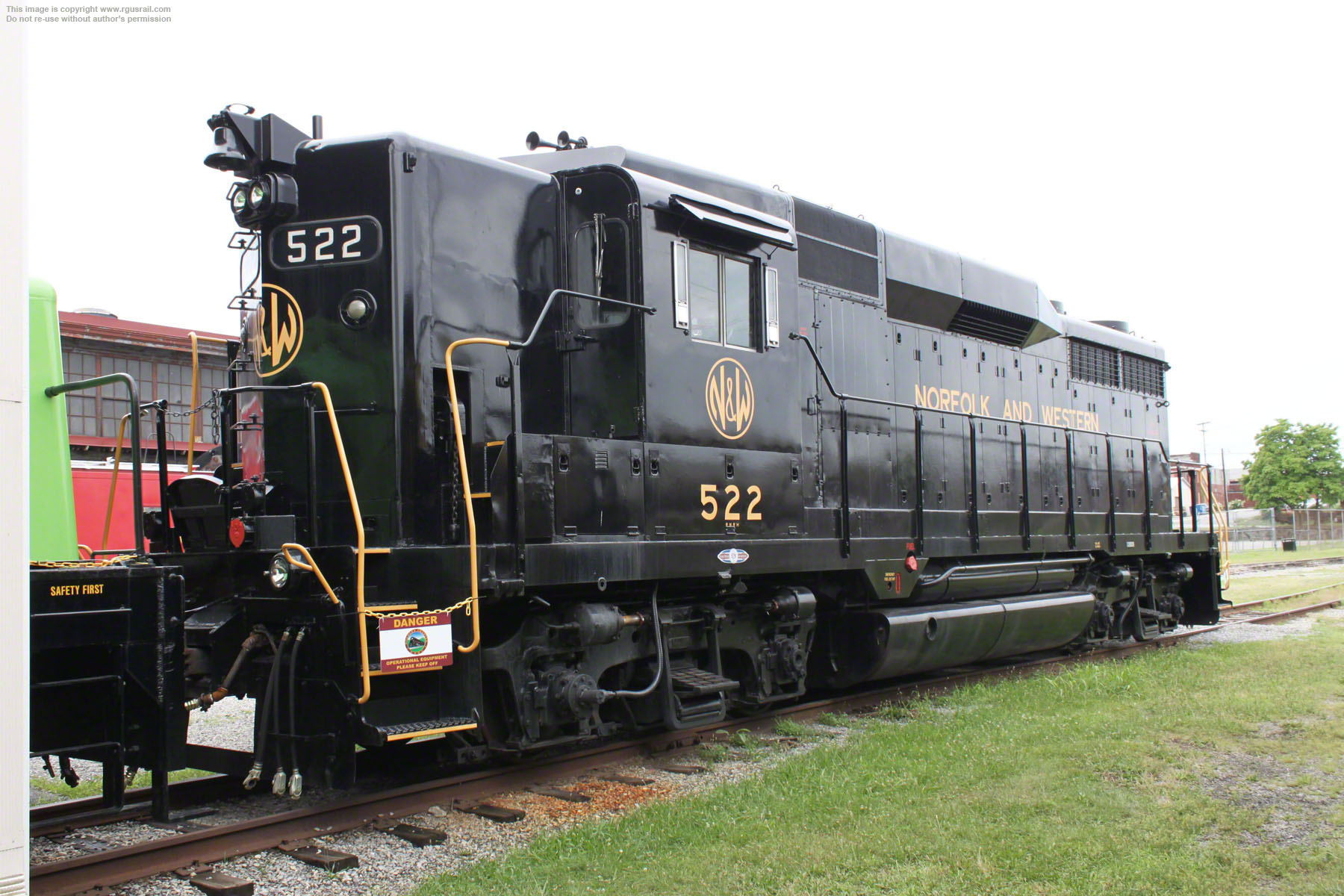


Norfolk & Western EMD GP30 # 522 was built in 1962, one of three hundred and six GP30s purchased by the N&W. It was retired in 1990, bought by the Roanoke Chapter of the NRHS and restored to operation in 2000-2002.
The GP30 updated elements of the GP20 but managed to get an extra 250 hp out of the 2,000 V16 EMD 567D3 powering a GM D22-B generator to drive four GM D57 traction motors, the GP30 could deliver starting tractive effort of 60,500 lbs at 25% and 50,000 lbs continuous tractive effort at 9.3 mph with a top speed of 65 mph.


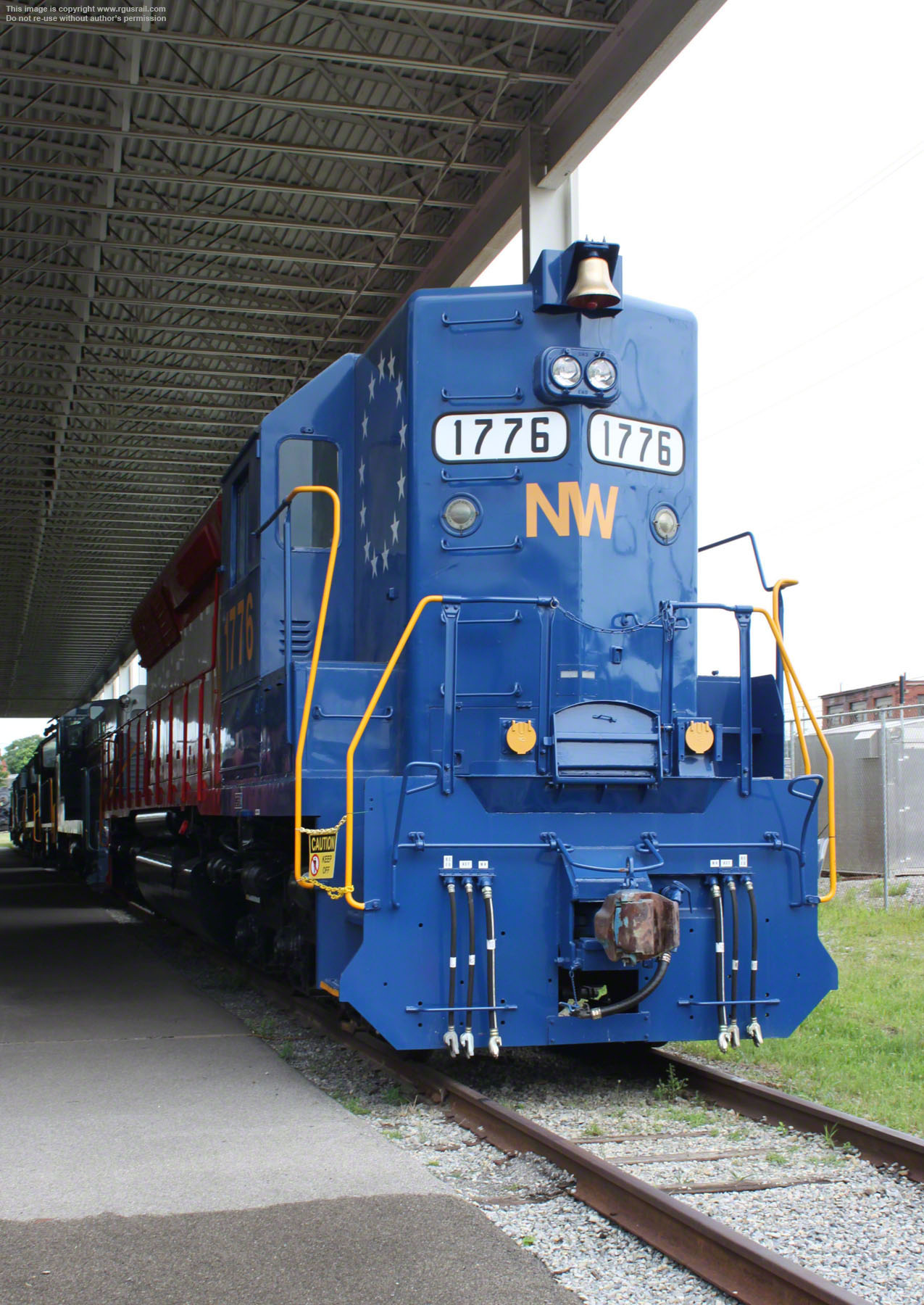
#1776 is a 3,600 hp, 205 ton EMD SD45 six axled diesel-electric built by EMD. One thousand, two hundred and sixty were built for US railroads between 1965 and 1971, including the Santa Fe, Great Northern, Northern Pacific and the N&W, which owned one hundred and fifteen.
Part of an order of twenty-five (#1765-#1789), it was delivered in February 1970. Repainted red, white and blue in May 1974 in celebration of the US Bi-Centennial, it went on a tour of the fourteen states in which the N&W operated with a coal hopper and piggyback trailer in similar colours.
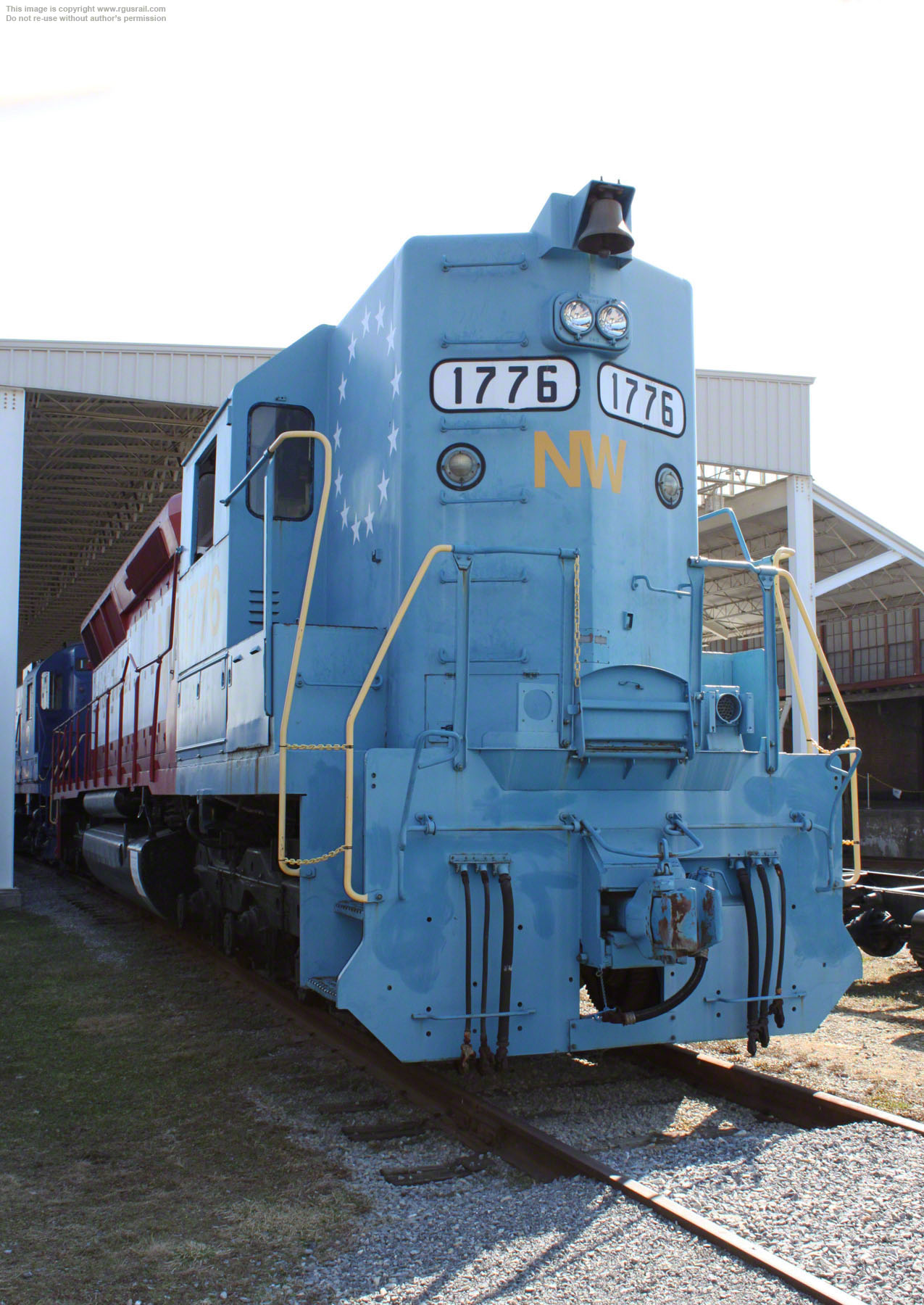


#1776 was one of many locomotives to feature Bi-Centennial themes at about this time. In November 1978, it was returned to a standard N&W black livery but, before donating it to the museum in 1990, Norfolk Southern repainted the locomotive in its Bi-Centennial scheme.
Weighing 368,000 lbs, #1776 is powered by an EMD 645E3 twenty cylinder prime mover with an AR10 main generator drivings six D77 traction motors. Starting tractive effort is 92,000 at 25% and continuous tractive effort is 82,100 lbs at 11 mph with a top speed of 65 mph.





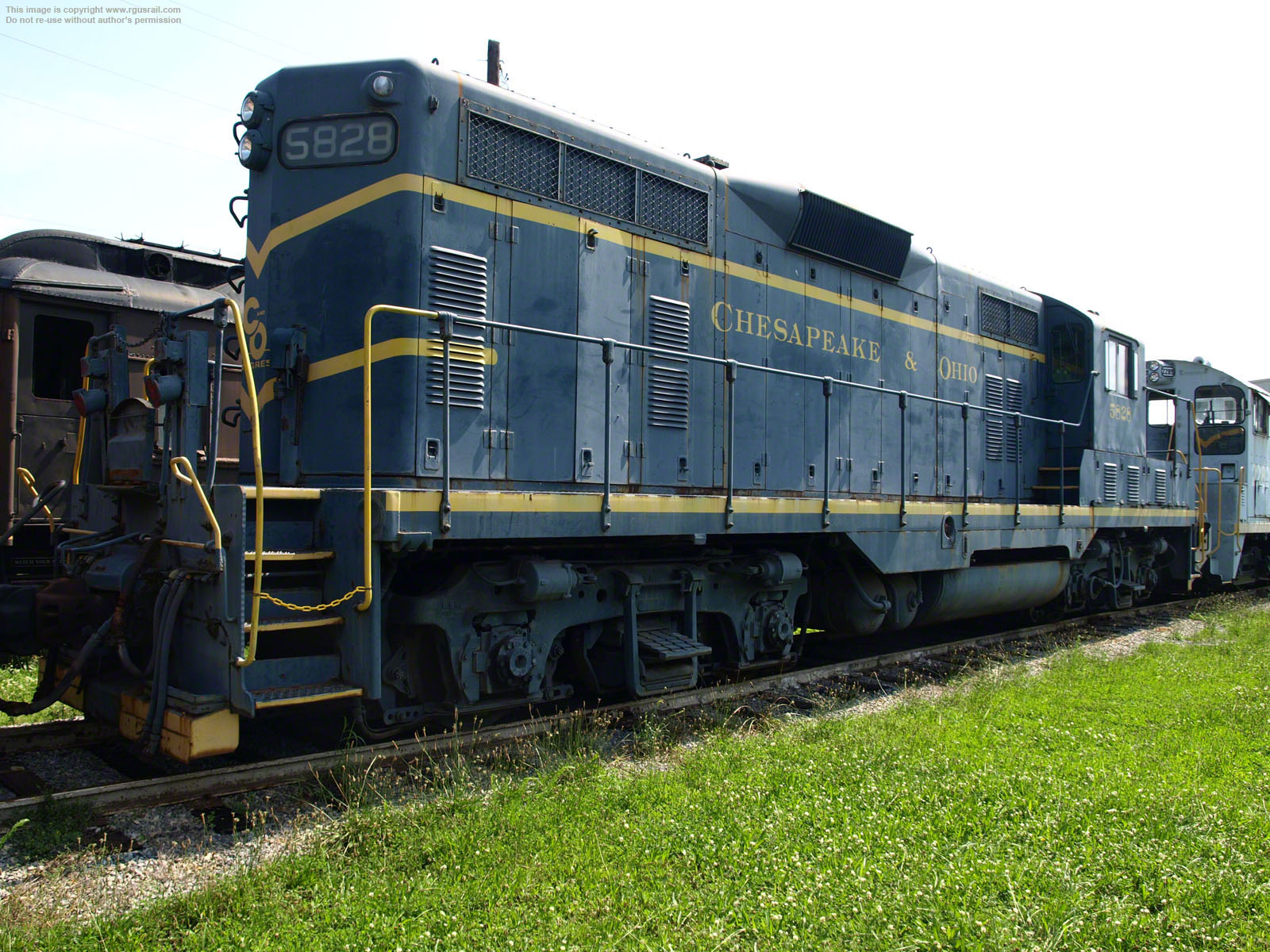
The GP7 is often credited with completing main line dieselisation in the US and was also offered without a cab. However, only five of these GP7B units were built in 1953, all for the AT&SF.
The unit is 55' 11" long and weighs 246,000 lbs. An EMD 567B 16-cylinder prime mover powers a GM D12 generator to drive four GM D-27B traction motors. It delivered starting tractive effort of 65,000 lbs at 25% and 40,000 lbs continuous tractive effort at 9.3 mph with a top speed of 65 mph.
One hundred and eighty GP7s were built for the Chesapeake & Ohio between 1950 and 1953. #5828 was one of seventeen delivered in 1952.
The GP7 was a versatile locomotive and astoundingly successful. Two thousand, seven hundred and twenty-nine GP7s were built by EMD and GMD between 1949 and 1954, two thousand, six hundred and fifteen were for US railroads, one hundred and twelve for Canadian and two for Mexican railroads.


#5828 was moved to Clifton Forge in 2009. You can see photos of it there on the C&O Railway Heritage Center page of this website. You can also see BO #6405 on the B&O Museum Yard and Car Shop page, CNW #4160 on the Illinois Railway Museum Yard page and NW GP7U #2185 on the Crewe Railroad Museum page. ACL GP7 #1804 shown on the Gold Coast Railroad Museum page is still operating.
A few GP7s can be hired to engineer at the Tennessee Valley Railroad in Chattanooga.


One hundred and seven GP9s were built for the Nickel Plate by EMD from 1955 to 1959. #532 was one of the last five built in 1959.
In 1966, it joined the N&W fleet and was renumbered #2532, subsequently becoming NS #1462.


#1462 was retired in 1984, donated to the museum and returned to its original NKP livery and number.
NW GP9 #521 is shown earlier on this page and NW GP9 #620 is on the North Carolina Transportation Museum page.

This is the "B" Unit of EMD's A-B set FT Demonstrator #103, built in 1939 to promote the locomotive as a freight-hauling diesel-electric. It was the first in EMD's highly successful F series. The "F" stood for freight and "T" for 2,700 hp. Later F units were simply numbered sequentially from F2 to F9.
#103 toured thirty-five states and twenty Class 1 railroads in 1939 and showed itself superior in operation and with lower running costs than steam freight locomotives, convincing many railroads to make the switch to diesel-electrics.
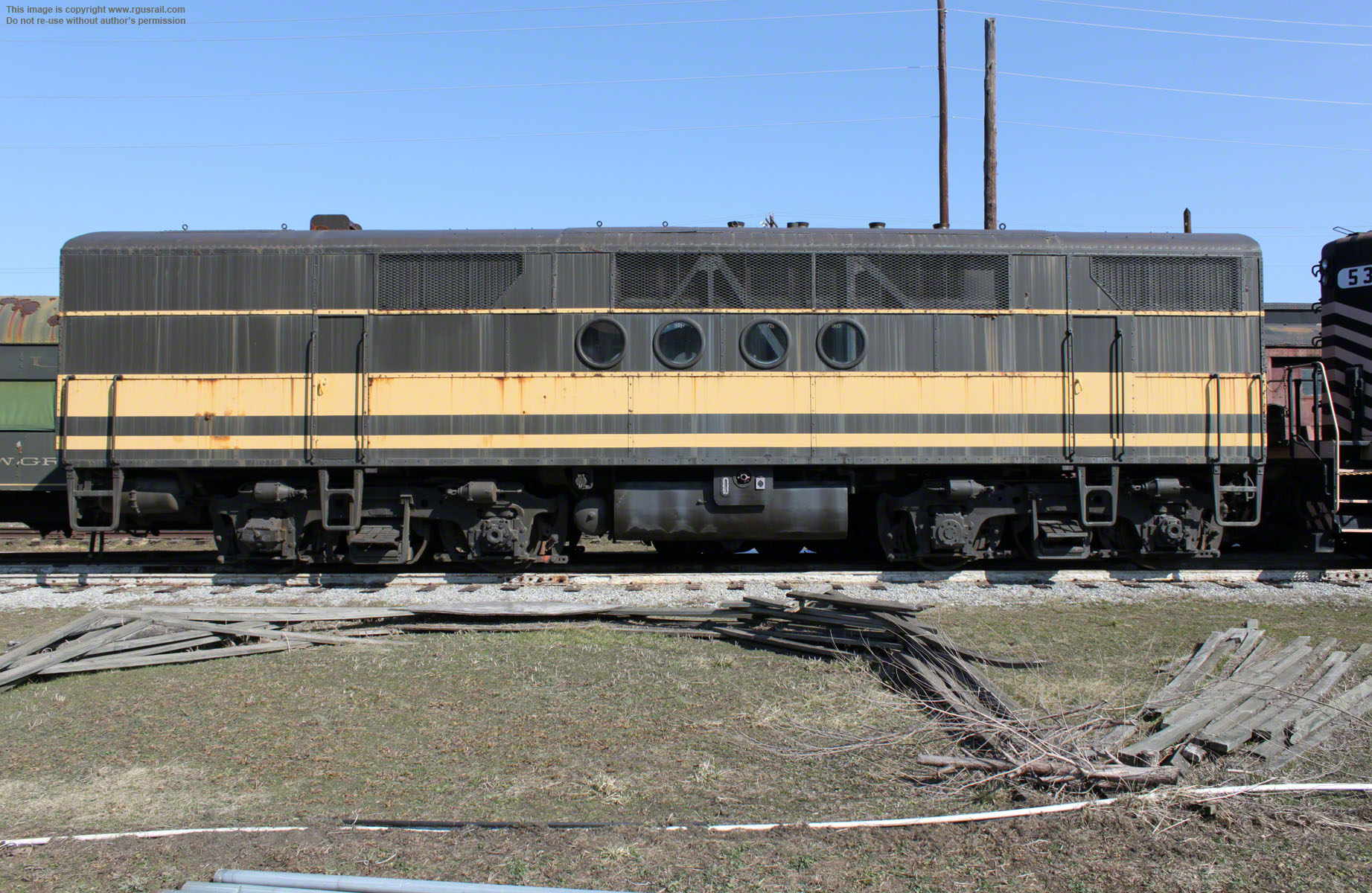

War time restrictions prohibited other manufacturers from building diesel locomotives but, as a diesel-only producer, EMD produced five hundred and fifty-five FT A units and five hundred and forty-one B units between 1939 and 1945, all for US railroads. The largest purchaser was the AT&SF, which bought one hundred and fifty-five A units and one hundred and sixty-five B. Multiple unit controls allowed all units in a consist to be run from one cab.
SOU FT B #960604 is on the Southeastern Railway Museum page of this website.
A single FT unit mustered 1,350 hp, but they were marketed as semi-permanently coupled A-B sets making a single locomotive of 2,700 hp. Many railroads also paired sets to make a four-unit A-B-B-A of 5,400 hp. With a 16 cylinder 567B prime mover powering a GM D12 generator to drive four GM D7 traction motors, each unit produced continuous tractive effort of 40,000 lbs at 9.3 mph.
#103 was sold to Southern Railway and came to the museum in 1985. #103's A unit is on the National Museum of Transportation, St. Louis Train Shed page of this website.


Wheeling and Lake Eire D-3 is an EMD NW2 1,000 hp switcher.
One thousand, one hundred and forty-five were built from 1939 to 1949, one thousand, one hundred and twenty-one for US railroads and twenty-four for Canada. Four went to the W&LE.
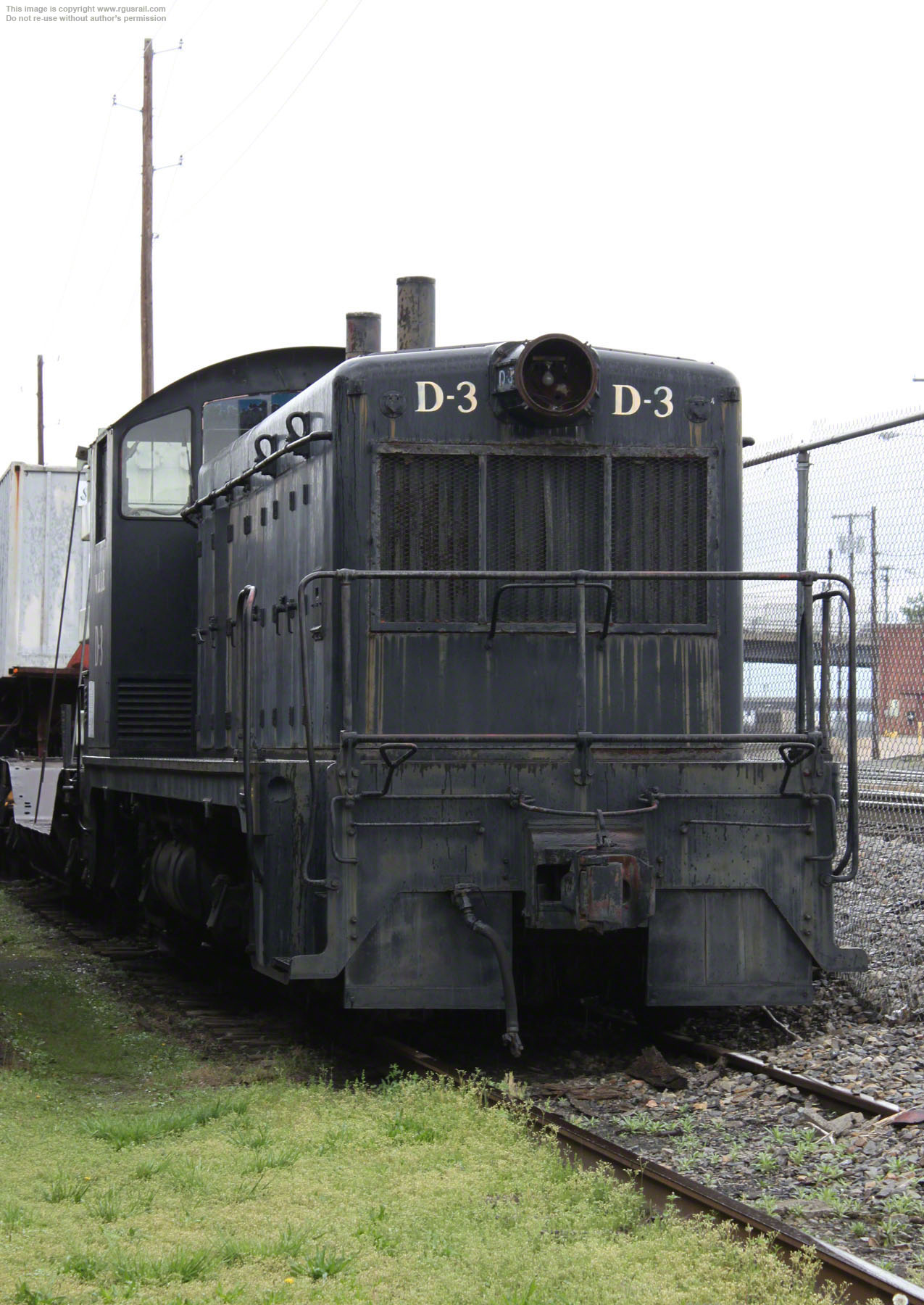

Distinguishing features of the NW2 are the half-height front radiator grille and the two stacks, just visible in the photo above.
D-3 was delivered to the W&LE in June 1941. It was then leased to the Nickel Plate in 1950 as #97, and went to the Wabash in 1961.
When the Wabash was acquired in 1964, #97 joined the Norfolk & Western roster, but was sold to the Celanese Corporation in 1966 and worked as "NW2" at the Celco Plant in Pearsburg, VA, until retired in 1987.
It was donated to the museum in 1988.


#2289 is one of twenty EMD SW9 switchers built for the Louisville & Nashville between 1950 and 1953. An EMD 567C prime mover powered a GM D15C generator to drive four GM D37 traction motors, one on each axle. It delivered 62,500 lbs starting tractive effort at 30% and 43,000 lbs continuous tractive effort at 11 mph with a top speed of 65 mph.
From 1950 to 1953, seven hundred and eighty-six SW9s were built by EMD for US railroads
and twenty-nine by GMD for Canadian
railroads.
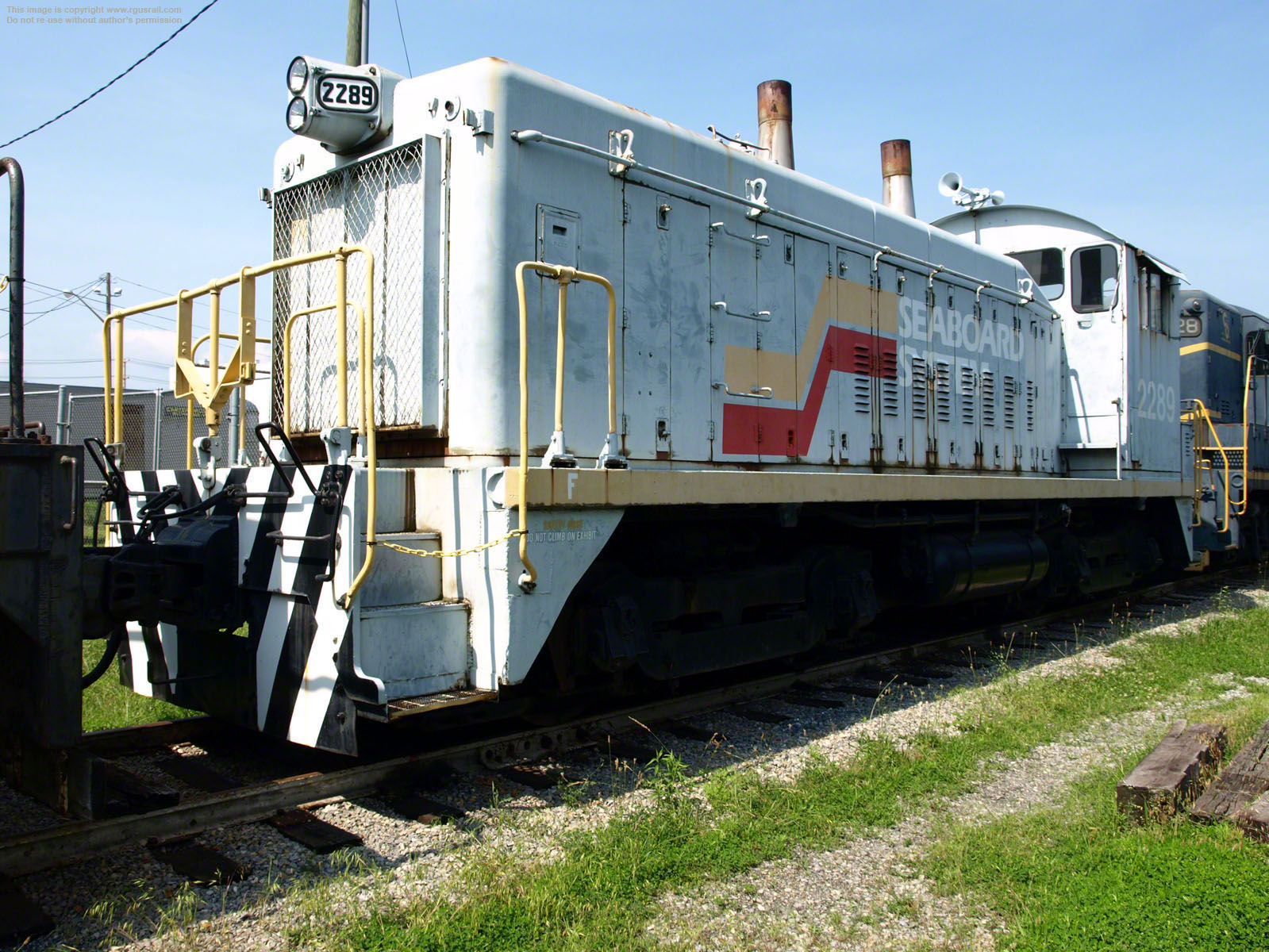


In 1971, the Seaboard Coast Line Railroad, successor to the Atlantic Coast Line, purchased the remainder of the Louisville & Nashville shares it did not already own, and the company became a subsidiary.
The Seaboard System Railroad, successor to Seaboard Coast Line, then absorbed the Louisville & Nashville entirely. Some time during that process, #2289 was repainted in the SBD livery. Finally, in 1986, Seaboard was absorbed into the newly named CSX Transportation system.

#3 is a 50 ton diesel-electric switcher built by H. K. Porter in Pittsburgh, PA, for the Virginia Central, the ex-narrow gauge (36") Potomac, Fredericksburg & Piedmont Railroad, which originally operated thirty-eight miles of track between Fredericksburg and Orange, VA.
In 1926, the Potomac, Fredericksburg & Piedmont was converted to standard gauge and its name was changed to the Virginia Central Railway. In 1938, the entire line was abandoned except for a one mile segment in Fredericksburg which survived until 1983.


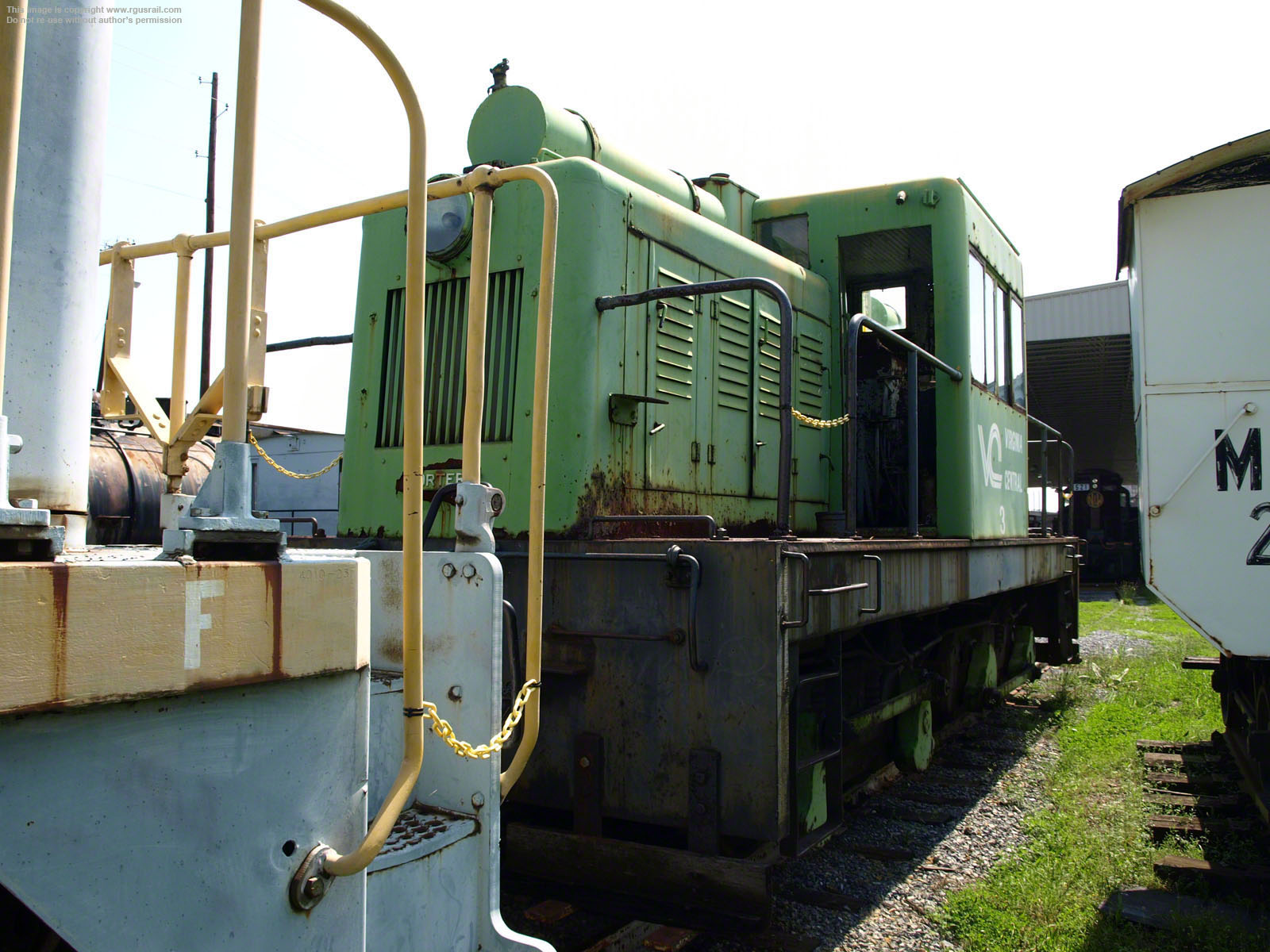
#3 appears to have been donated to the museum some time after the main segment of the VC ceased operations.
H. K. Porter started producing light-duty railroad engines in 1867 in partnership with John Y. Smith as Smith & Porter. The partnership was dissolved in 1871 following a fire at the Pittsburgh works. Porter then formed a partnership with Arthur W. Bell, called Porter, Bell & Company, building light passenger and small freight engines. After Arthur Bell died in 1878, Porter continued on his own as H. K. Porter & Company.

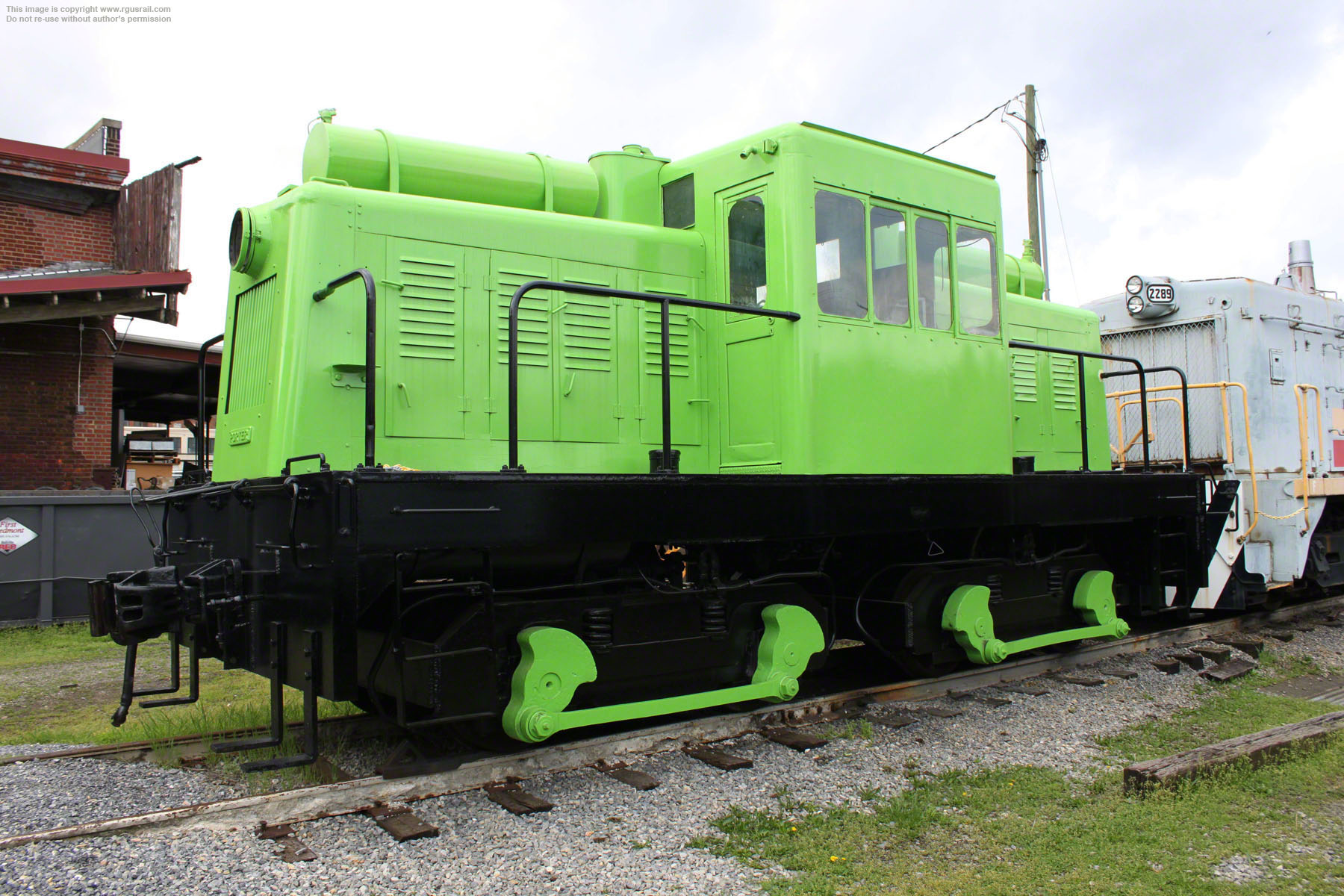

The company built almost eight thousand locomotives until the last was outshopped for a Brazilian company in 1950.
The company
continues to produce industrial equipment to this day, including hydraulic and pneumatic cutters.
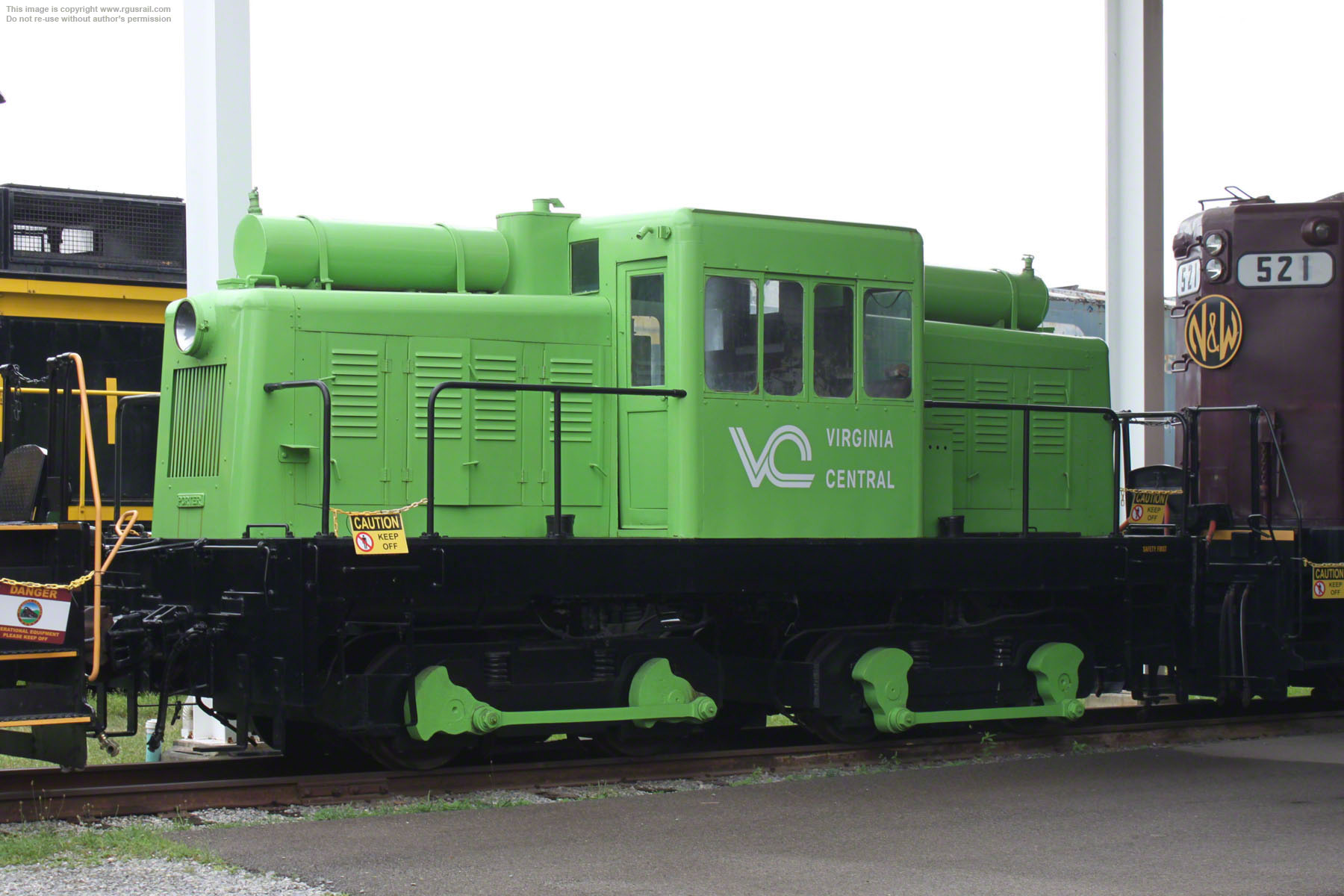

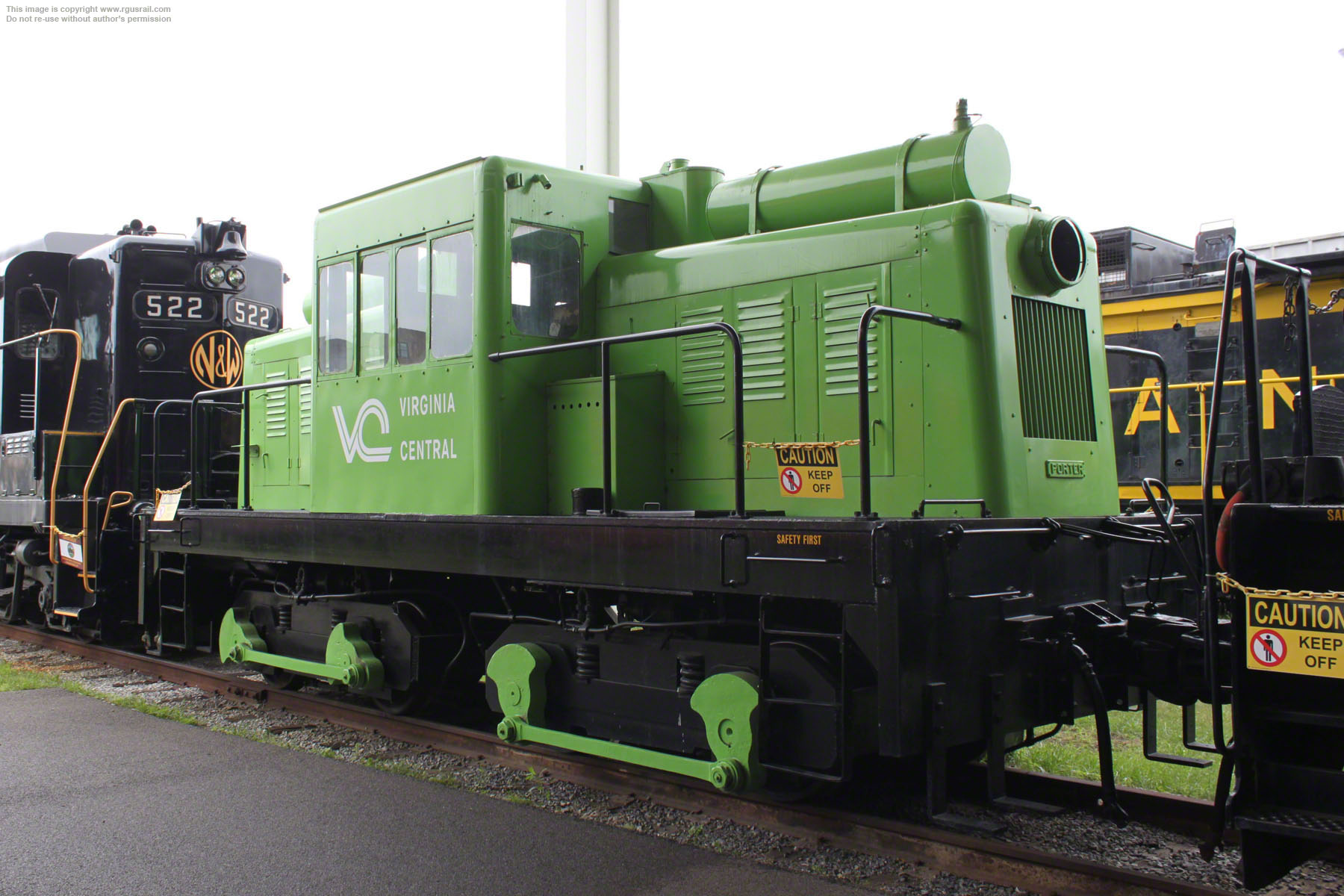

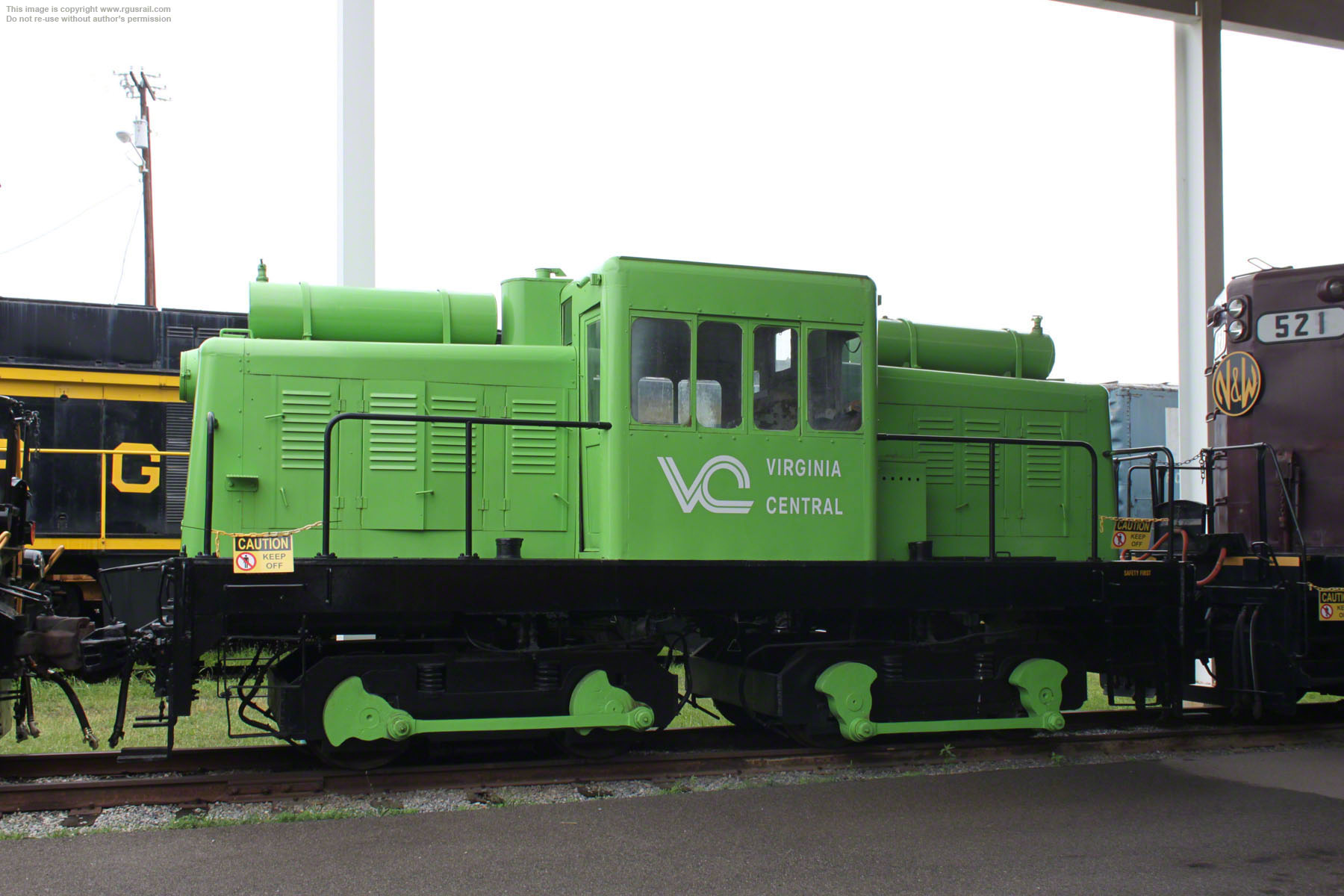

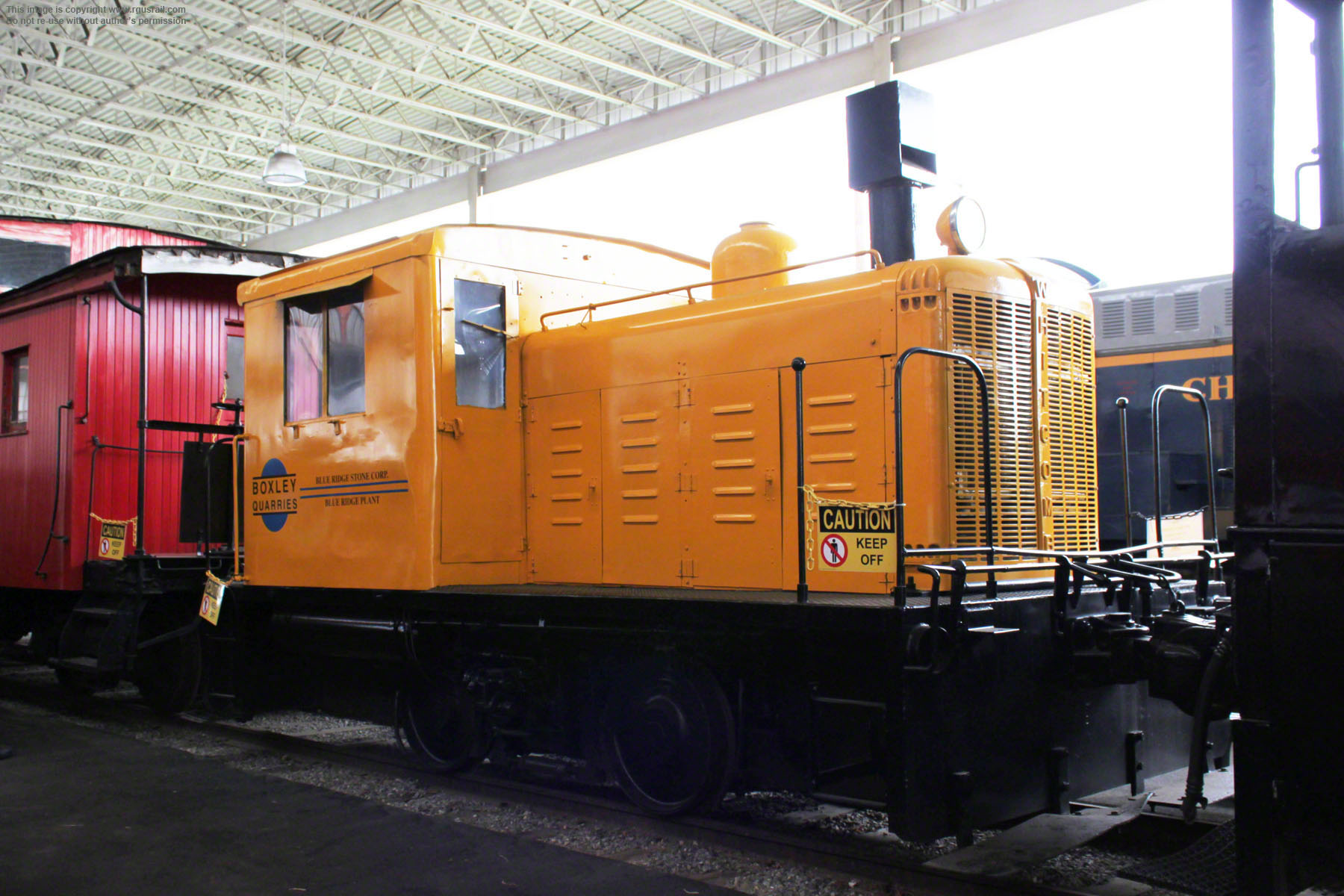
This 30 ton switcher was built by the Whitcomb Locomotive Works in Rochelle, IL, in 1941 for Houston Shipbuilding. At some point, it was purchased by Blue Ridge Stone and worked as a switcher at the company's complex in Roanoke, VA.
Blue Ridge Stone was part of the Boxley company founded by William Wise Boxley. Boxley partnered with J. C. Carpenter to build railroads, working on the New York Central, C&O, B&O and N&W. In 1908, the pair opened their first quarry.


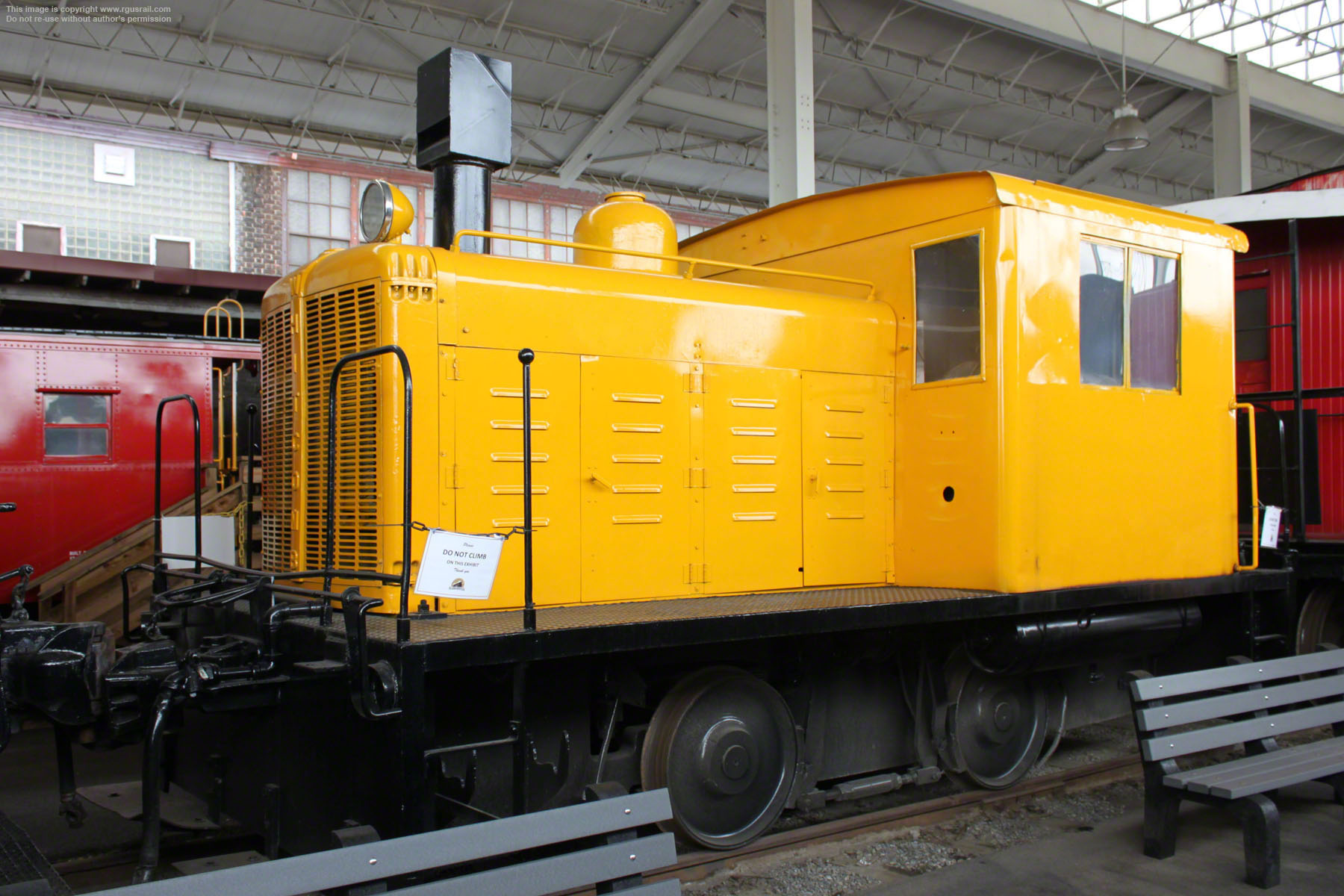
Whitcomb built small gasoline and diesel electric switchers.
Founded in 1907, the company was bought by Baldwin in 1929. Production shifted to Baldwin's Eddystone, PA, site in 1952 and the last Whitcomb locomotive was built there in 1956.

The Blue Ridge Stone Company opened in 1917.
Boxley eventually ceased railroad construction, although production of ballast and crushed stone continued, and the company has continued to diversify into the 21st Century.

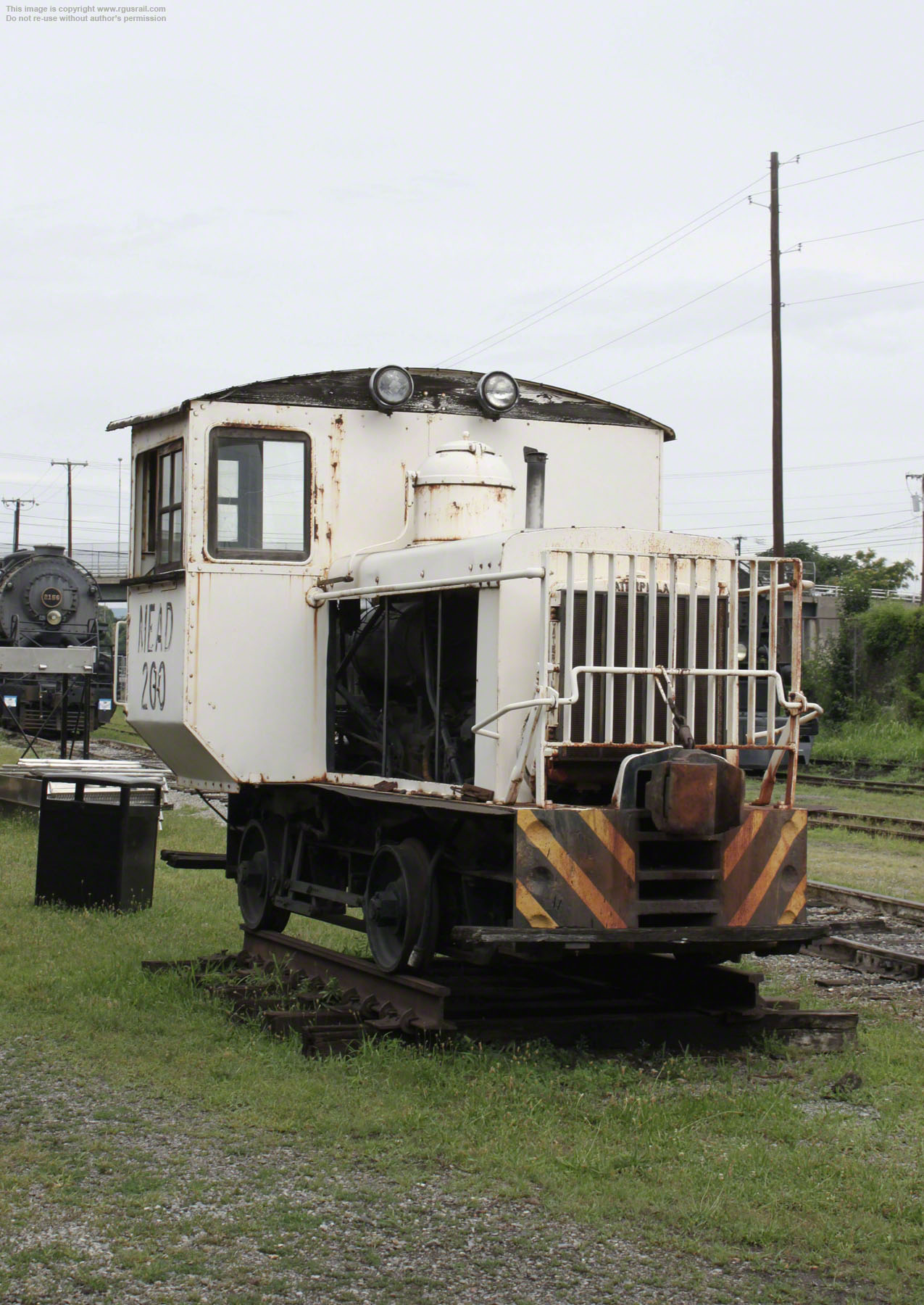


Not much seems to be known about this little narrow gauge (36") switcher built in 1935.
It is a diesel engine: traction is supplied directly from the motor to the wheels, rather than through a diesel-powered electric generator driving traction motors.
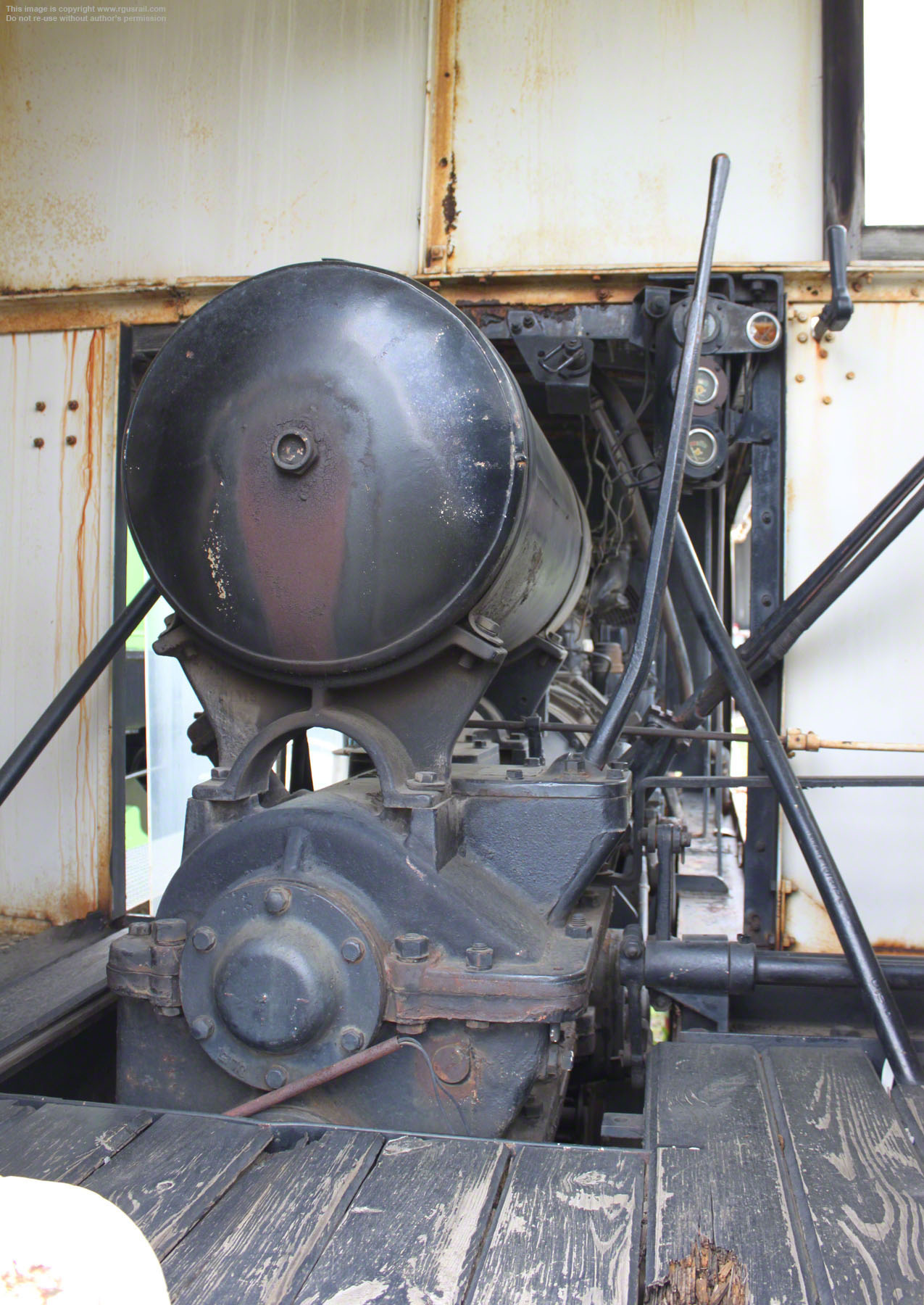


#200 worked at Mead Paper Mills in Lynchburg, VA, until retired in 1981. It was then donated to the museum by Mead Corporation. Since it had undergone some changes in its forty-six years with the company, Carter Machinery of Salem, VA, later restored it to its original condition.
Mead Paper Mills started out as Heald's Bark Mills in 1846 with a large paper manufacturing factory on the Lynchburg River, and adopted the name Mead in 1882. It has survived a number of acquisitions and mergers and is today part of the Rock-Tenn Company.


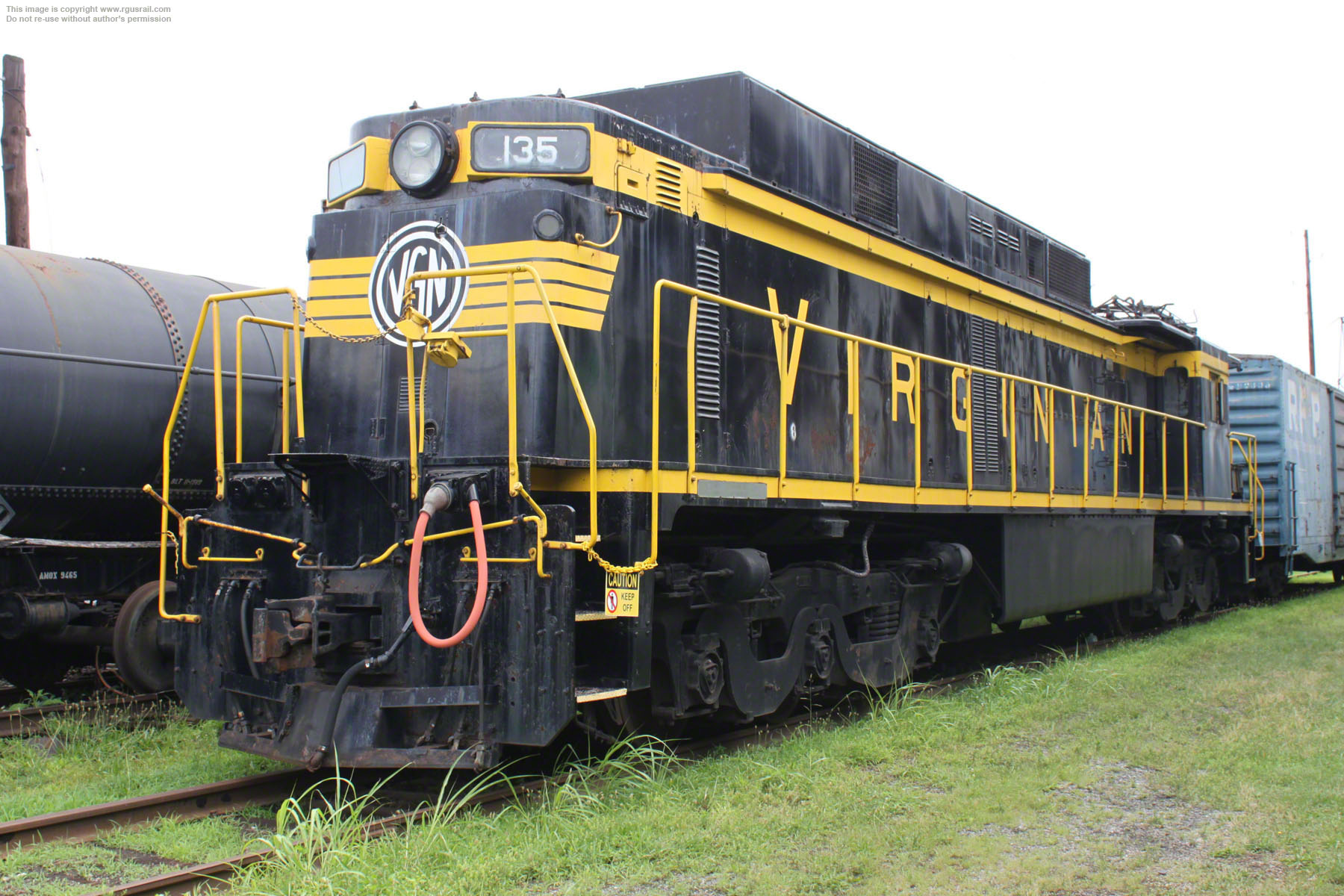
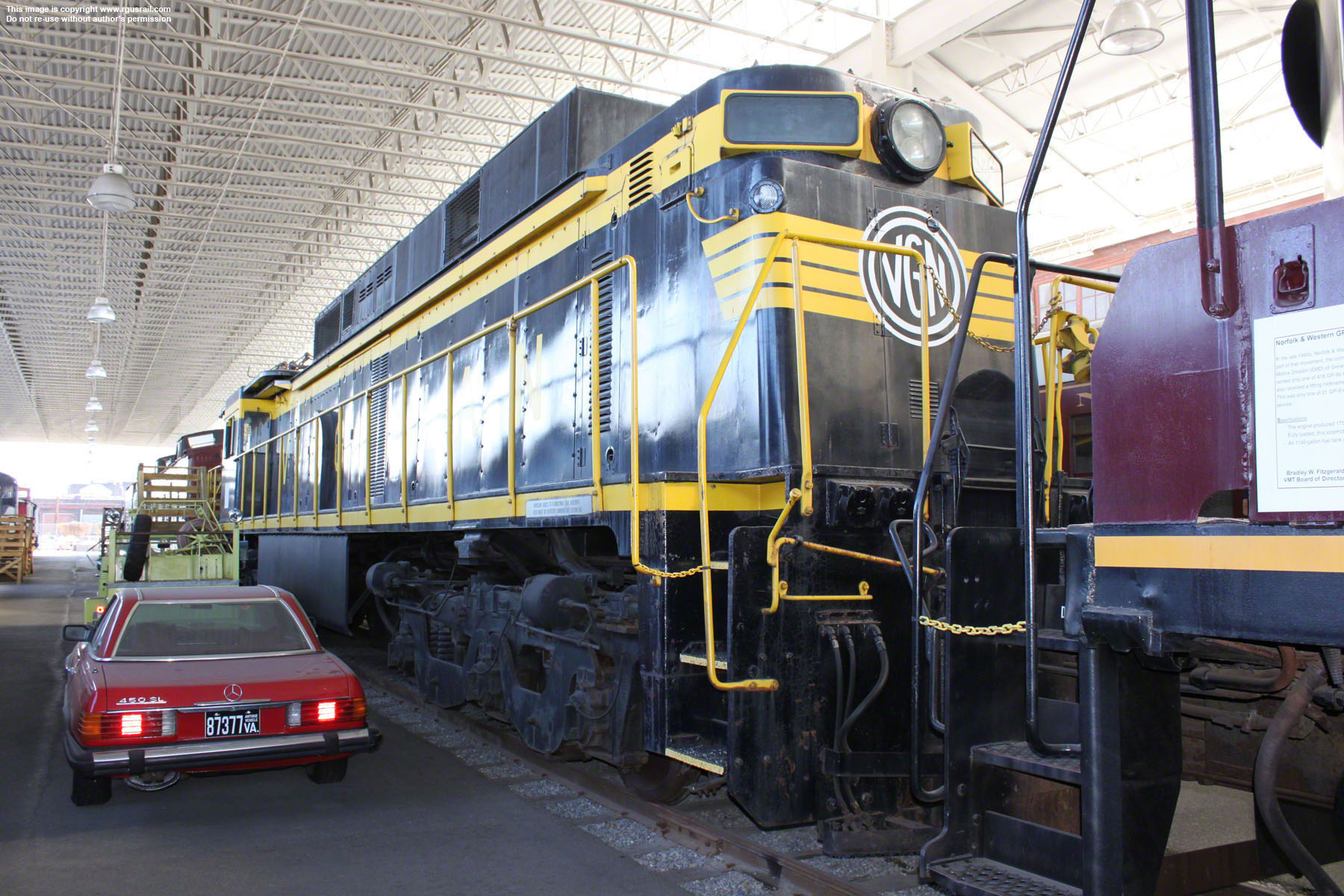
#135 was one of twelve 3,300 hp EL-C class electric locomotives built by General
Electric for the Virginian Railroad between 1956 and 1957 (#130-#141).
The VGN had electrified its one hundred and thirty-three mile line from Roanoke, VA, to Mullins, WV, in 1925, and these were to be the most advanced electric motive power the railroad owned.
At 69' 6" long and 348,000 lbs, they delivered 98,000 lbs tractive effort with a top speed of 65 mph, hauling coal trains over the southern part of the system.



The EL-C was powered by a water-cooled
ignitron rectifier, an electron cylinder filled with
gas with a pool of mercury at the bottom through which an AC current was passed to produce DC pulses. Westinghouse was the original manufacturer and owned trademark rights to the name "Ignitron".
The EL-C design was used as the basis for Penny's E-44 units built between 1960 and 1963 and you can see one of these, PRR E-44 #4465, on the Railroad Museum of Pennsylvania Train Shed page of this website.
The VGN merged with the Norfolk & Western in 1959. The N&W saw diesels as the future of motive power, and electrification was discontinued in 1962. The EL-Cs were then sold to the New York, New Haven & Hartford in 1963.
Reclassified as EF-4s #300-#310 (one unit was used for spare parts for the other eleven) on the New Haven, ten of the remaining EL-Cs survived on the Penn Central as well as its successor, Conrail, where they were reclassified E-33 #4601-#4610. They were finally retired in 1981 when Conrail ended its electrified operations.


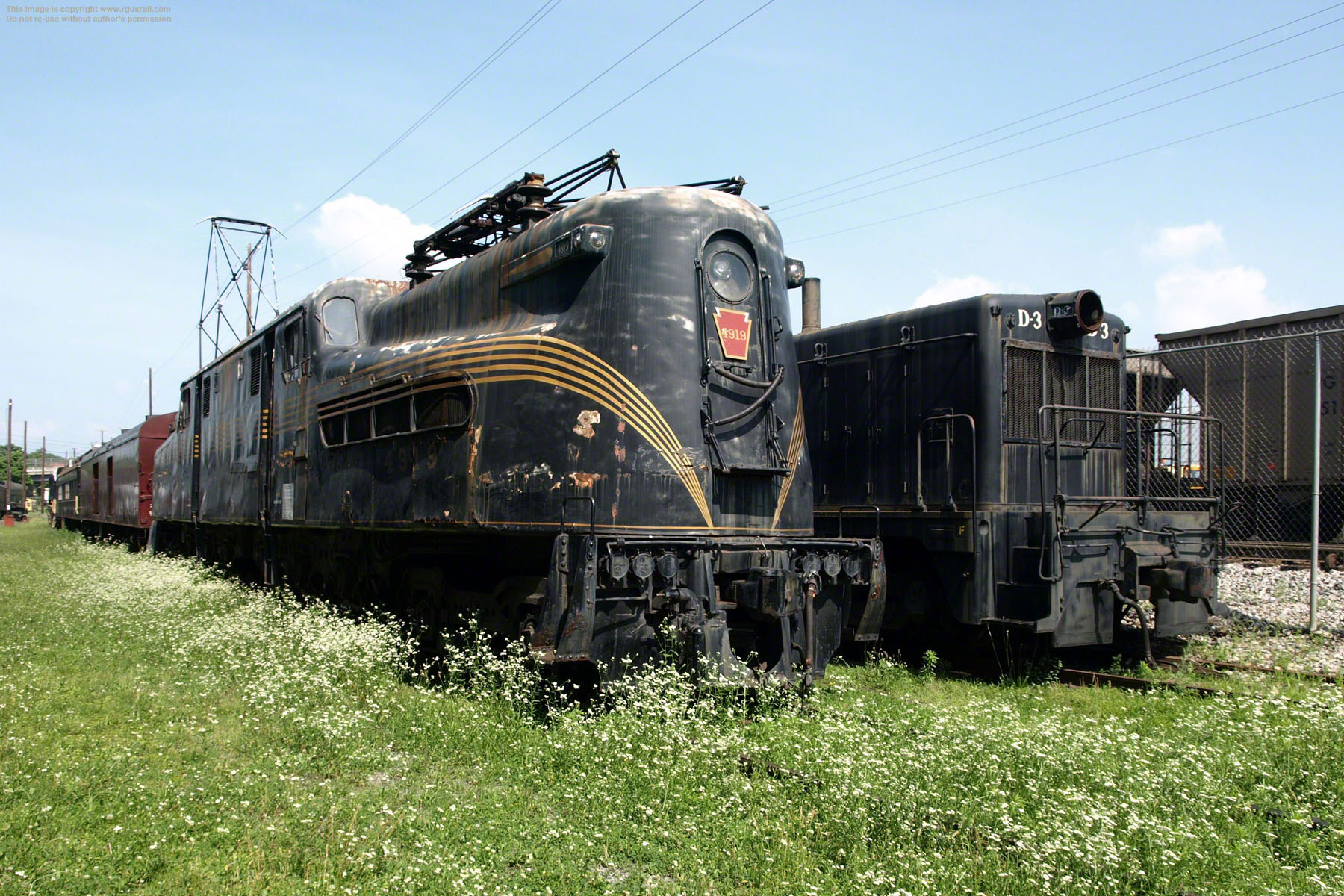

GG1s were geared to operate at 110 mph hauling PRR's main line passenger trains between New York, NY, Washington, DC, and Harrisburg, PA, over the six hundred and fifty-six miles of the system that had been electrified by 1938. They were also geared for lower speeds to haul freight.
The GG1 was the longest serving class of locomotive in the world, including steam and diesel: eight still hauled daily New Jersey Transit runs in 1983. They were also the fastest US catenary-supplied electric locomotives until Amtrak's Metroliner arrived in 1969.
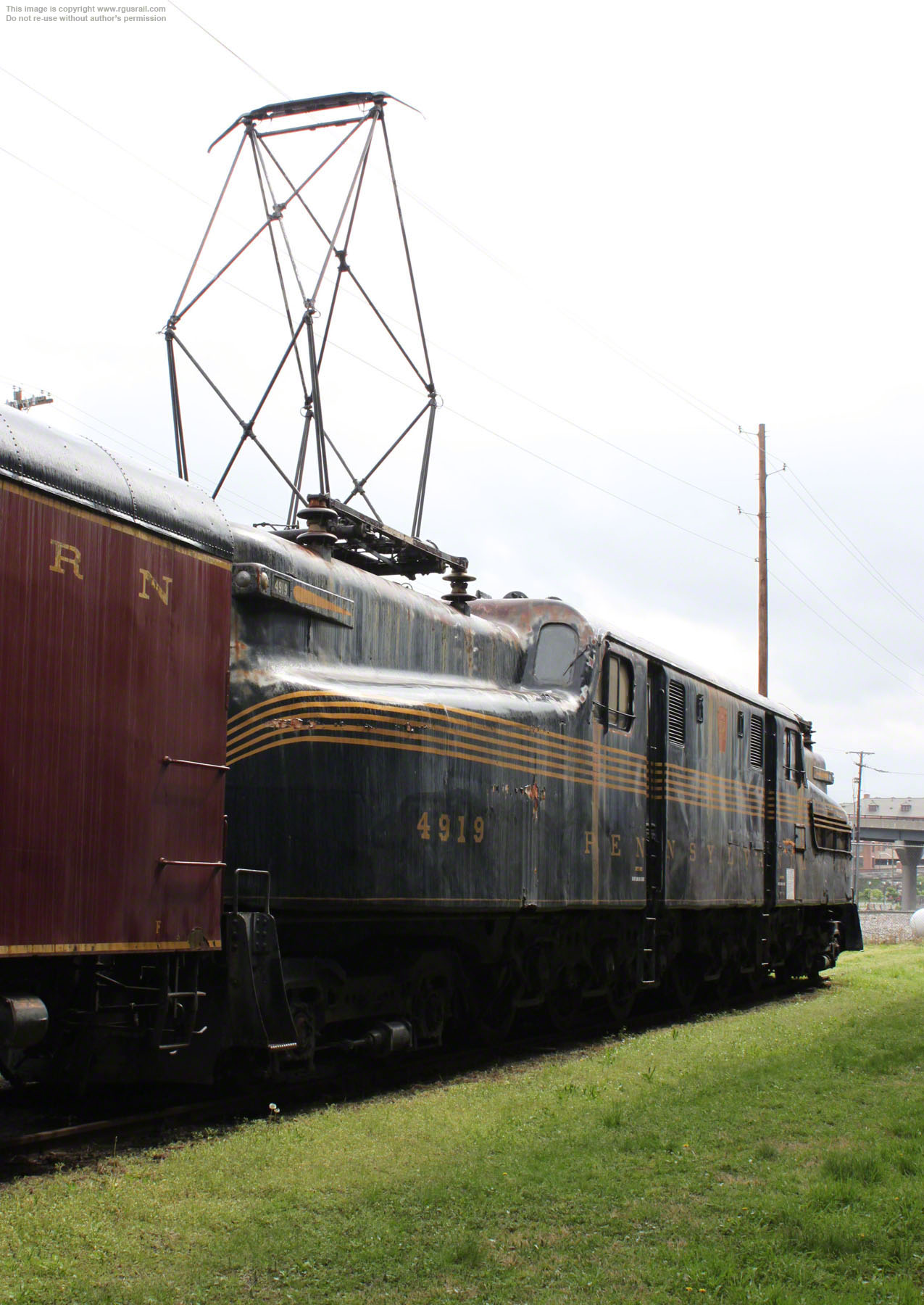
Originally #4917 when delivered from PRR's Juniata Shops in Altoona, PA, in June 1942, a general renumbering by Penn Central in June 1973 made this GG1 #4934 and, later, #4919.
#4919 operated under Pennsy, Penn Central, Conrail and Amtrak until retiring in 1979. You can see the first GG1, #4800 on the Railroad Museum of Pennsylvania Yard page of this website. There are other GG1s on the National New York Central Museum, Illinois Railway Museum Train Shed, Museum of the American Railroad and National Railroad Museum pages.


Until recently, #4919 had the original Brunswick Green coloured body, with the PRR standard Clarendon lettering. Prior to 1942, the lettering was Futura style.
When I last visited, the unit sported a dark blue coat of paint.



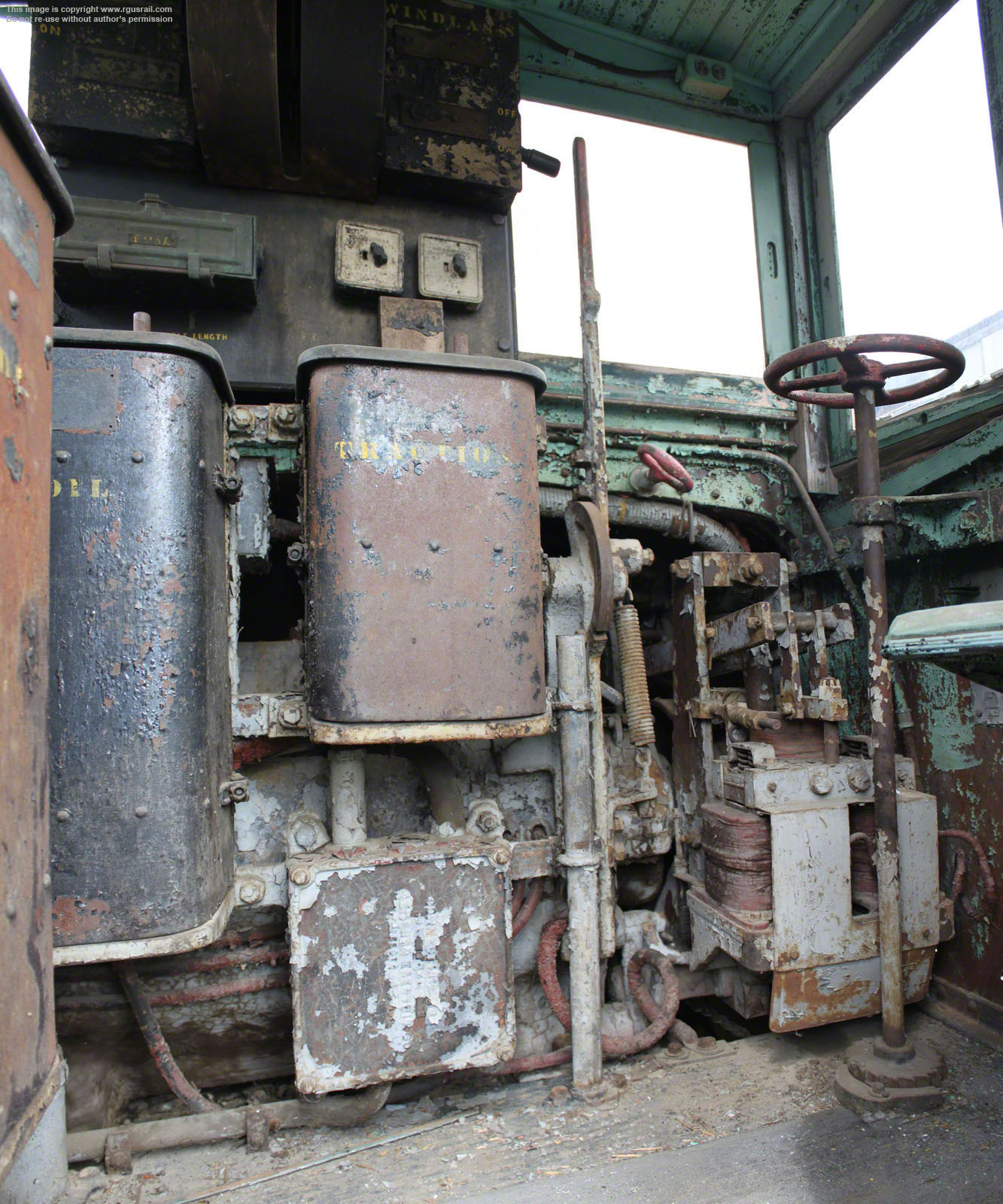

This is one of forty units built by GE in 1914 for the Panama Canal Company. It ran along rails parallel to the canal, pulling ships through the Gatun, Pedro Miguel and Miraflores locks at the west end.
These so called "mules" were actually used for side-to-side and braking control in the narrow locks, with forward motion provided by the ships' engines. Each mule had a winch operated by the driver, which was played in or out to keep the ship centred in the lock while moving from chamber to chamber. The mules run on rack tracks, to which they were geared. Only three or four "mules" have survived.
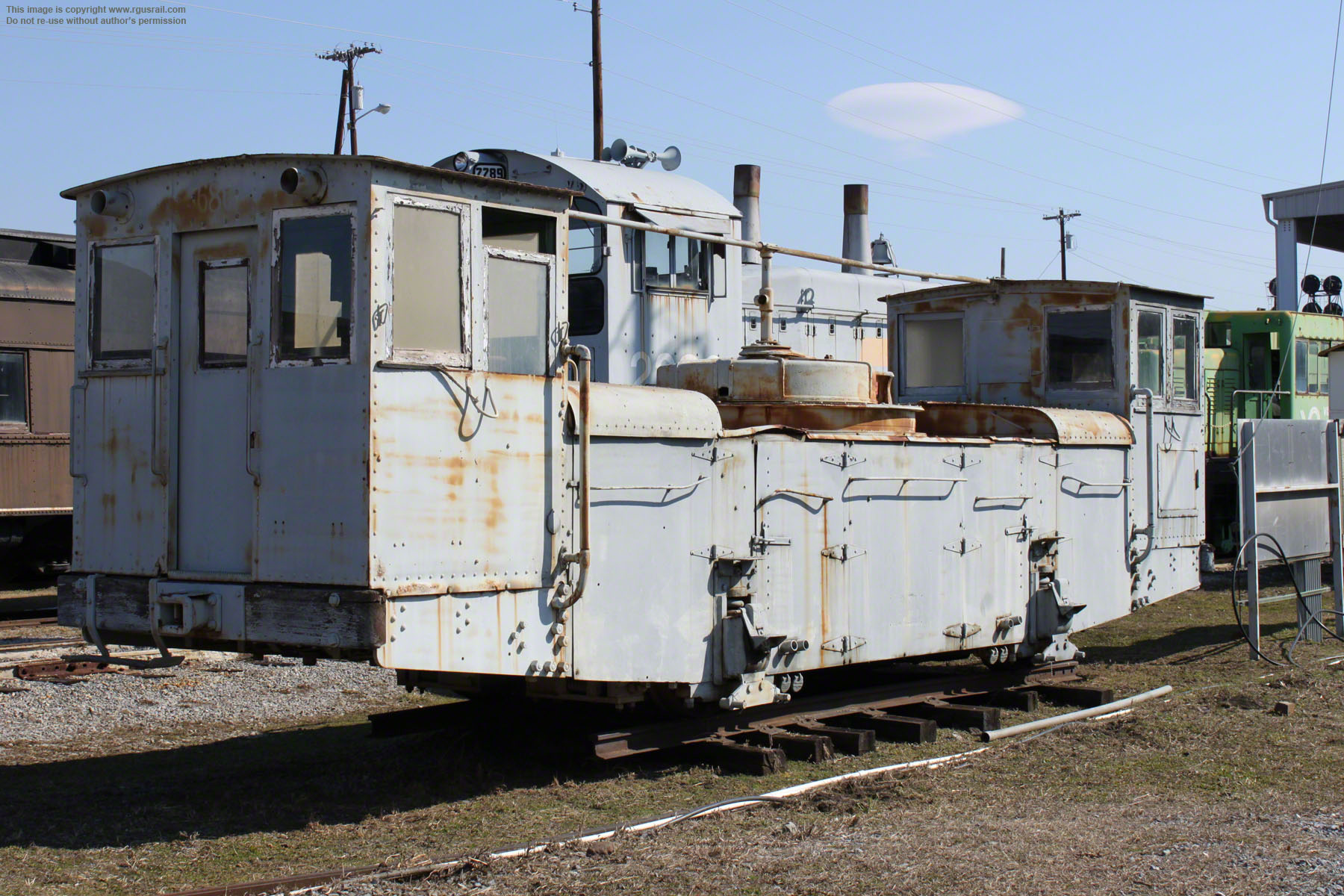


250 ton rail derrick #514925 was built by the Industrial Brownhoist Division in Bay City, MI, in 1948 for the Norfolk & Western. #514925 retained its number when the N&W amalgamated with Southern to form Norfolk Southern in 1982.
The crane was moved to the museum in 2000 and is displayed with Norfolk Southern flatcar #NW590374. Both crane and cars were used at derailments or where other heavy lifting was called for. The raised box at the front of the flat car carried tools and other equipment used at wreck sites.


A number of Industrial Brownhoist cranes have been preserved at different museums in the US.
You can see more of these on the Ogden Union Station page of this website, the Baltimore & Ohio Railroad Museum Yard and Car Shop page, the Pennsylvania Railroad Museum Yard page, the Gold Coast Railroad Museum page, and the Monticello Railway Museum, Orange Empire Railway Museum, Illinois Railway Museum Yard and Lake Superior Railroad Museum pages.
Industrial Works was founded in 1873 in Bay City, MI, initially doing equipment repairs for the many local sawmills.
They built their first crane for the Chicago & Western Illinois in 1883 and became a major producer of cranes for countries around the world.

Industrial Works merged with the Brown Hoisting Machinery Company in September 1927 to become the Industrial Brownhoist Corporation with headquarters in Cleveland, OH. in 1931 the Cleveland plant was closed and all crane manufacturing was consolidated at Bay City. American Hoist & Derrick bought Industrial Brownhoist in 1960 and continued to build rail cranes at Bay City until 1983.
Its cranes were used at sea ports, construction sites and mines.


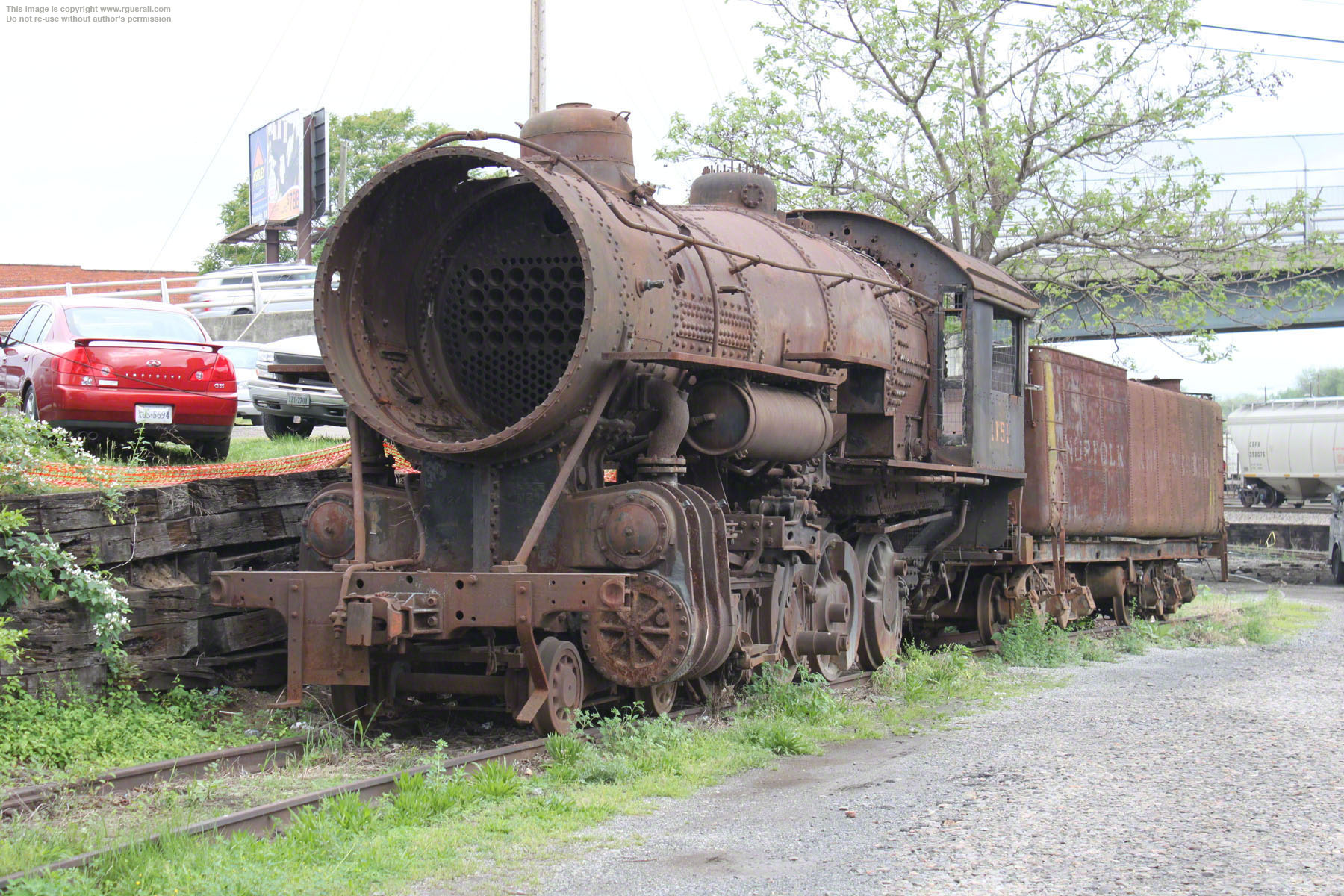
Above, Norfolk & Western M2c #1151 stands in the yard just outside the museum grounds. It is one of five surviving Norfolk & Western M Class Twelve Wheeler (4-8-0) locomotives.
Retired and sold to Virginia Scrap Iron & Metal in 1950, along with M2 #1118, M2c #1134 and W2
(2-8-0) #917, the so called "Lost Engines of Roanoke" languished in the company's Roanoke, VA, yard in South Jefferson St for nearly fifty years, later joined by Baldwin built Chesapeake Western DS-4-4-600 switchers #662 and #663, along with other rolling stock and tenders.

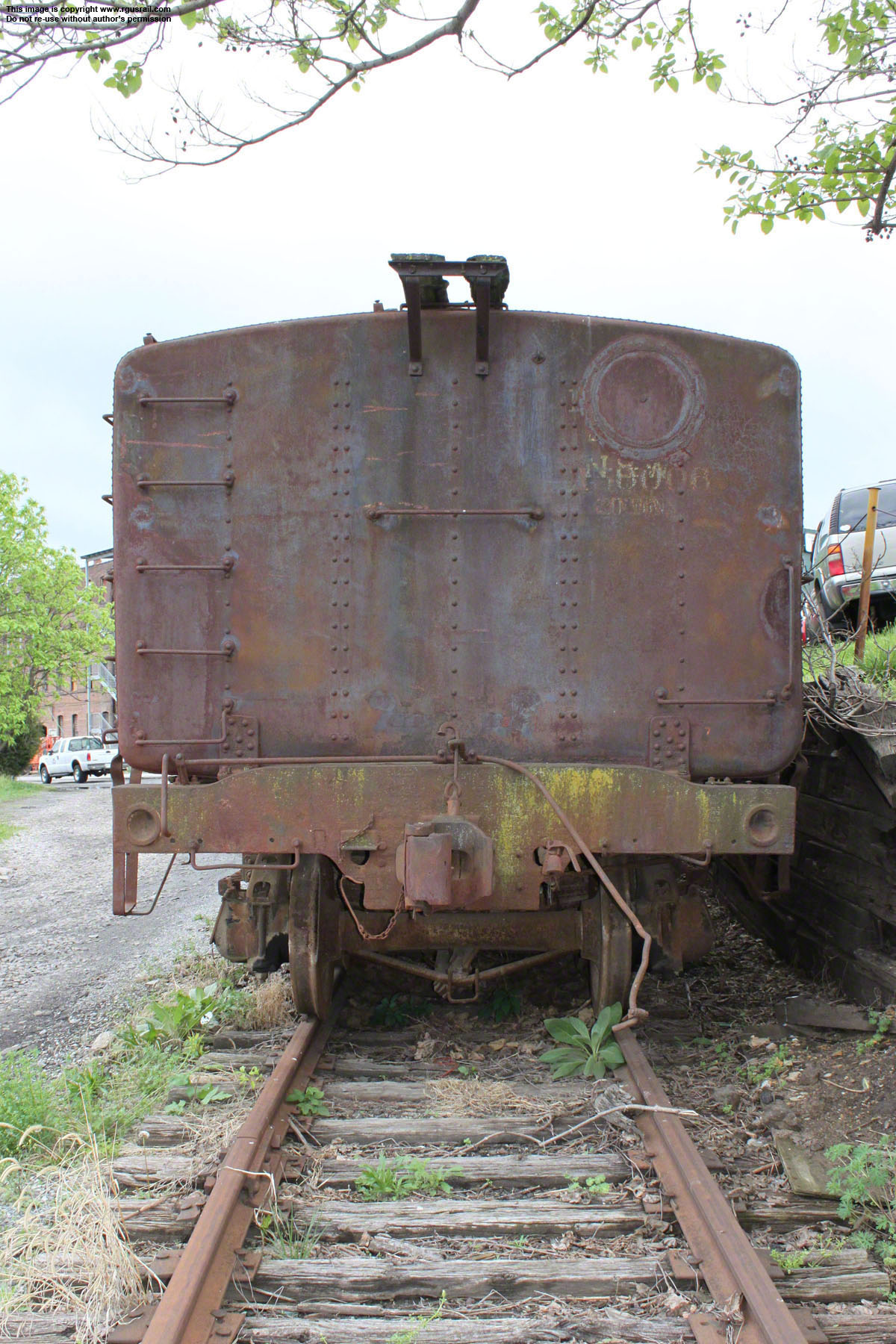

In 1997, however, momentum grew for the locomotives' reclamation. Finally, in August 2009, all three were moved out of the Virginia Scrap Iron & Metal yard destined for restoration.
#1118 went to the NRHS Roanoke Chapter's 9th Street Yard in Roanoke, VA, while #1134 went to the Virginia Railroad Museum in Portsmouth, VA (you can see photos of it on the NW #1134 page of this website). #917 has also found a new home at the Buckeye Express Diner, 810 State Rt. 97 in Bellville, Ohio.
The M Class was designed to haul freight and coal over the Blue Ridge Mountains in Virginia. Seventy-five Ms were supplied by Alco and fifty by Baldwin in 1906 numbered #375-#499. The following year, another fifty were ordered from Alco and fifty from Baldwin designated M1 and numbered #1000-#1099. These were supplied with Walschaert gear in place of the M Class's Stephenson gear.
They were the heaviest Twelve Wheelers ever built, and were the only non-articulated steam freight locomotives on the N&W roster
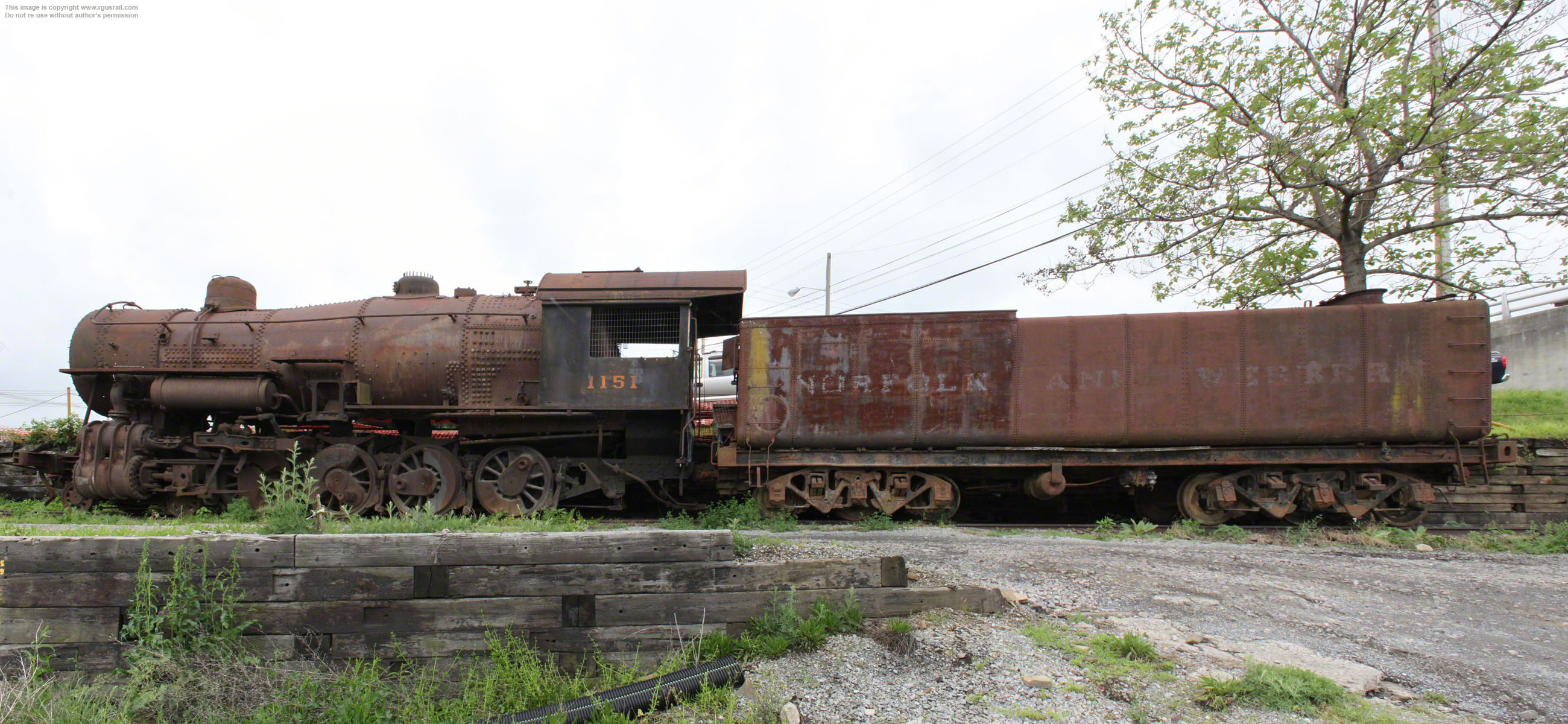


In 1910, fifty more 4-8-0s were ordered from Baldwin designated M2, while the Roanoke shops built three M2a, two M2b and six M2c class locomotives. The Baldwin locomotives had Walschaert valve gear, but the Roanoke built 4-8-0s had Baker valve gear, soon to become standard on the N&W. Many of these were later fitted with superheaters and mechanical stokers. Colloquially known as "Mollies" by their crew, the M2s were not particularly popular because of their rough riding and poor steaming, probably caused by the relatively small heating surface.
The engine weighs 206,200 lbs, 169,800 lbs on its 56" drivers, with a 26' 5" engine and 15' 6" driver wheelbase. It has 21" x 30" cylinders, a 45 sq ft grate, 173 sq ft firebox and total heating surface of 2,797 sq ft. Operating at a boiler pressure of 200 psi it delivered 40,163 lbs tractive effort. The tender weighs 167,500 lbs light and has a capacity of 10,000 gallons of water and 10 tons of coal.


The museum is located alongside what was, until early 2013, Norfolk Southern's Roanoke Classification Yard. The yard was still in use when I last visited and there was plenty of action to see, but operational improvements have since freed up network capacity so that the Roanoke classification yard is no longer required.
Above, NS EMD SD40-2 #3224, NS EMD GP59 #4626 and NS EMD SD40-2 #1651 idle just beyond 5th St Bridge near the western end of the museum grounds. NS EMD GP38-2 #5098 sits back beside NW #144509 coal car.
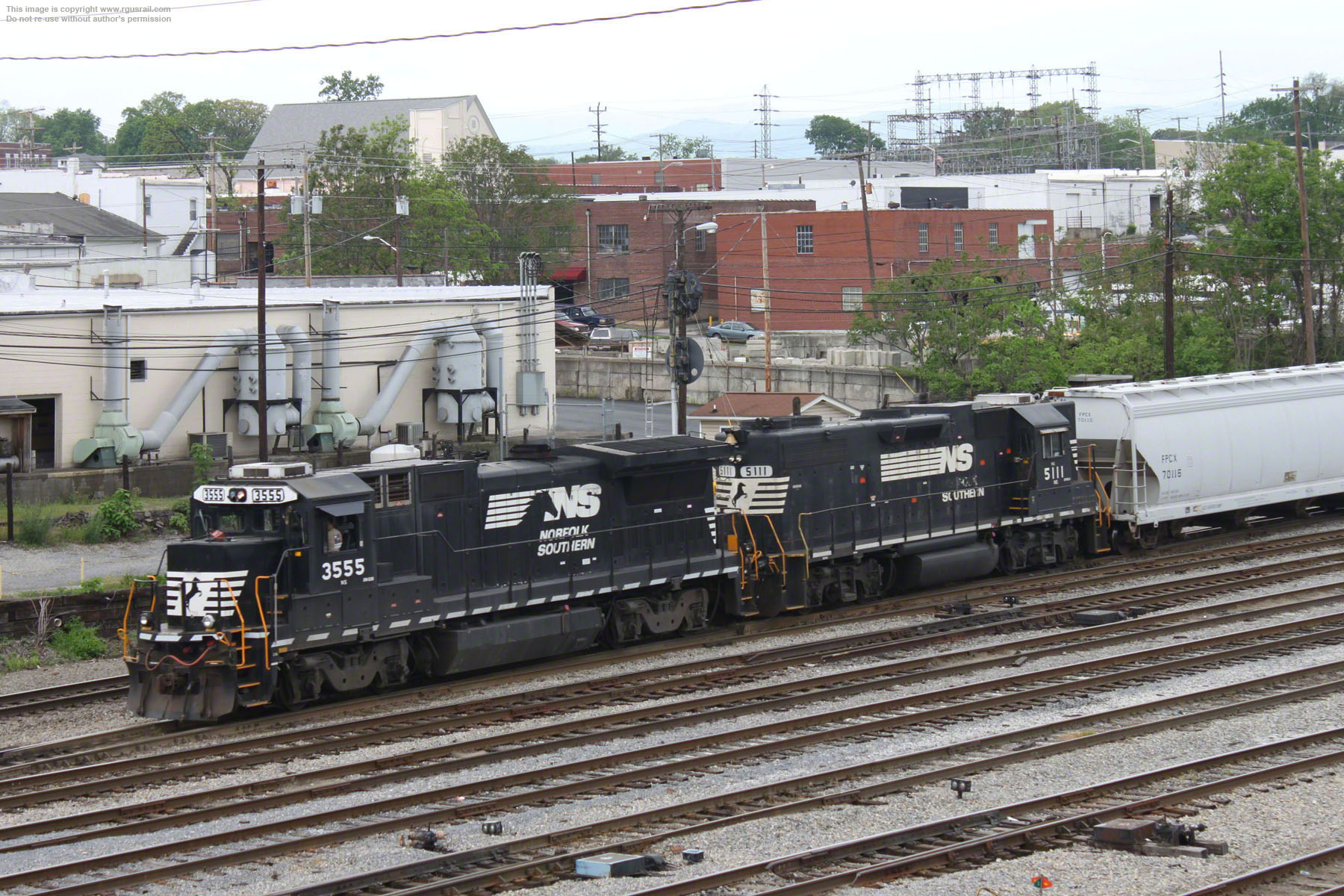

Left and in the next three shots, NS GE B32-8 #3555 and
B32-8 #5111 are engaged in switching activity.
Only forty-nine of these four axle 1,350 hp diesel-electrics were built by GE between 1984 and 1989, all but four of them for Norfolk Southern.


On the left, NS EMD SD40-2 #3370, still bearing its Conrail livery, hauls a mixed freight east with NS EMD SD40-2 #6166 and EMD GP38-2 #5298. NS EMD SD40-2 #3235 is standing on the adjacent track.
Above, after pulling under the 5th Street Bridge, the mixed freight crosses with a train of empty coal hoppers hauled by NS GE C40-9W #9365 and EMD SD60 #6699.
Downtown Roanoke is in the background. The Virginia Museum of Transportation's Robert B. Claytor & W. Graham Claytor Jr. Pavilion is just beyond the tracks in the middle distance.


A little later, another train of empty coal hoppers heads west hauled by NS GE C40-9W #9719 and GE C40-9 #8797.
Related Links:
Virginia Museum of Transportation Museum Website
Norfolk & Western Historical Society
Send a comment or query, or request permission to re-use an image.
I have three histories of the Norfolk & Western: Richard E. Prince's Norfolk & Western Railway, published by the author in 1980, Lewis Ingles Jeffries' N&W: Giant of Steam, published by Pruett in 1980, and E. F. Pat Striplin's The Norfolk & Western: a History, published by the Norfolk and Western Railway Company in 1981 (click on the cover of each book to search for it on Bookfinder.com).

wdtvlive42 has uploaded N&W's documentary Operation Fast Freight to YouTube. It follows a boxcar east on the Norfolk & Western from Columbus, OH, to Norfolk, VA. Click to watch this movie.
