


The Nevada Northern Railway Museum is in Ely, NV, one hundred and twenty miles south of West Wendover off the I-93, one hundred and eighty miles west of Holden off the I-15, or two hundred and twenty miles north of Garnet off the I-15. That's some distance, but it's worth the drive. The countryside is spectacular, Ely is really friendly and, if you engineer one of the steam locomotives at the museum, you're in for a treat!
The museum is founded around the southern end of the old Nevada Consolidated Copper Company line that used to run between East Ely and Cobre, NV, where it connected with the Southern Pacific. The railroad's main purpose was to haul copper ore, but it also handled freight and a passenger train ran daily until 1941.
Activity began to decline in the late 1970s and, in 1983, all operations were suspended. Three years later, the line, yard and shop facilities at East Ely were transferred to the White Pine Historical Railroad Foundation, a non-profit organisation that today operates the property as the Nevada Northern Railway Museum.


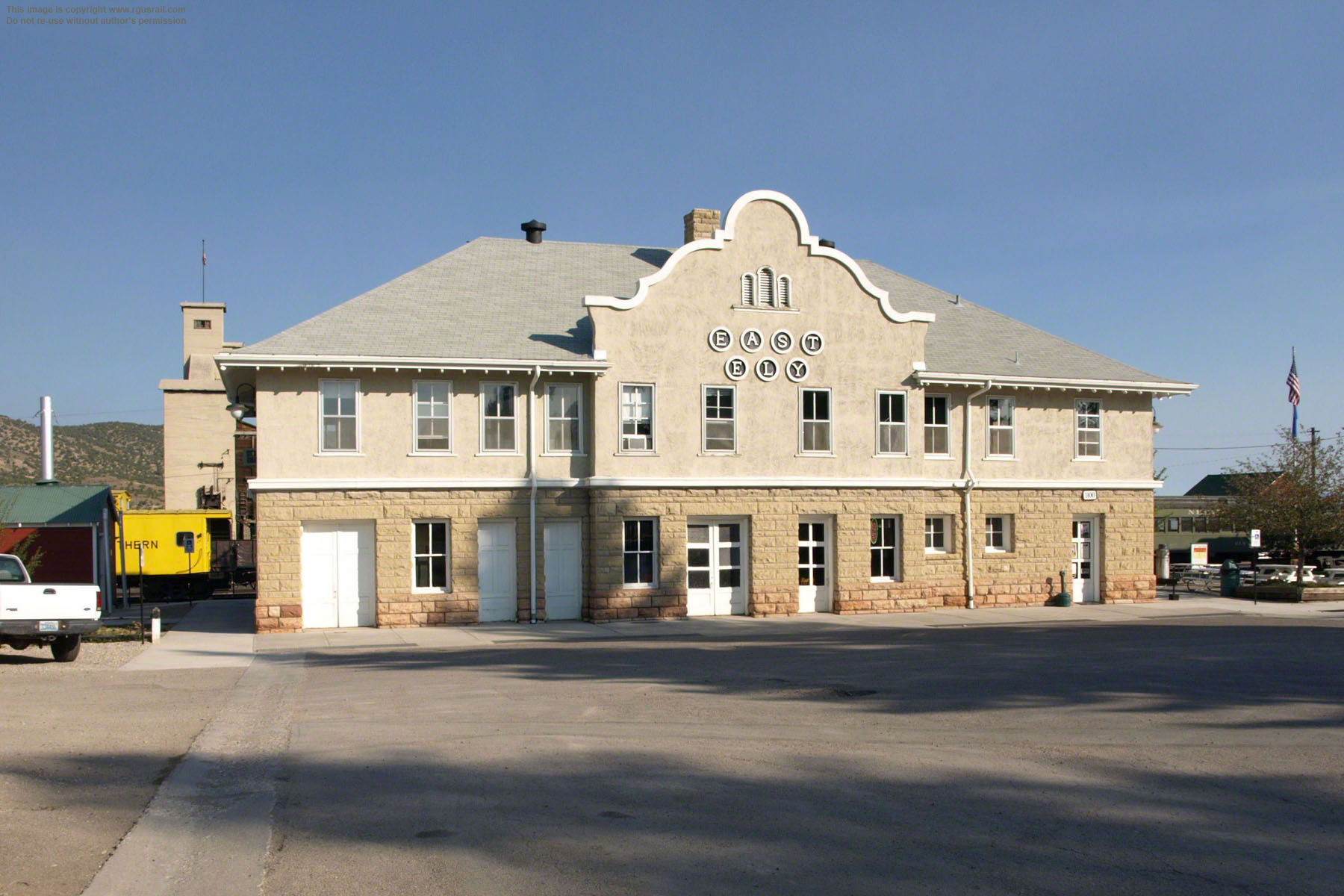


The depot, in the Mission Revival style, was designed by Frederick Hale and built in 1907.
The building is kept in excellent condition. The interior has the original men's and women's waiting rooms, baggage and express rooms. The building was placed on the National Register of Historic Places in 1984.
The location of the depot was originally a matter of contention between the railroad and residents of Ely, who successfully sued to have the depot's name changed from Ely to East Ely to reflect its 1¼ mile distance from the main township.





The Machine Shop (left) and Engine House (right) house much of the motive power collection.
The building was constructed in 1908, and altered in 1917 and 1941. Repairs to motive power and rolling stock are also carried out in the building.



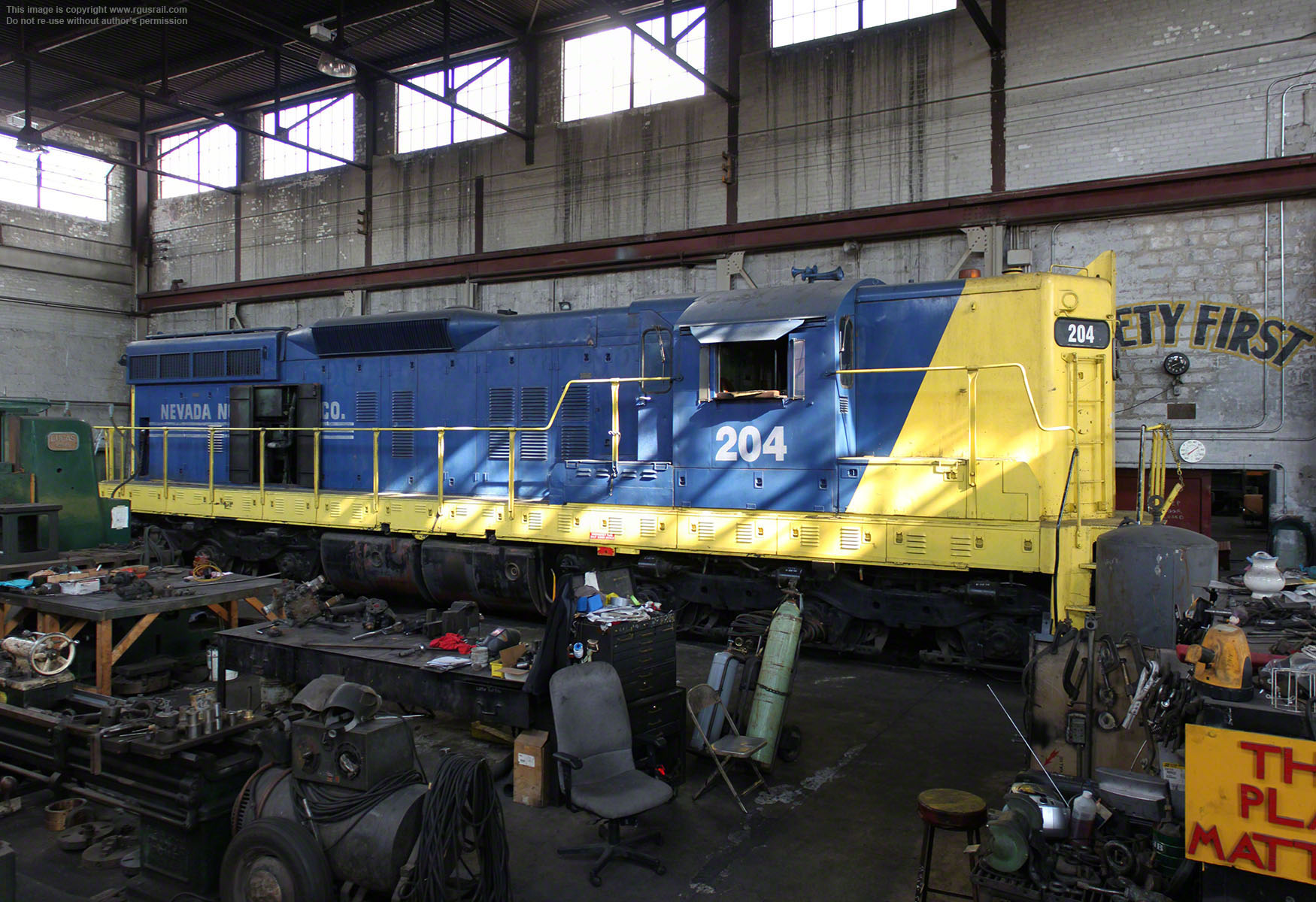


#204 is 60' 8½" in length and weighs 360,000 lbs. The SD9 is externally similar to its predecessor, the SD7, but internally features the more powerful and more easily maintained 1,750 hp 16 cylinder EMD 567C prime mover in place of the SD7's 1,500 hp 567B. The prime mover powers a GM-D22 generator to drive six GM-D47 traction motors, one on each axle. With starting tractive effort of 90,800 lbs at 25% and continuous tractive effort of 75,000 lbs at 9.5 mph, it has a top speed of
65 mph.
These durable freight haulers excelled for freight railroads all over the US for decades, and many rebuilt examples are still earning their keep on short line railroads today.
Inside the Machine Shop, #204 is one of five hundred and fifteen six-axled SD-9s built by General Motors Electro-Motive Division
in La Grange, IL, between 1954 and 1959 (four hundred and seventy-one for US railroads, the remainder for export).
The engine was one of one hundred and fifty SD-9 units ordered
by the Southern Pacific Railroad. It was built in 1956 and
delivered as #5468, but was renumbered #3942 in 1965. In 1977, it was rebuilt and renumbered again as #4426. It was retired in July 1995 and sold to Progress Rail Service, a dealer in used locomotives. The following year it was purchased by the Nevada Northern Railway, and it now runs excursions and provides engineer rentals.


Rotary Snowplow B is one of the last wood-bodied standard gauge rotary plows still in existence.
It was built in 1907 by Alco for the Nevada Northern. The steam engine powered the front rotary blades, but it had no motive power of its own and was pushed from behind by one or more locomotives. It has not
been operated for many years but could be restored to operating condition.


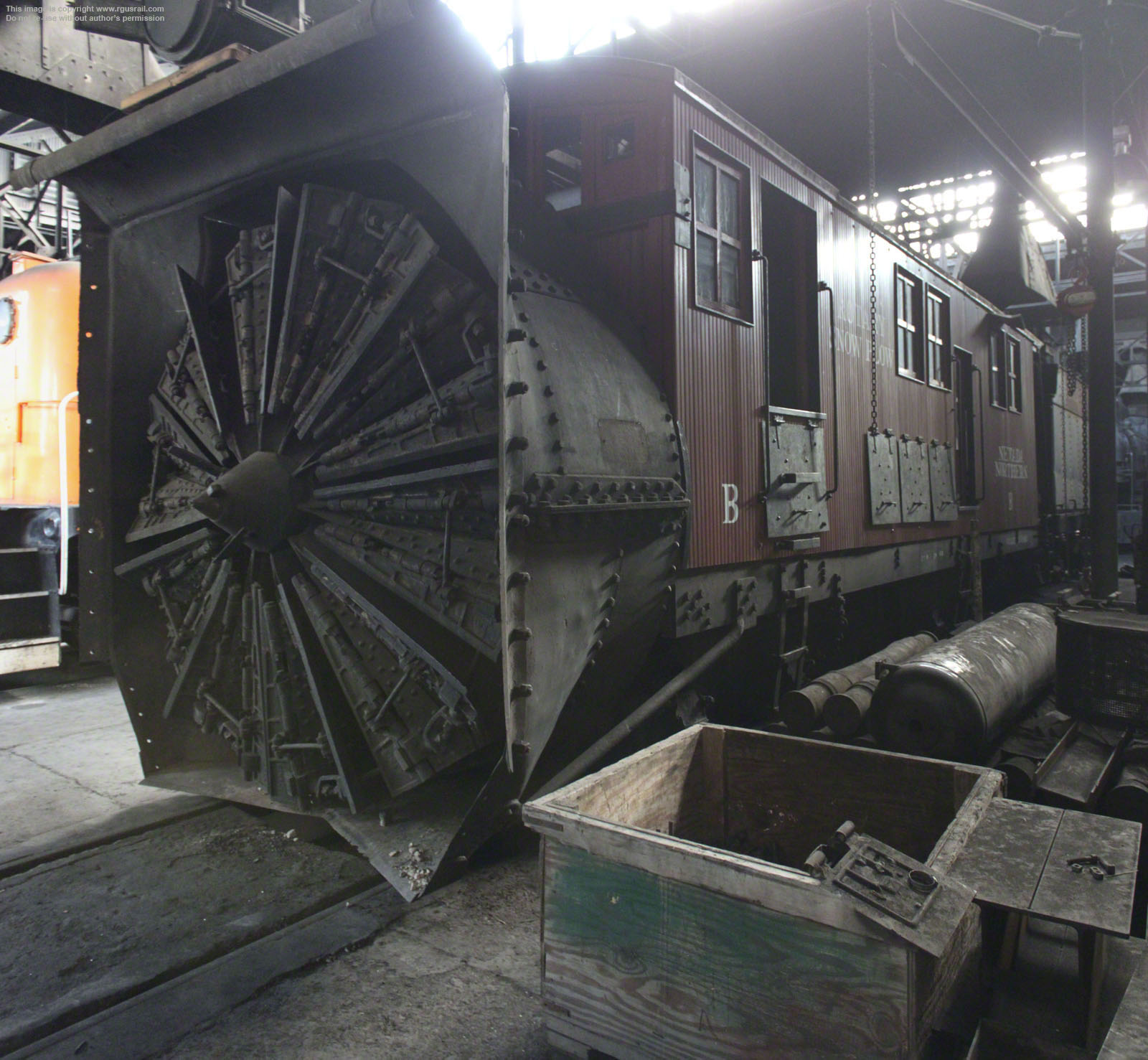
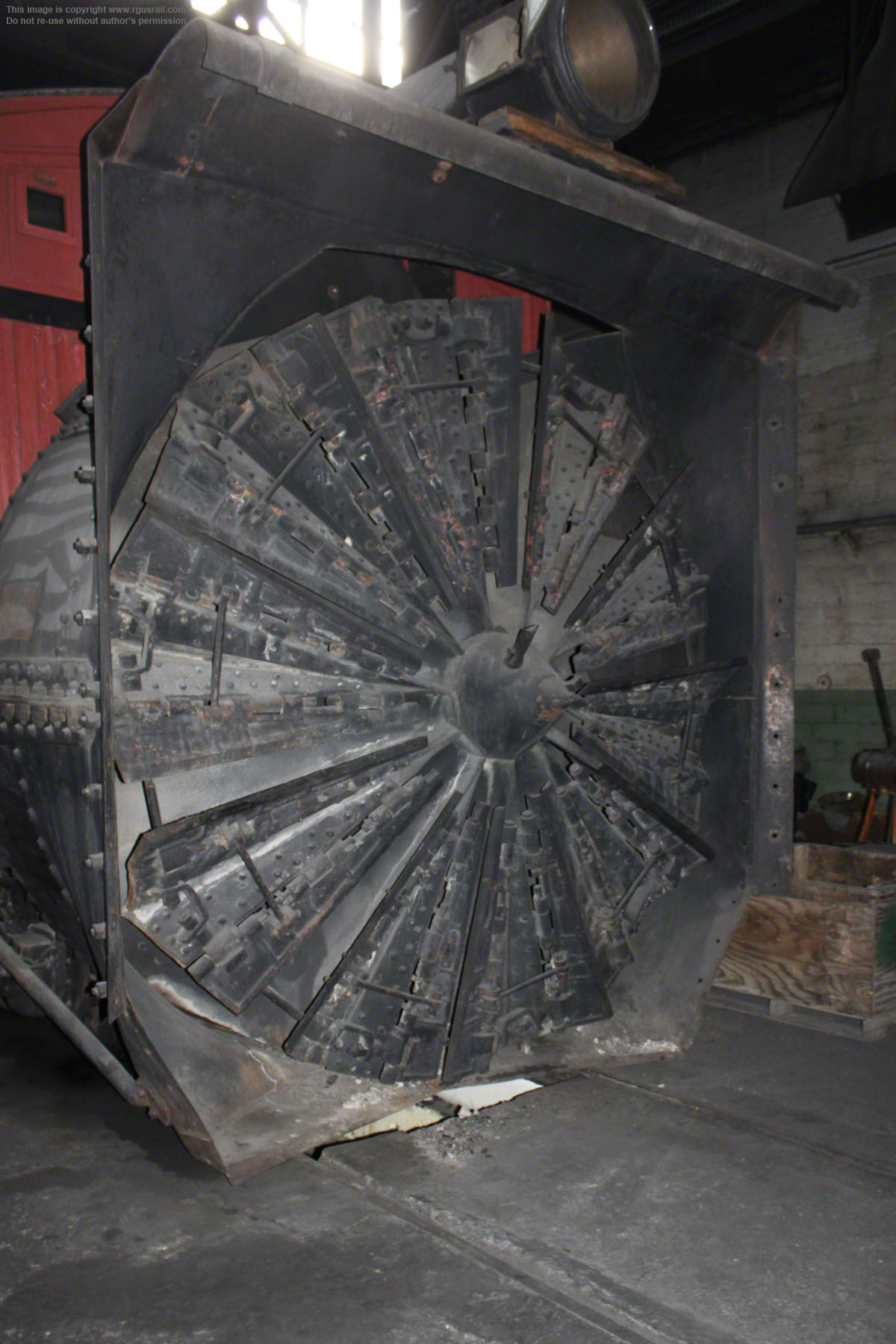

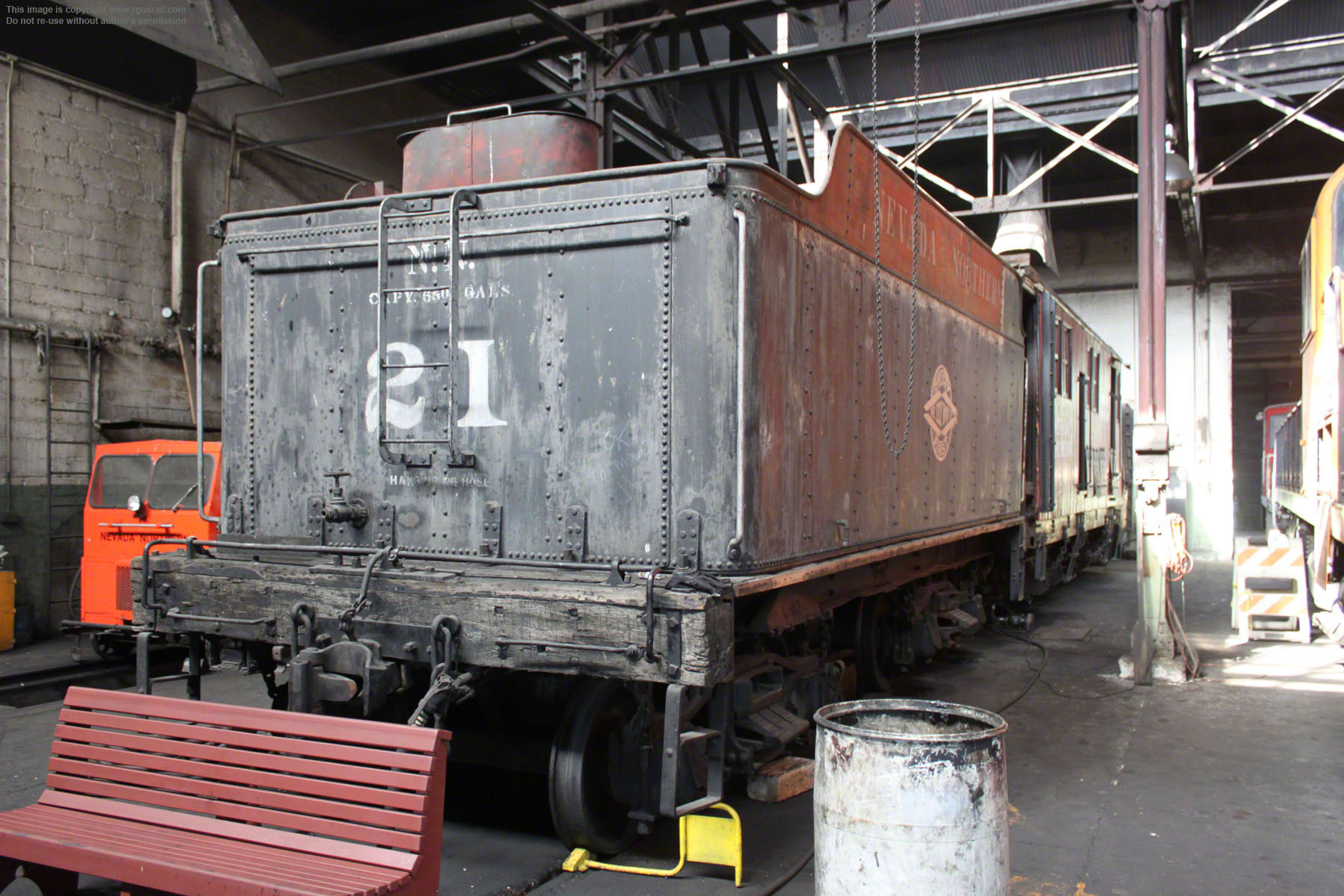

The plow is coupled to a tender to provide fuel and water for the internal steam engine.
The current tender is from Nevada Northern
4-6-0 #21, built by Alco in 1909 for freight service. #21 was scrapped in 1952, but its tender was retained for use by the plow.



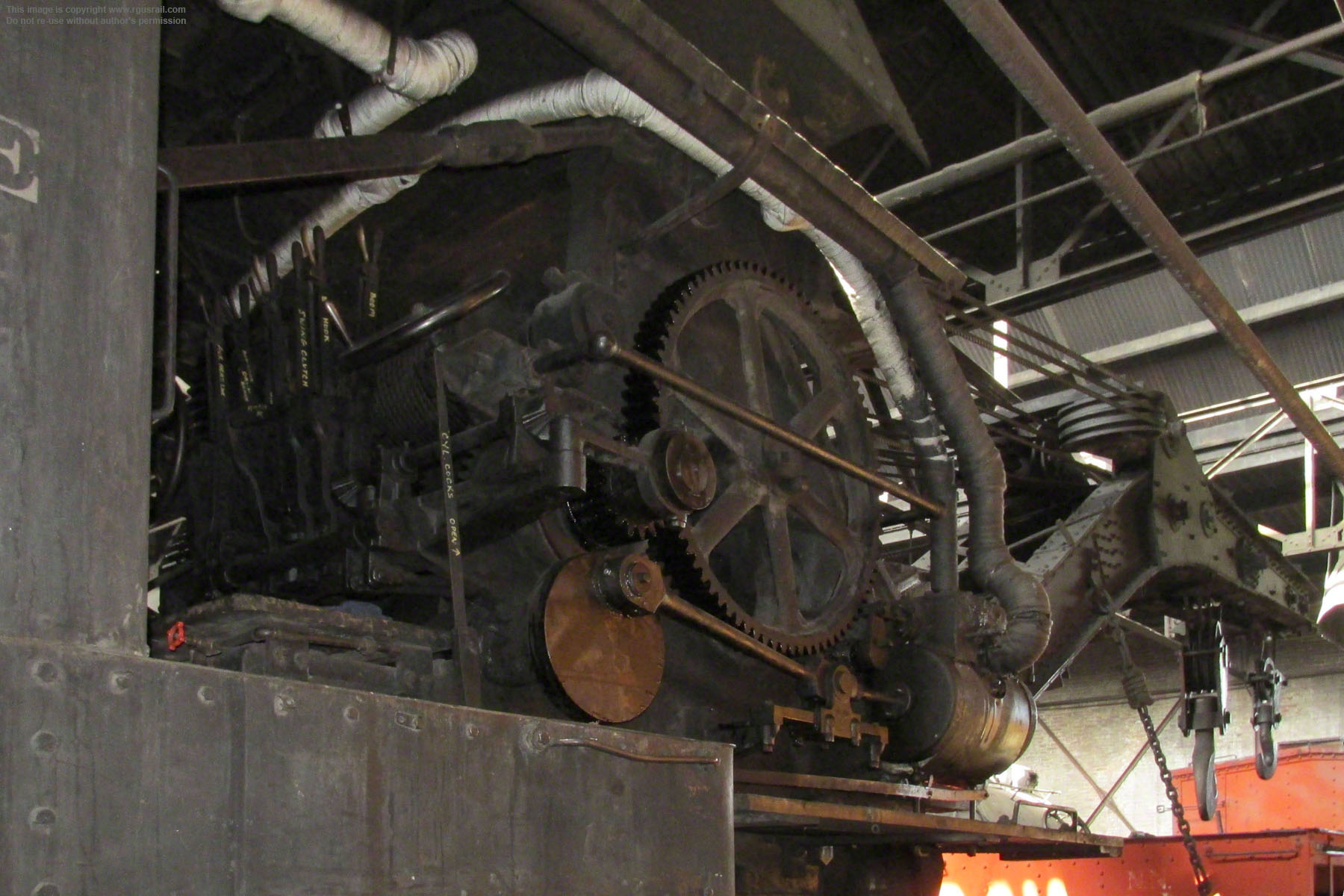
Steam operated 100 ton Wrecking Crane A was bought from Industrial Works of Bay City, MI, by the Nevada Northern in 1907 at a cost of $16,015.
Industrial Works started building cranes in 1893 with a 12 ton crane. By 1904, they were building 100 ton cranes and, by 1922, 200 tons. In 1931, Industrial Works combined with the Brown Hoisting Company of Cleveland, OH, (established in 1880) to form Industrial Brownhoist.


Crane A sits on a heavy-duty flat car and pivots on a series of heavy rollers. A boom extends to create additional lifting torque. It lifted rolling stock and locomotives back onto the track after wrecks or derailments, as well as other heavy objects such as bridge beams. It was used to build the nearby McGill Smelter in 1908, and was in service as recently as 1982 clearing a wreck on the Western Pacific.
Restoration began in 2002 and was completed in late 2005 . It is now one of only three operational steam powered wrecking cranes in the US.



#105 is one of nine RS-2 units built by Alco for the Kennecott Copper Corporation (successor to the Nevada Consolidated Copper Company) from 1948 to 1949.
It was part of the last batch of four RS-2s delivered to the company in late 1949.


Three hundred and eighty-four RS2s were built from 1946 to 1950, including nine manufactured by Alco subsidiary, the Montreal Locomotive Works in Canada. Thirteen were exported overseas, the remainder went to US railroads.
#105 was one of three hundred and fifty-three built with a single 12 cycle, 1,500 hp model 244 engine. An additional thirty-one were built in 1950 with 1,600 hp engines.



#109 is an RS-3 built by Alco between 1946 and 1950. At present, the museum does not know much about the locomotive’s provenance.
#109, like #105, is available for rental under the museum’s engineer rental programme.


With a 4-cycle Model 244 V12 prime mover driving a GE GT581 generator to power four GE 752 traction motors, one on each axle, the RS-3 delivered 57,800 lbs starting tractive effort at 25% and 42,500 lbs continuous tractive effort at 10 mph. It is 55’ 5” long, weighs 230,000 lbs and had a top speed of 65 mph.
You can see another of the Kennecott
Copper RS-2s, #103, on the Pacific
Southwest Railway Museum age of this website.

#801 is a 1,000 hp
VO-1000 built by Baldwin for the Bingham & Garfield Railway in 1942, where it worked as a yard switcher at Magna, UT.
It was transferred to Kennecott Copper’s Chino Mines Division in New Mexico as #80 in 1949.


#80 then moved to the Kennecott Nevada Mines Division in 1963, where
it was renumbered #801 again. It worked as a switcher at the McGill plant until 1983 but was never used on the Nevada Northern Railway during its life time.
It is 48' 10" long and weighs 244,500 lbs. With a starting tractive effort of 60,000 lbs at 25% and 34,000 lbs continuous tractive effort at 10.8 mph, it had a top speed of 60 mph.
Five hundred and
forty-eight VO-1000s were built from 1939 to 1946.
It has a 1,000 hp eight cylinder De Lavergne VO 6c prime mover driving a Westinghouse WE480 generator to power four Westinghouse WE362 traction motors.




The S-12 is 48' long and weighs 240,000 lbs. A six cylinder De LaVergne 606A SC prime mover powered a Westinghouse WE480 generator to drive four Westinghouse WE362 traction motors. It delivered 34,000 lbs continuous tractive effort at 10.8 mph, and had a top speed of 60 mph.
Four hundred and fifty-two S-12s were built from 1951 to 1956, all for US railroads. Seven have survived. You can see the last S-12, Erie Mining Company #7243, on the Lake Superior Railroad Museum page of this website. It is the last locomotive ever built by Baldwin.
#802 is an S-12 diesel electric built in 1952 by Baldwin-Lima-Hamilton for the New York Central as #9313.
It went to Penn Central as #8097 and was then
sold to Chrome Crankshaft in Joliet, IL, in 1968.
The following year, it was bought by Kennecott Copper Corporation and was moved as KCC #1 to the Southern Pacific's Taylor Shops in Los Angeles, CA, to be painted. Renumbered #802, it served as a switcher at the McGill smelter until donated by the KCC to the Nevada Northern Railway Museum.


#81 is an 85 ton overhead catenary powered electric locomotive built by GE in 1941. It was originally numbered #58 and worked on Kennecott Copper's Chino Mines Division in New Mexico.
In 1963, it moved to the Nevada Mines Division at McGill, NV, where there was about a mile of electrified track and was used to spot cars in the McGill yard and at the rotary dumper.



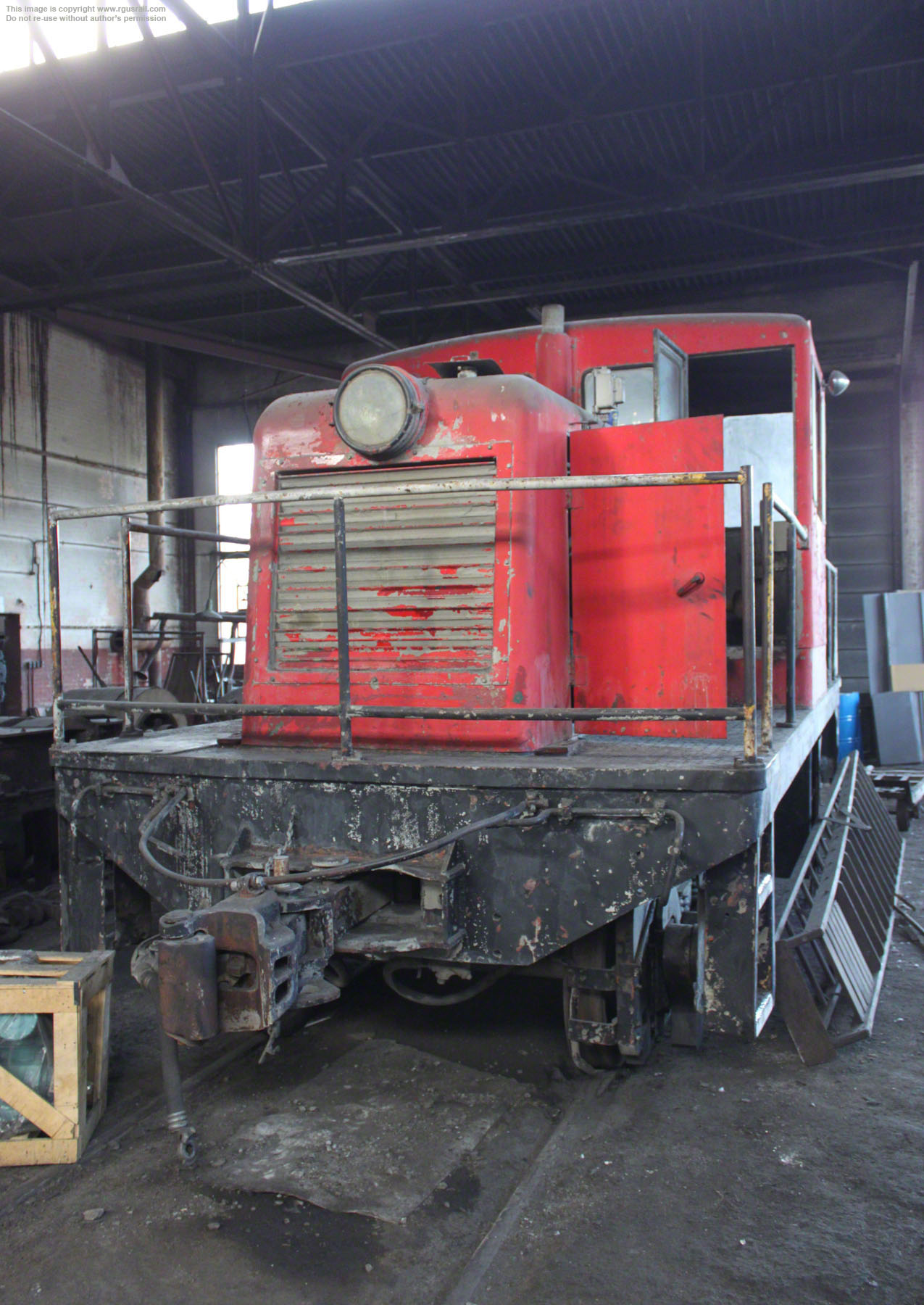
#4501 is a 45 ton switcher built by General Electric in 1942 as USA #7249. It started work at the Cornhusker Ordnance plant in Ovina, NE.
In 1974, the unit was sold to the Alaska Railroad where it was used on construction of the Valdez pipeline. It then went to the Chelatchie Prairie Railroad in Chelatchie, WA, in 1983 and was renumbered #007. It next passed to the Oregon Pacific Railroad in 1994 where it was renumbered #4501 and was used to haul passenger cars on the 3.8 mile line of SamTrak train in Portland, OR. The Oregon Electric Railway Museum in Brooks, OR, was the next owner, buying #4501 in 2005.


In 2008, #4501 was sold to the Port of Tillamook Bay Railroad and was trucked to the Timber, OR, area.
The following year, it was sold to the S&S Railroad, operating on a short section of ex-KCC track between Cobre and McGill Junction, NV.

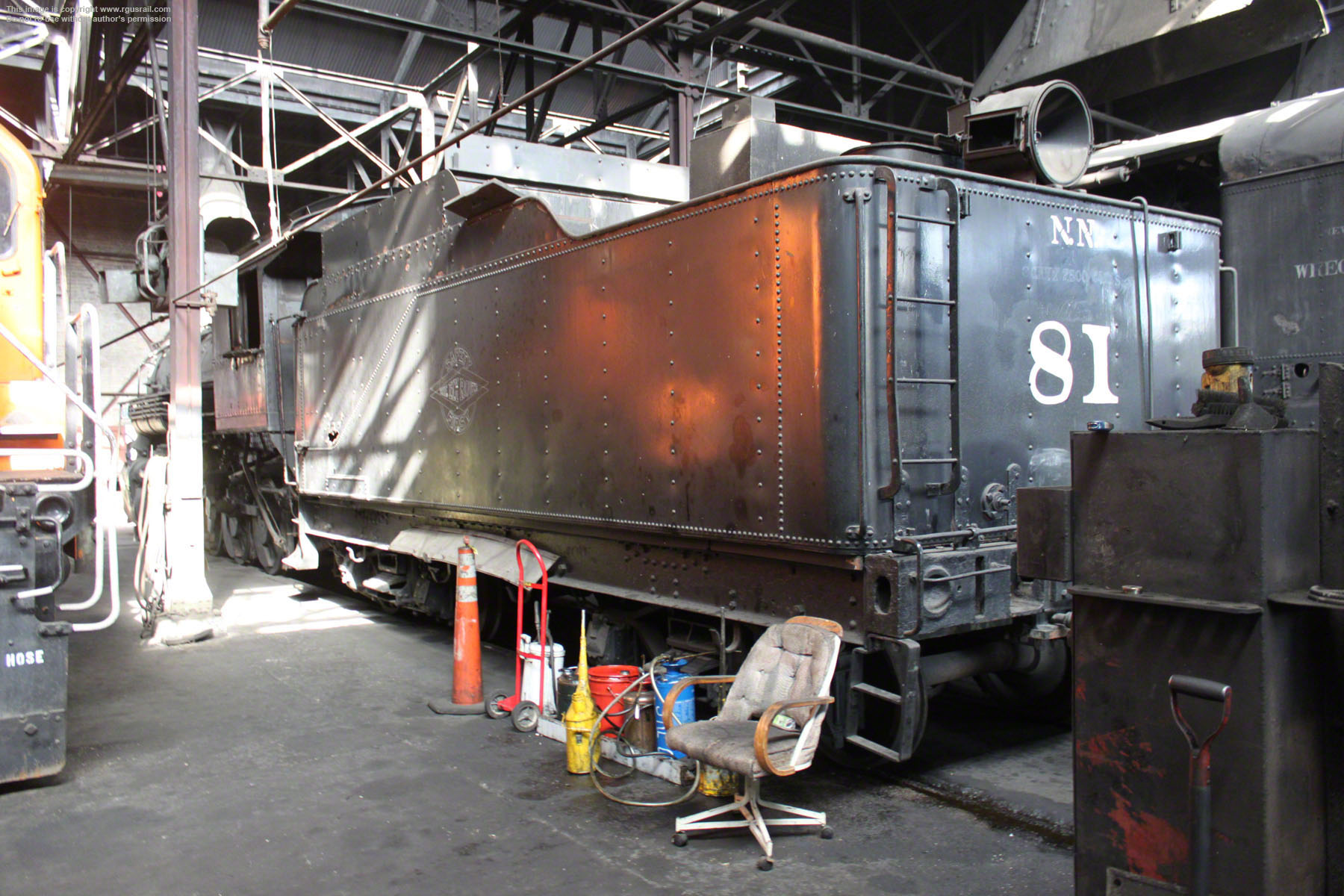


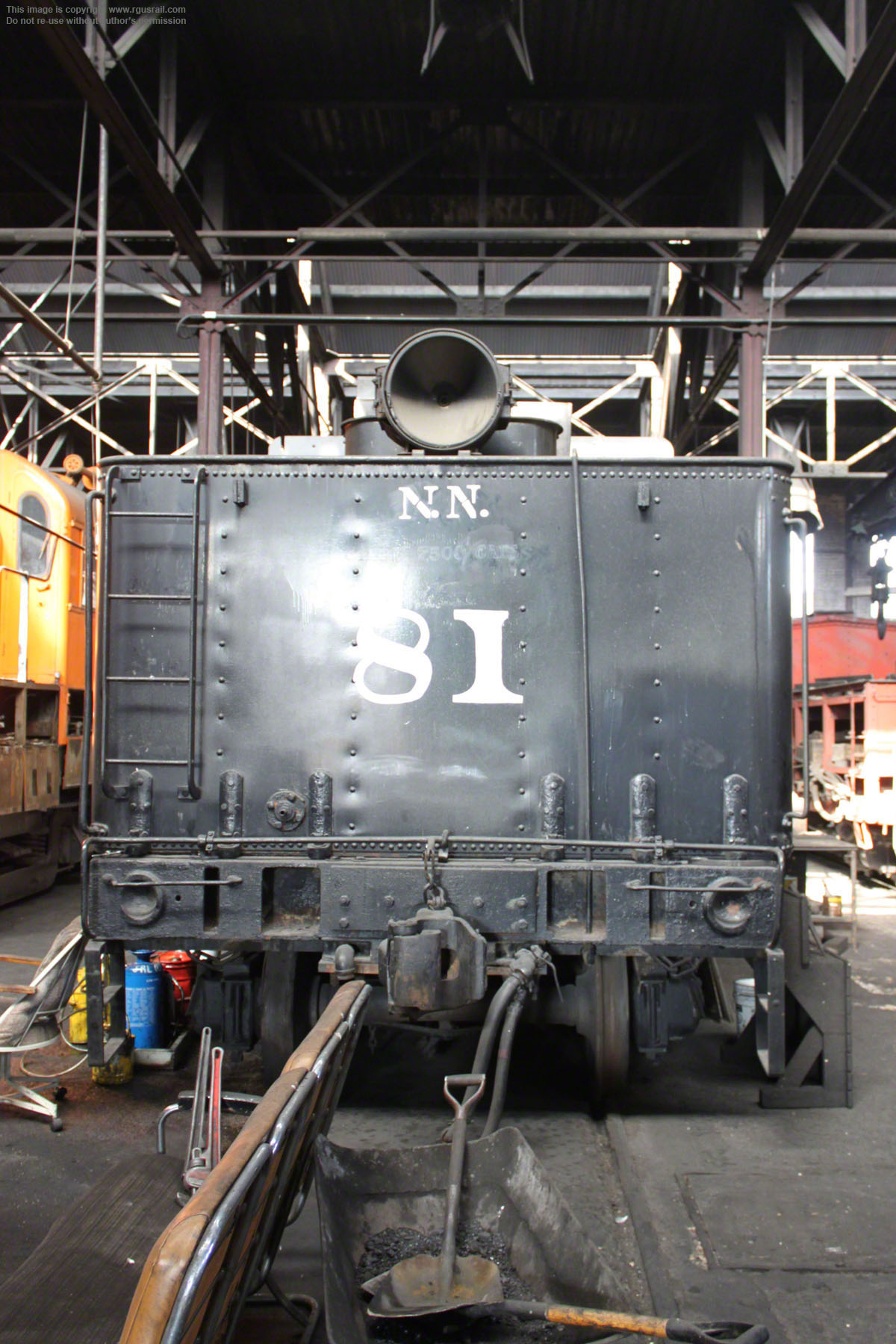
The railroad installed a mechanical stoker in 1939. Total heating surface is 2,312 sq ft including 423 sq ft superheating. Operating at a boiler pressure of 190 psi, it delivers 36,309 lbs tractive effort. The tender weighs 145,000 lbs light and has a 7,500 gallon water and 12 tons of coal capacity.
#81 hauled both freight and passenger trains. It was donated to the White Pine Public Museum in 1960 and is currently stored in the engine house awaiting reflueing and other routine maintenance.
#81 is a Consolidation type (2-8-0) locomotive built for the Nevada Northern in 1917 by the Baldwin Locomotive Works in Philadelphia, PA, at a cost of $23,700. With an engine wheelbase of 24' 1" and driver wheelbase of 15', #81 weighs 176,000 lbs, 155,000 lbs on its 51" drivers. It has Baker-Pilliod outside radial valve gear actuating inside-admission 10" piston valves and 21” x 26” cylinders.
The grate is 46.2 sq ft and three arch tubes contribute 19 sq ft to the firebox's 175 sq ft heating surface.


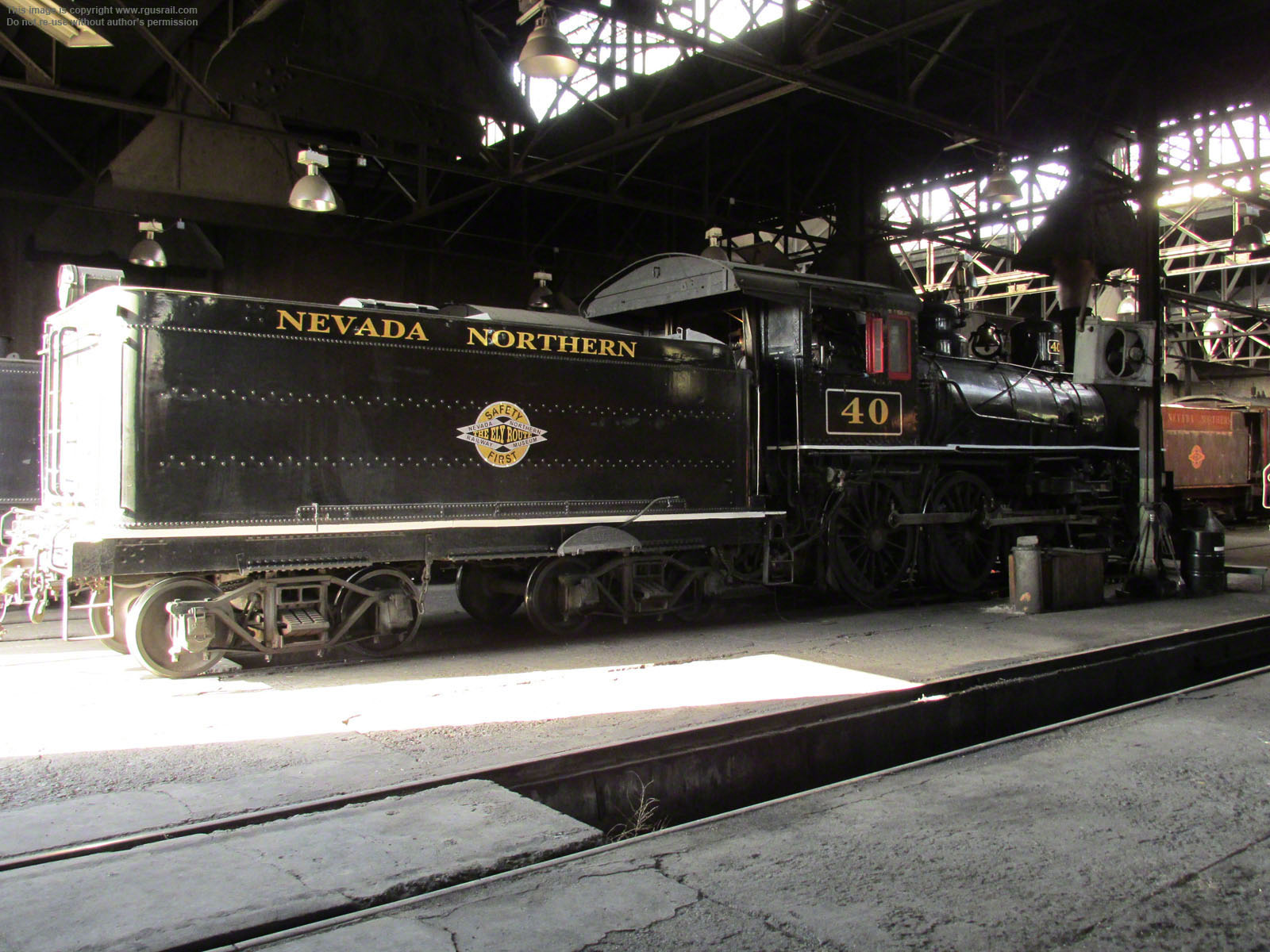


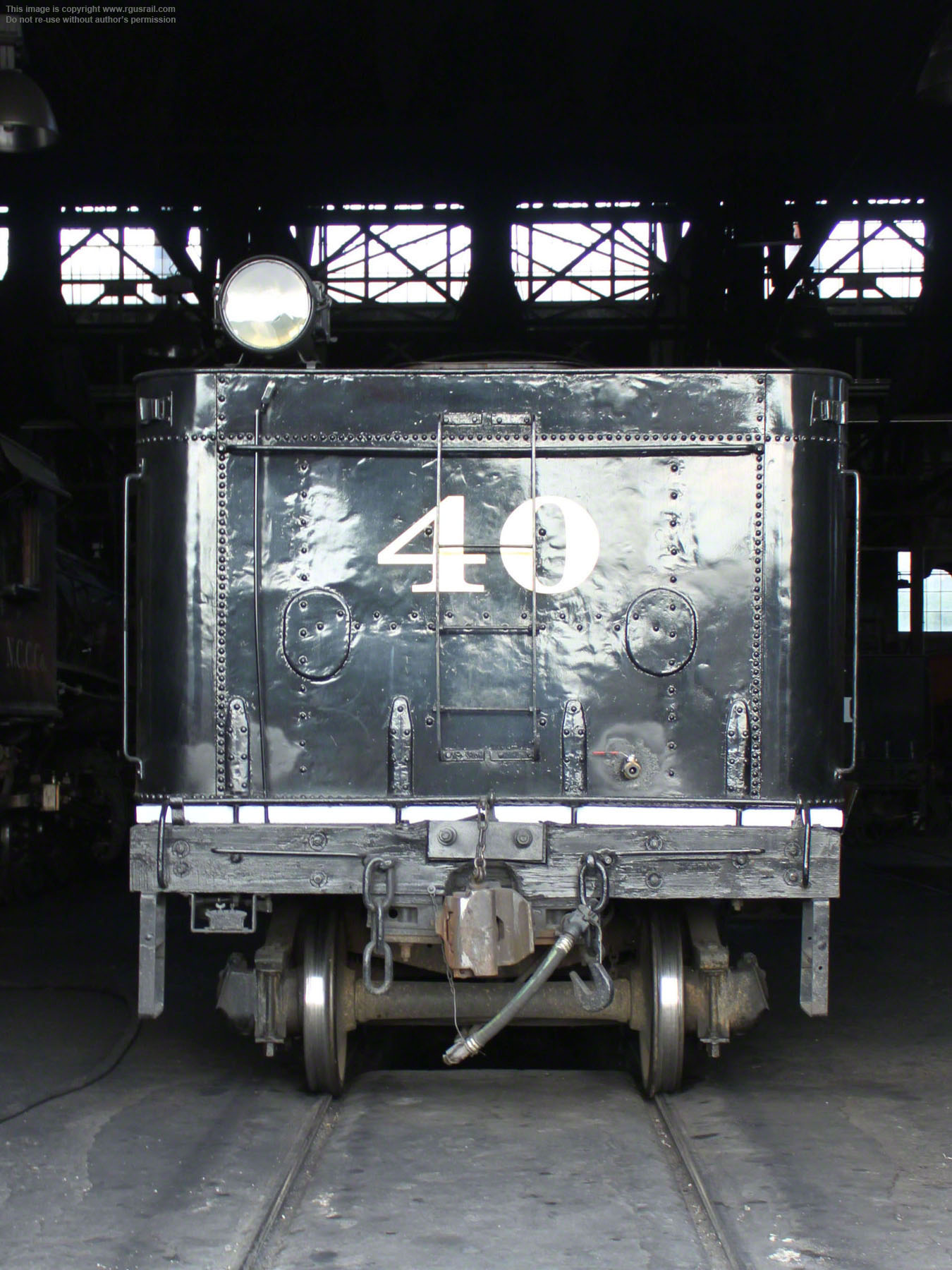
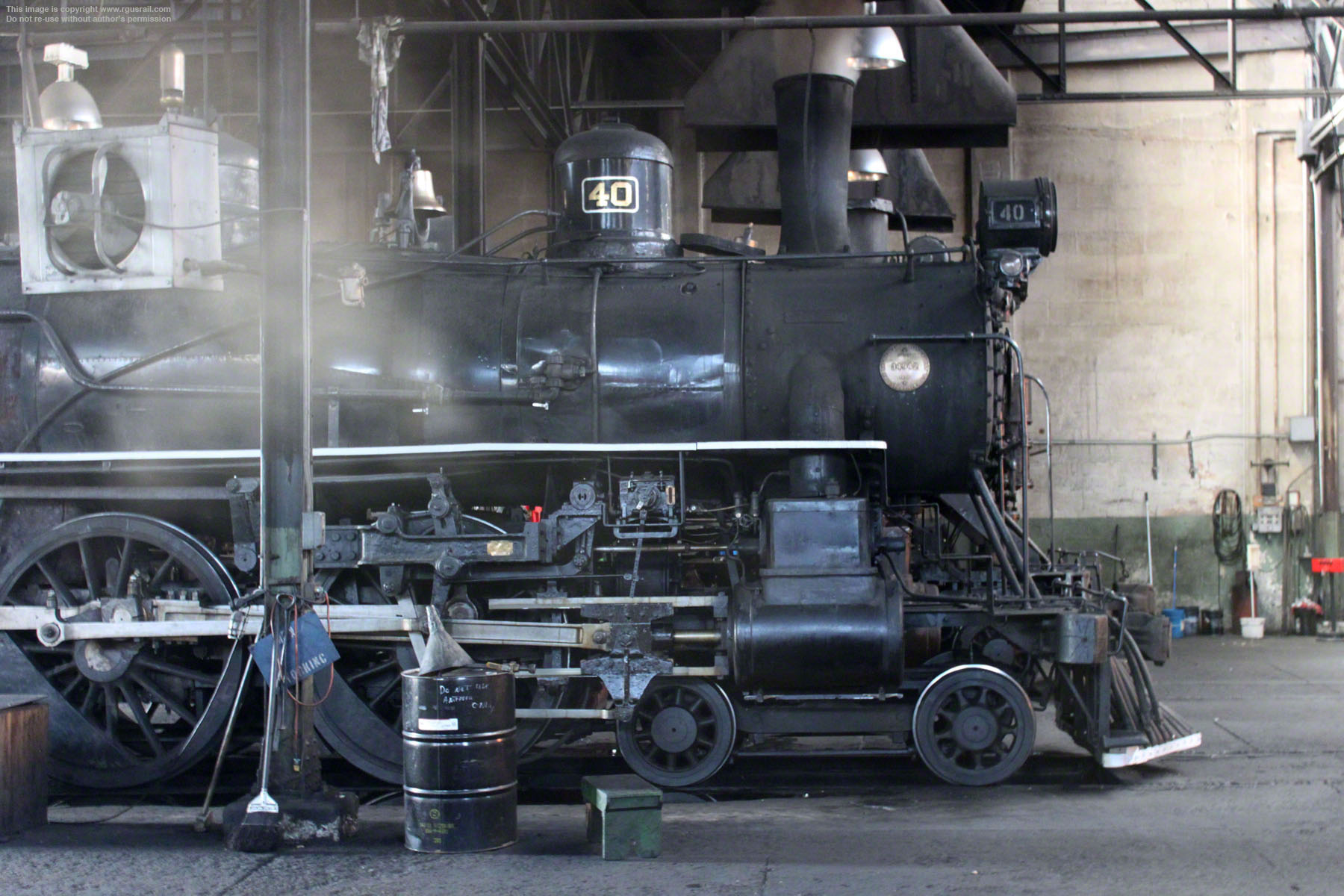
#40 is a ten wheeler type (4-6-0) locomotive built
by Baldwin in 1910 for Nevada Northern passenger service at a cost of $13,139. It weighs 137,400 lbs, 102,500 lbs on its 69” drivers and has an engine wheelbase of 24' 6" and driver wheelbase of 13' 4". The engine has Baker valve gear and 19” x 26” cylinders. The grate is 29.3 sq ft and the firebox 145 sq ft. Total heating surface is 2,048 sq ft. Operating at a boiler pressure of 200 psi it delivers tractive effort of 23,135 lbs.
The tender weighs 120,000 lbs light and has a 6,000 gallons of water and 10 ton coal capacity.


#40 operated mainly between Cobre and Ely until passenger services were scrapped in 1941. It was then tried on freight trains, but its large drivers did not provide enough tractive effort to make it viable. So, it was retired, except for occasional use on passenger excursions, and was donated to the museum in 1986 along with the rest of the railroad equipment at Ely.
Beginning in 2002, it underwent a thorough inspection and overhaul that completed in early 2005. It then returned to service, and provides both passenger excursions and engineer rentals.

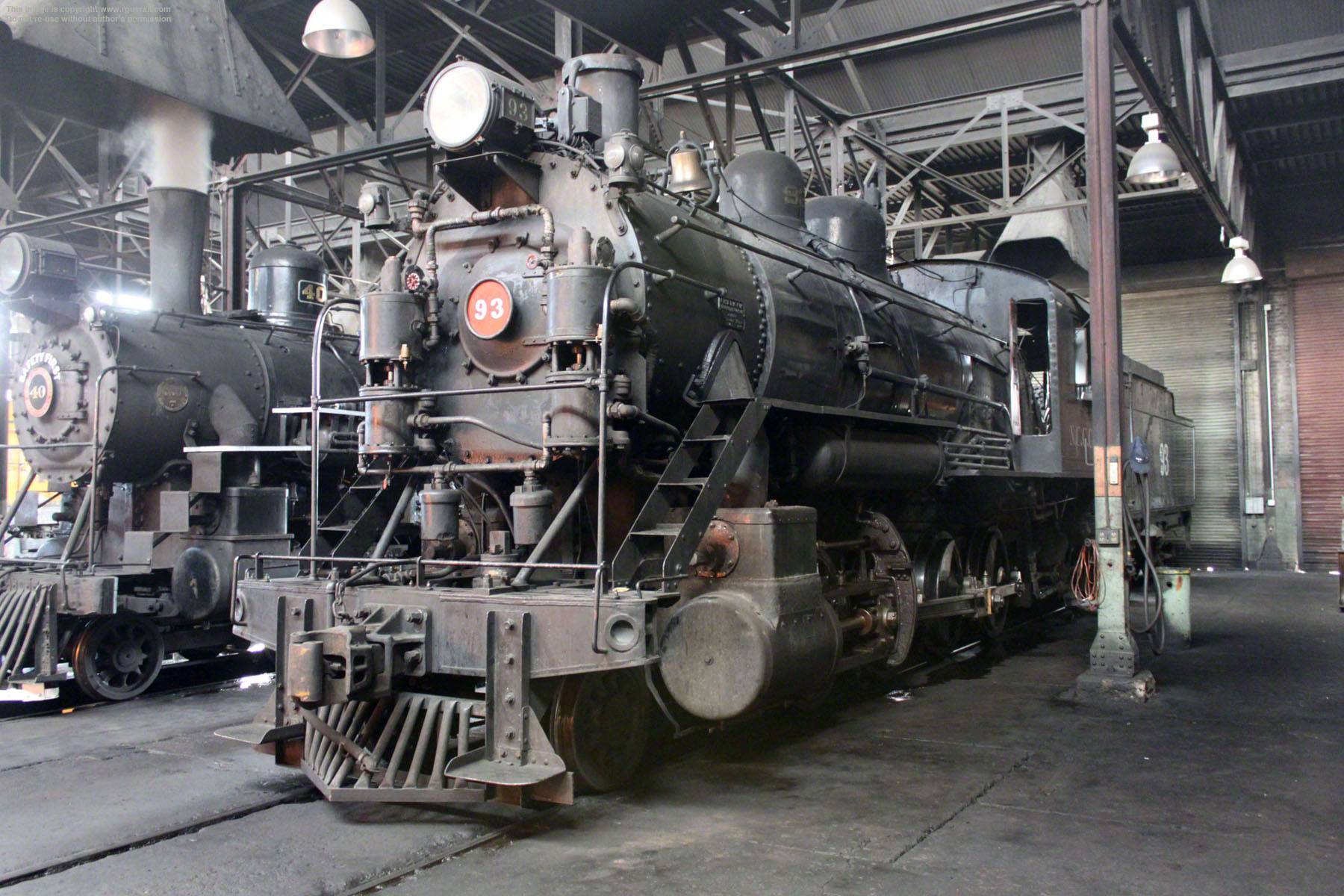


Above, Consolidation type (2-8-0) locomotive Nevada Northern #93.
I visited one year for
the Engineer Rental programme. You can find out more about
#93 and see photos of my return trip from Ely to Keystone on the NN #93 page on this website.


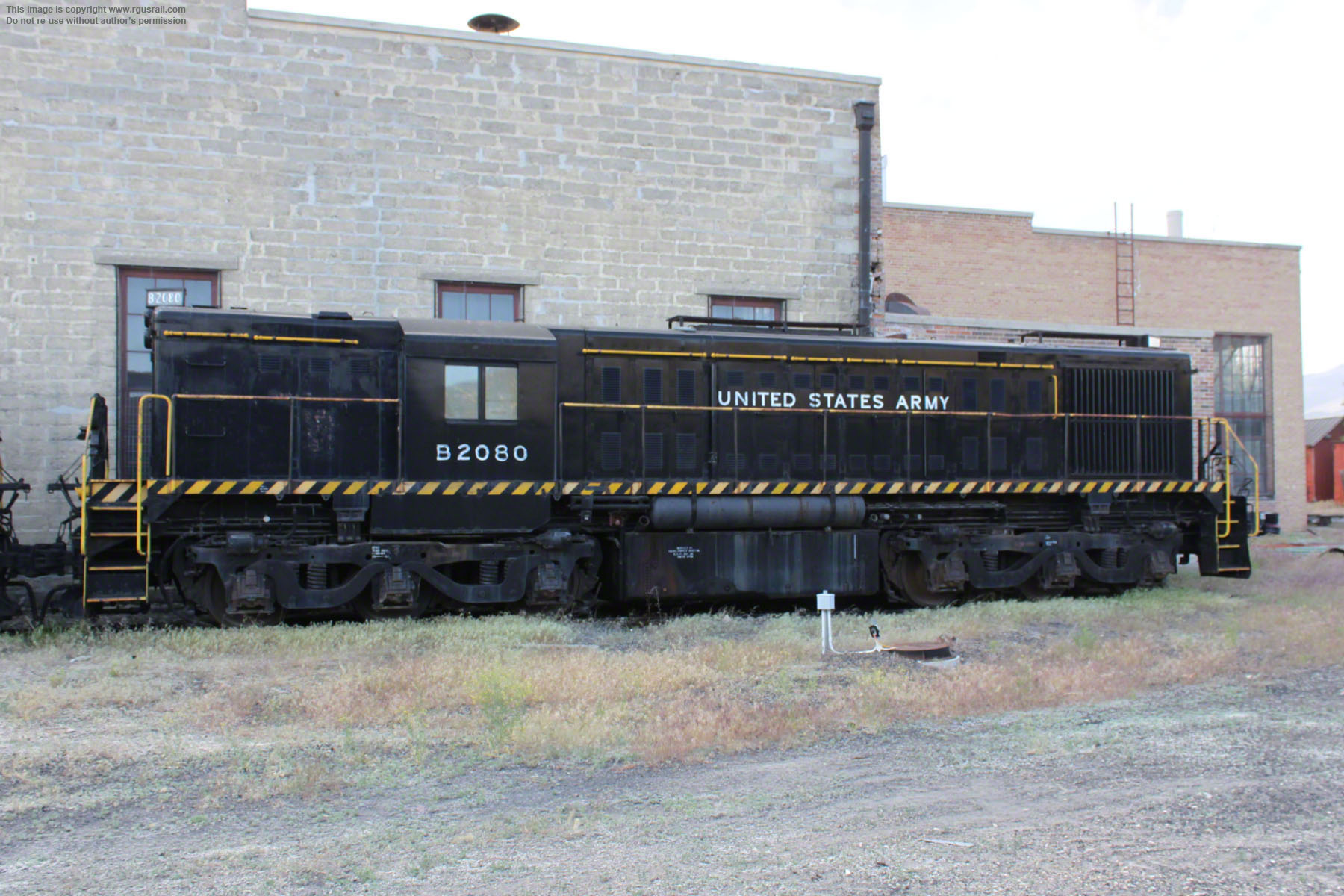


#280 is one of two MRS-1 diesel-electrics at the museum built by Alco in 1953. Ninety-six were built for the US Army Transportation Corps from 1953 to 1954. They were designed for use in theatres of war, with multi-gauge trucks and a narrow loading gauge for service on a wide range of railway systems.
Most went into storage at the USATC's facility at Marietta, PA, until about 1970, when the Pentagon decided a future large-scale land war would no longer include capture and use of enemy railway systems.


Many were then assigned to military bases around the country until the Army decided to transfer the units to the US Navy.
Subsequently, thirteen were sold to the Alaska Railroad and two to the Administración de Ferrocarriles del Estado in Uruguay.
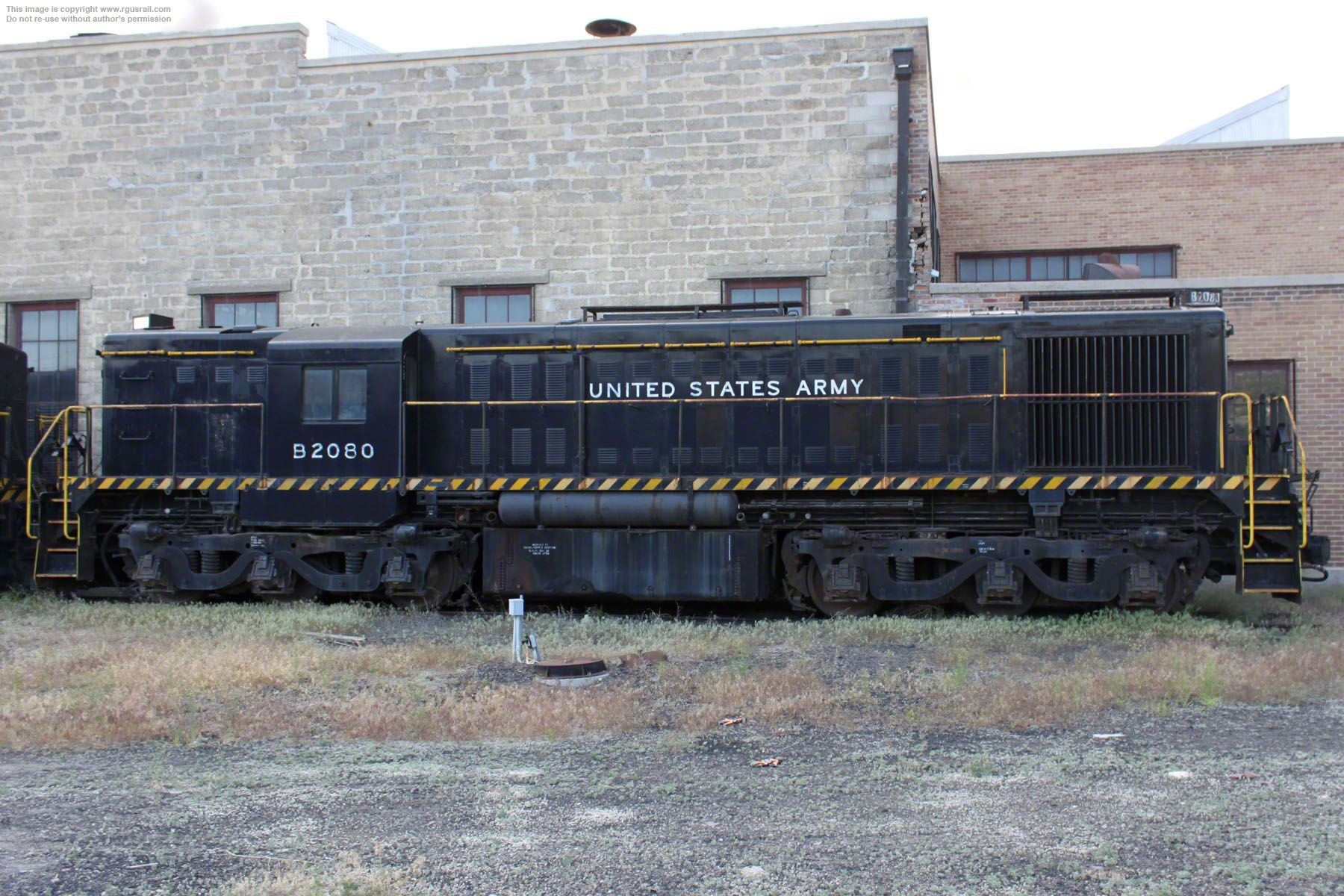


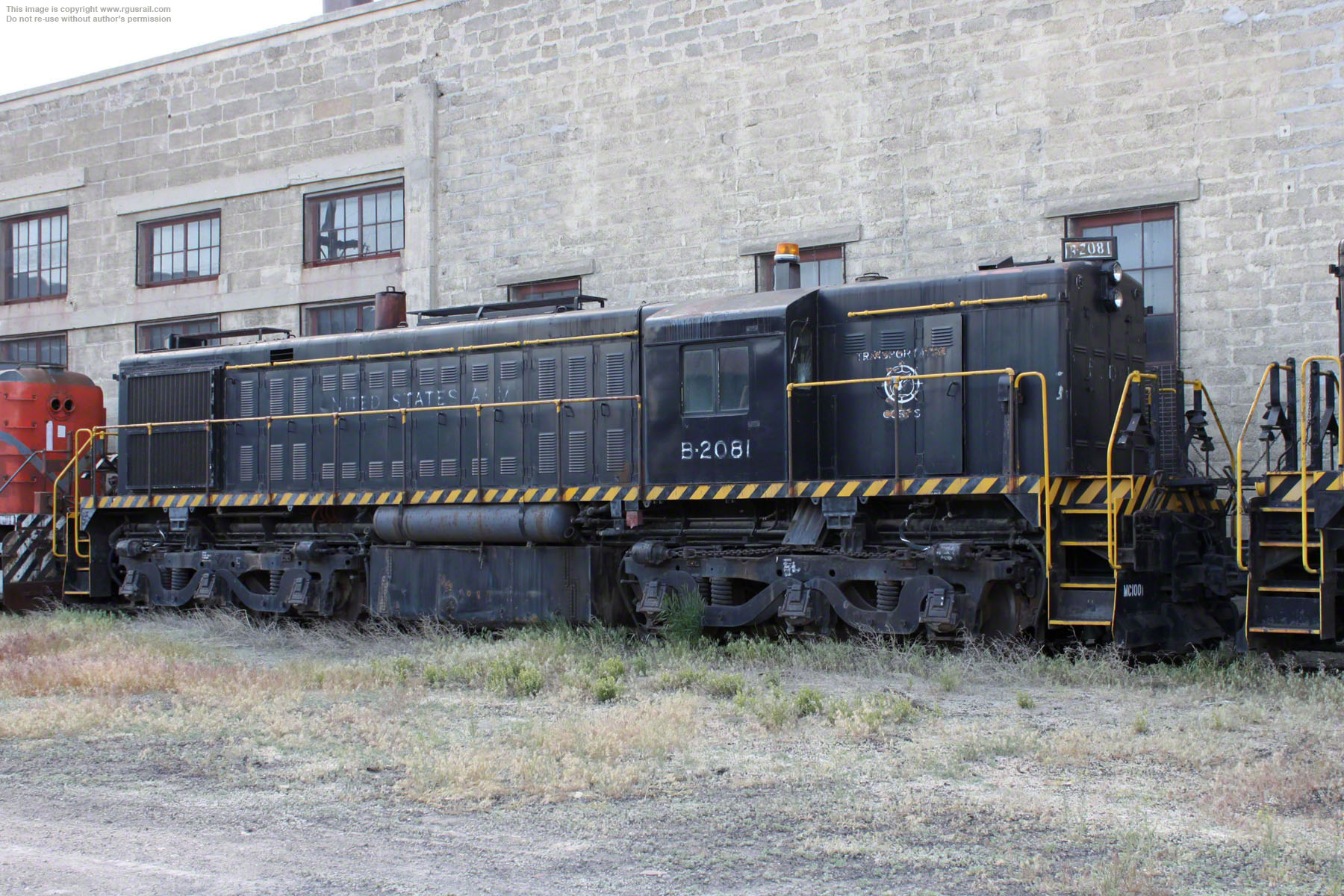
#2081 is the second of the USA MRS-1s at the museum. The 240,000 lb unit is 55’ 11” long, with an Alco 244D prime mover powering a GE-581 generator driving four GE 752 traction motors, one on each axle. It has starting tractive effort of 40,000 lbs at 25% and delivers 30,700 lb continuous tractive effort at 11 mph with a top speed of 70 mph.
You can see more MRS-1s on the National Museum of Transportation, St. Louis Yard page of this website, the Pacific Southwest Railway Museum page and the Railtown 1897 page.


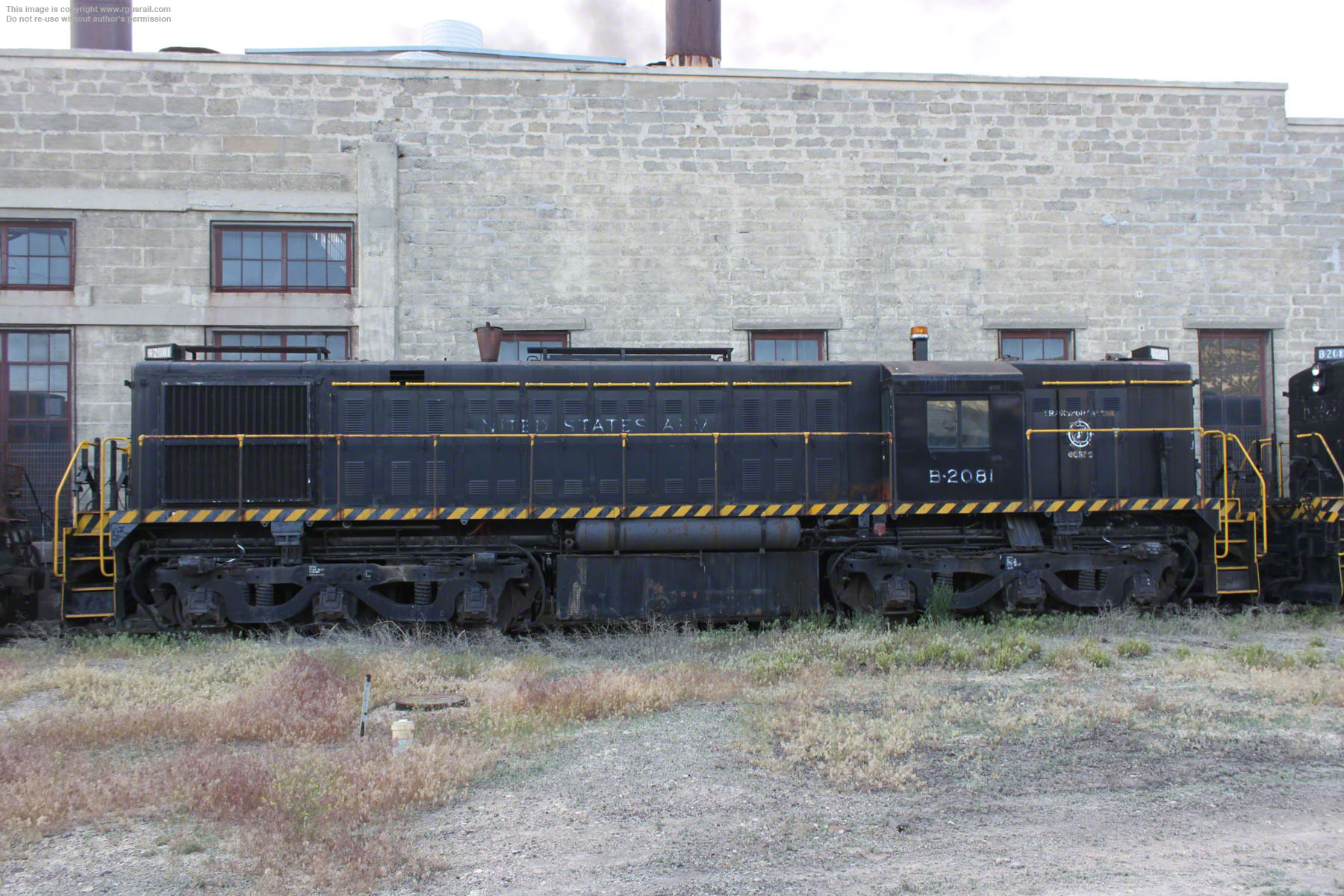



#4303 was built by EMD in 1954 as Southern Pacific #5354. It was renumbered #3814 in 1965 and then, after a rebuild in 1970, #4303. It was retired in 1994, sold to Progress Rail Service, a dealer in used locomotives in 1995, and then to BHP Nevada Railroad, where it became #201.
Four hundred and seventy-one SD9s were built for US railroads from 1954 to 1959, and forty-four for export. One hundred and fifty went to the SP, including fifty-two with steam generators for passenger service. A number of SD9s have survived.

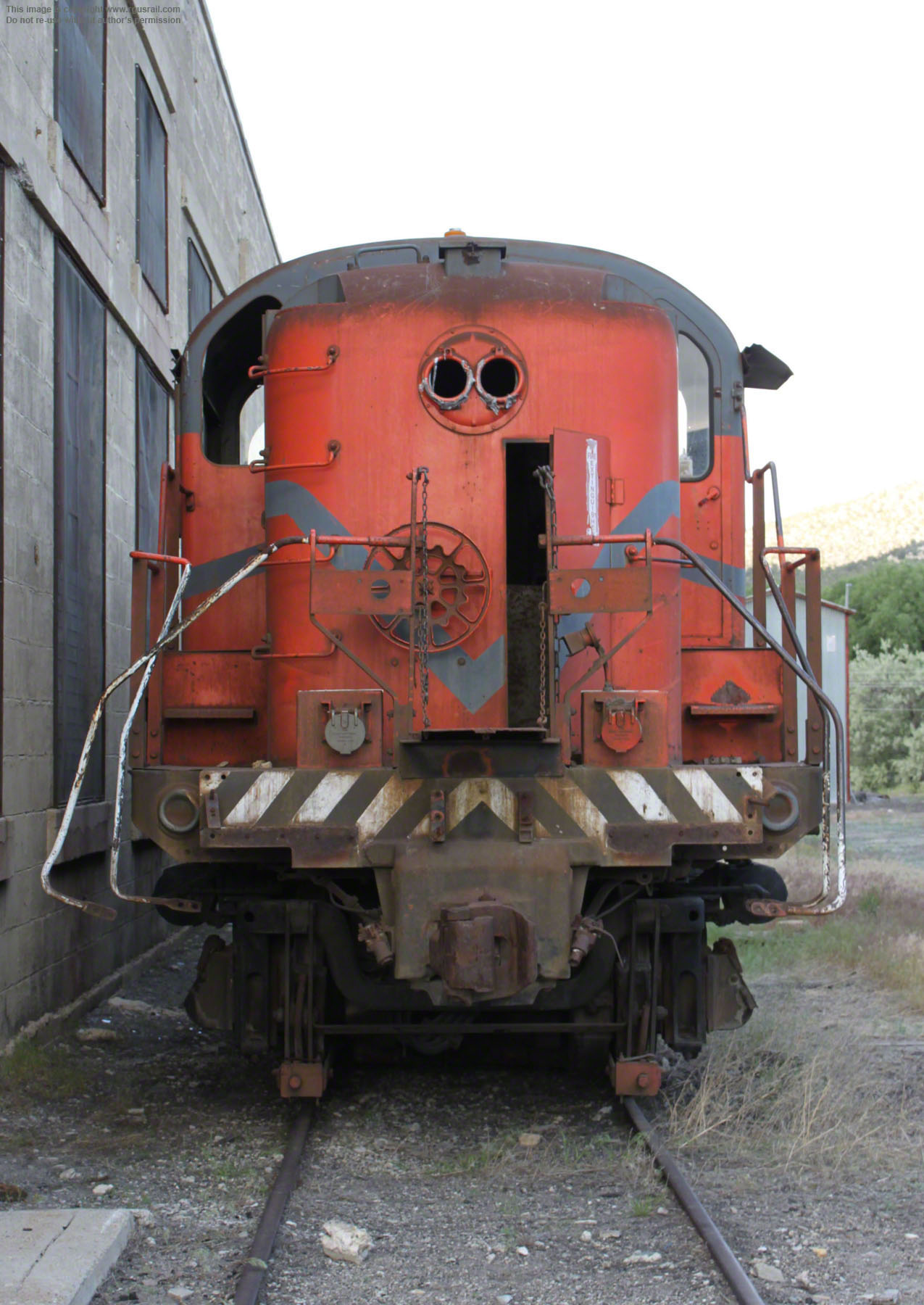
This RS-3 was built by Alco in 1951 for the Lehigh & Hudson River Railway as #13. It was sold to George R
Silcott Railway Equipment in Worthington, OH, in 1971 who sold it to the San Manuel Arizona Railroad the following year. The SMA was a short-line railroad that operated a 29.4 mile line from a connection with the Copper Basin Railway at Hayden, to San Manuel, AZ.
In 1997, #13 went to the BHP Nevada Railroad and then to the Nevada Northern in 2000. It is being used to supply spare parts for both #103 and #109.
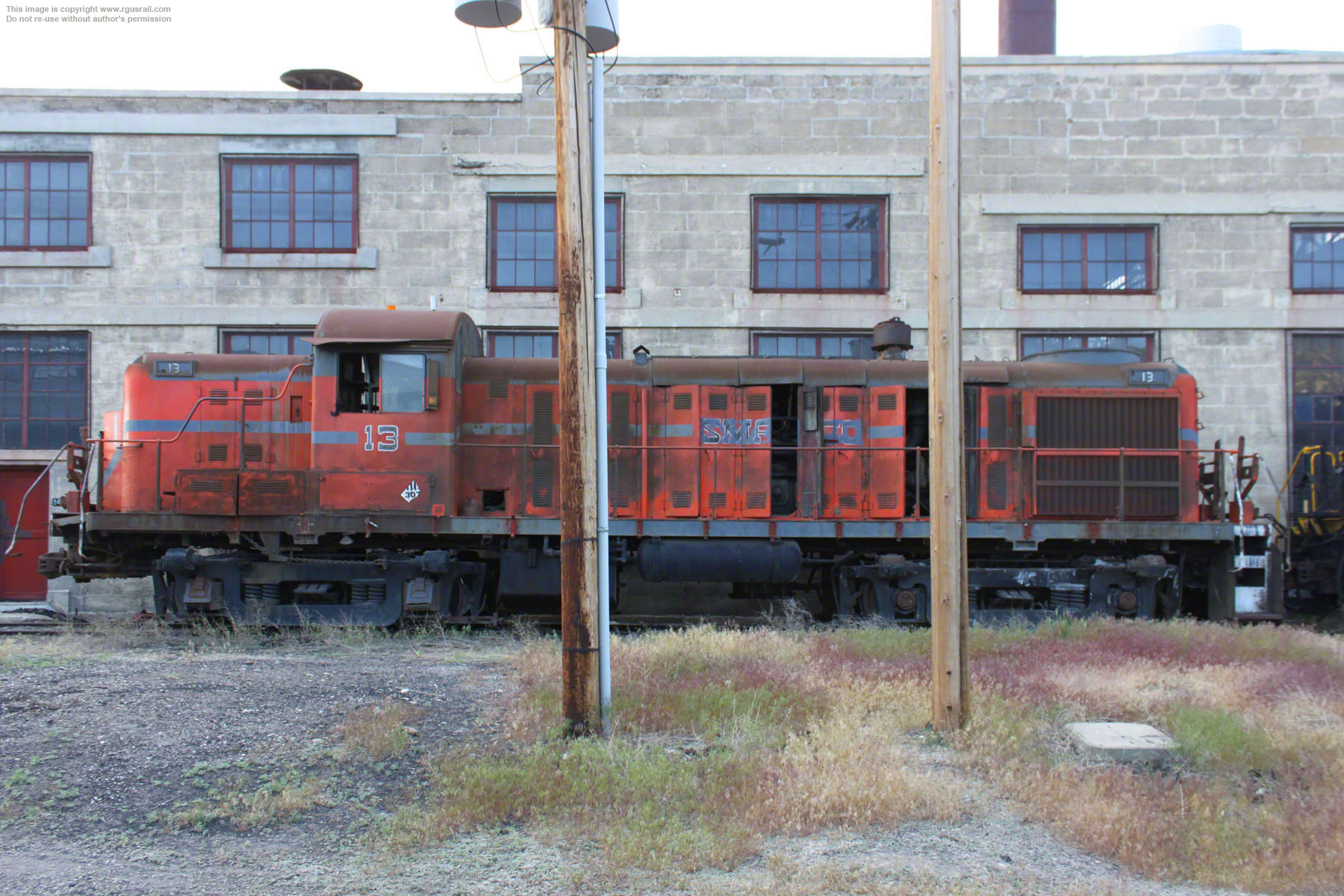





#310 is a 25 ton, B50/50-1 diesel-electric locomotive built in 1950 for Kennecott Copper’s Nevada Mines Division at General Electric's Schenectady, NY, shop. It has a Cummins HI-600 6 cylinder inline 150 hp prime mover powering a GE GT-1503 generator to drive two GE 5Y733H1 traction motors, one on each axle. It is equipped with Westinghouse SA-2 straight air brakes and is typical of General Electric's early, single-ended locomotives built for industrial use.
#310 operated at McGill as a switcher, but never served on the Nevada Northern Railway.



Kennecott Copper diesel-electric crane #7 has an 80 ton lifting capacity.
No builder’s plate has been found on the crane and the construction date is therefore not known, but it is a relatively modern piece of equipment.





This spreader was built in 1917 by the O. F. Jordan Company of Chicago, IL, for the Nevada Northern, although it has been modified over the ensuing years. The corrugated metal sheeting mounted on the sides, for example, is an addition to the original wooden cab and housing.
Spreaders are used to remove snow, spread
gravel, build banks and trim embankments of
brush along the side of track. They are pushed by
a locomotive, which also supplies power. #360 is one of the oldest maintenance-of-way machines in the US.


This is one of five four wheel maintenance of way cars in the museum's collection. #5000 was built in 1913 at the Nevada Northern shops from a steam locomotive pilot truck. The wheels are 44" in diameter, and the ballast weight is lead.
Scale cars are used to calibrate the scales that weigh loaded railroad cars. They are of a precisely known weight so that the scale can be calibrated against them. This is important as customers are generally billed against the weight of cargo being shipped.


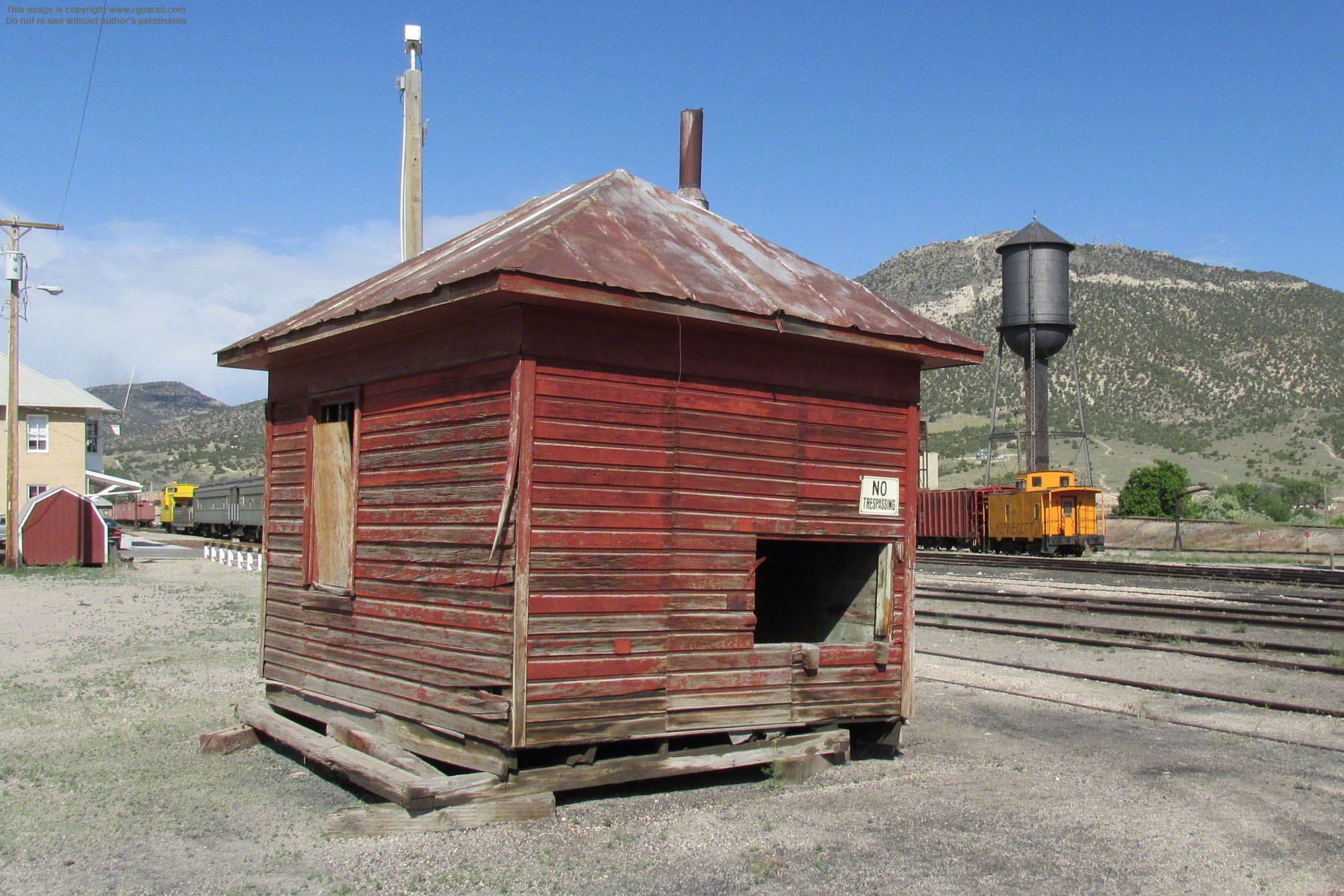

Because of its geographic remoteness and the gradual decline over the years of the mining industry that gave birth to it, the rail yard at East Ely escaped major modernisation and it is now
one of the best preserved and most complete historic main yard complexes in the US. It
includes thirty-nine historic buildings and
seventy-five historic structures including rolling stock.
The rail yards are listed on the United States National Register of Historic Placesas and were listed as a National Historic Landmark in 2006.

The 50' x 320' Car Repair Shop was built between 1944 and 1945, and houses three tracks. The building is 50' high and a 15 ton travelling crane moves the length of the building.
Before it was built, car repairs were done in the open on the tracks.


A track runs directly under the coal tower, from which coal was loaded into locomotive tenders through chutes. Sand was also fed into locomotives' sand domes through a pipe and hose.
The tower is no longer used for coaling or sanding.
The eastern end of Ely Yard is dominated by the combined concrete coal tower and sand house, and the water tower.
The 75' tall coal tower was built in 1917. It houses elevator machinery to lift the coal and sand into bins (the sand house is structurally part of the tower, with a bin to hold fine sand). A slightly elevated spur track runs along the north side of the tower where hoppers dumped coal through a grate into a lower bin, from which a bucket lift carried it up to the coal bins. Sand was dumped in the same way to be loaded in the sand bin.


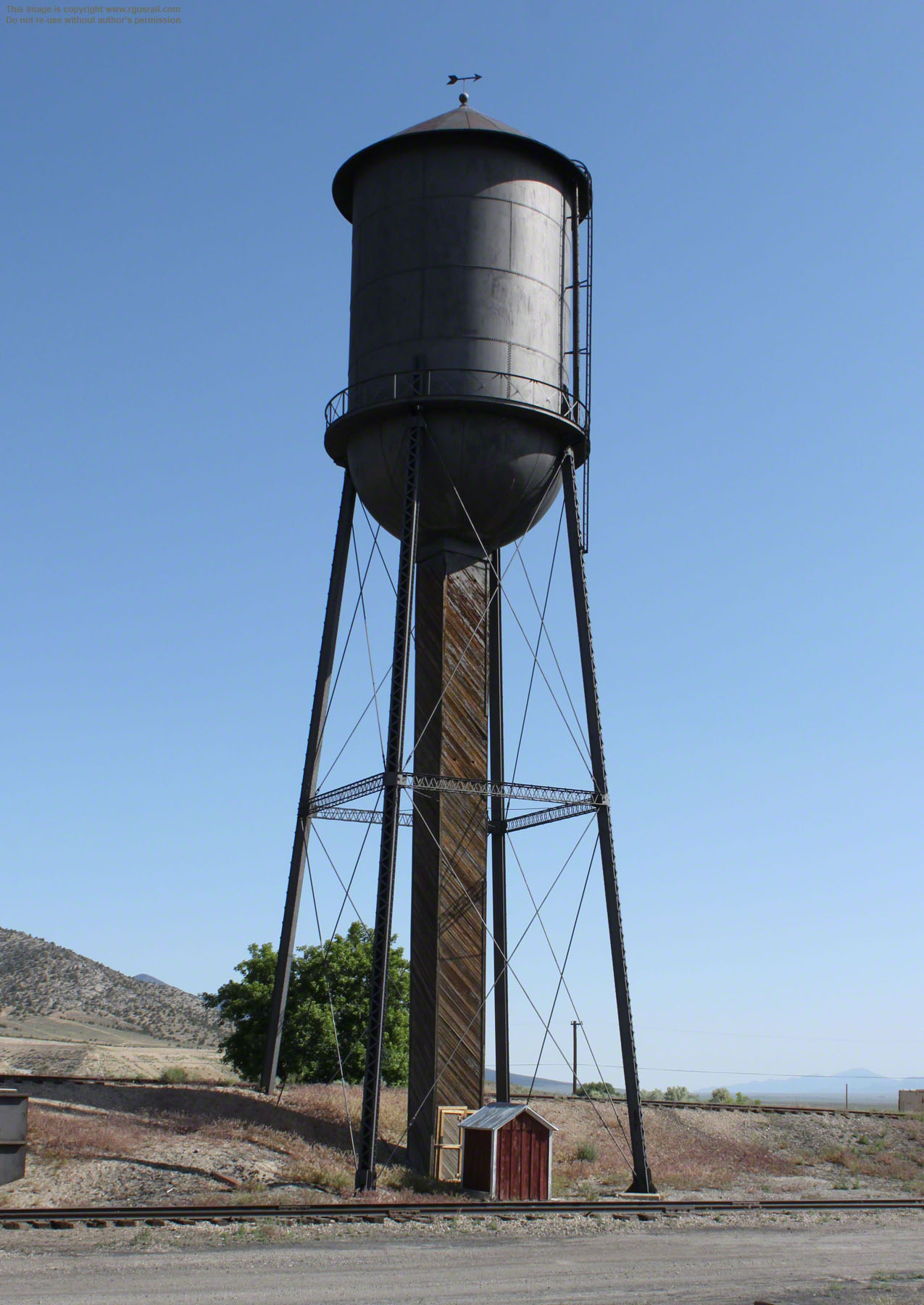
The 75' tall water tower rests on a concrete base that carries a date of 8-22-10, although the 100,000 gallon steel
tank is of more recent date.
The square wooden housing surrounding the standpipe is to insulate it during freezing weather.