


#261 is a coal-fired Northern (4-8-4) type locomotive built by Alco in July 1944. It is one of the last steam locomotives bought by that railroad and worked for only ten years before going into storage in late 1954 (1955 was the last year of regular steam service on the Milwaukee Road).
#261 is one of only two surviving S3s (you can see the other, #265, on the Illinois Railway Museum Train Shed page of this website). #261 was donated to the National Railroad Museum in Green Bay, WI, in 1956 and was their first display locomotive (there is page on the National Railroad Museum on this website). Stored indoors for much of its time there, its asbestos lagging removed and the firebox interior foam insulated, #261 was a prime candidate for restoration.


In 1991, a group of investors formed North Star Rail Inc., a "for profit" organisation, and took a ten year lease on the locomotive.
After some initial work at Green Bay, it was moved to Minneapolis for full restoration in 1992. The final work was completed in 1993 and #261 moved under its own power for the first time in thirty-nine years on 14th September 1993. The next day, it departed Minneapolis, MN, for North Fond du Lac, WI, and, on 18th September, returned with fourteen cars in tow on its first public excursion.
North Star employ four staff at the locomotive's storage and maintenance facility, a former Burlington Northern Diesel Shop at Minneapolis Junction, MN. Excursions are operated by Friends of the 261, a volunteer group. They assist with maintenance, prepare for and staff excursions and, in many respects, are the backbone of the entire operation.
I rode with #261 on 13th September 2008 on
a day excursion on former Milwaukee Road rail from Minneapolis to La Crescent, MN, return.

Above, the train stopped at Winona for a crew change.
On most excursions, #261 is coupled with a diesel-electric supplied by Amtrak to
provide pulling power in case of a breakdown, as well as electrical power to the passenger carriages. On this excursion, Amtrak #198 (a GE P42DC Genesis Class) joined
#261.
This was #261's second to last excursion before it underwent boiler recertification, which involves removing the cab, boiler lagging and boiler flues, and sandblasting the inside of the boiler. It is then sonar scanned and, providing there are no major problems, the locomotive is recertified.
It was hoped #261 would be back in steam by September 2009 but wrangling with the National Railroad Museum over leasing charges delayed progress. In May 2010, however, the two sides reached agreement for the Friends to buy #261 for $225,000. This happily meant the locomotive returned to steam in 2014 and will continue with the help of the dedicated bunch of volunteers who have kept it running since 1993.


Whenever it is out on the rails, #261 always attracts lots of attention, so there was quite a crowd when we stopped at Winona for a crew change. Some passengers also disembarked here and others joined the
excursion.
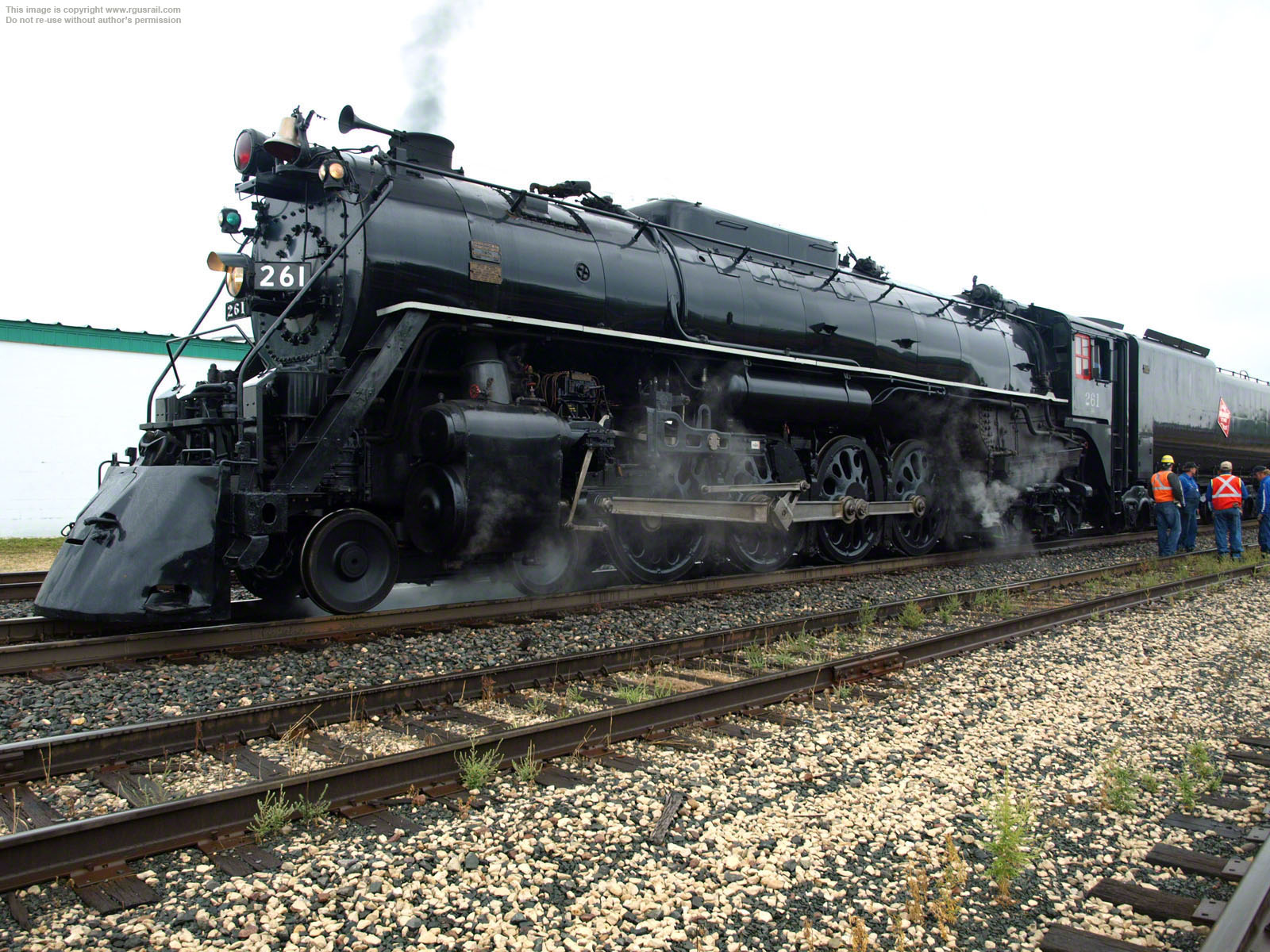

#261 weighs 460,000 lbs. The tender weighs 364,100 lbs light and has a capacity of 25,000 gallons of water and 20 tons of coal.
Like many Milwaukee Road locomotives, the S3 had all-weather
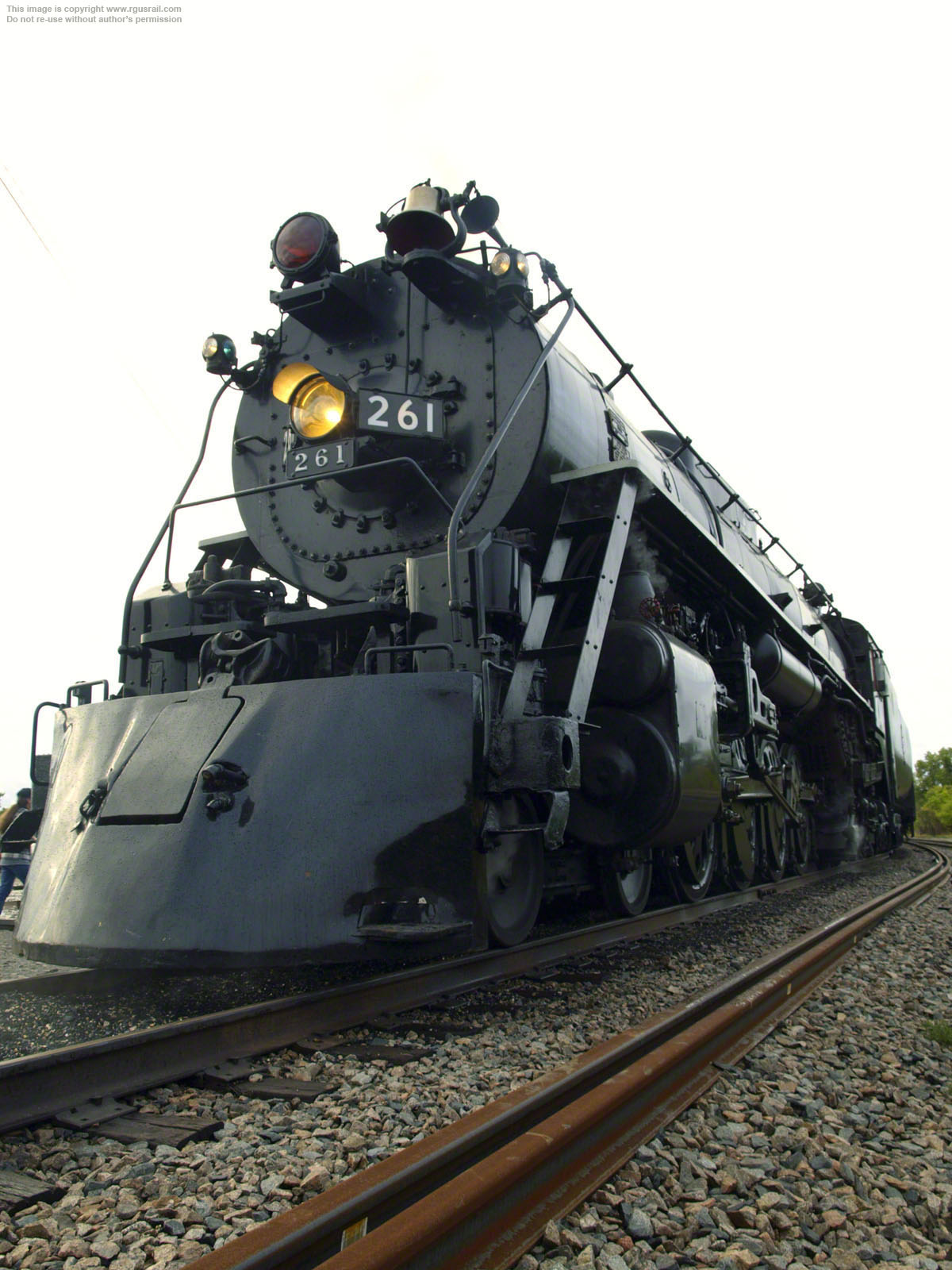
vestibuled cabs, a jacketed smokebox and solid cast pilot with a retractable coupler. The picture on the right also shows the squared smokebox door, fitted to the S3s by the Milwaukee Road after WWII to permit easier access to the superheater units. Combined with the offset horn and bell, and the red Mars warning light, these give #261 its somewhat unusual looking front end.
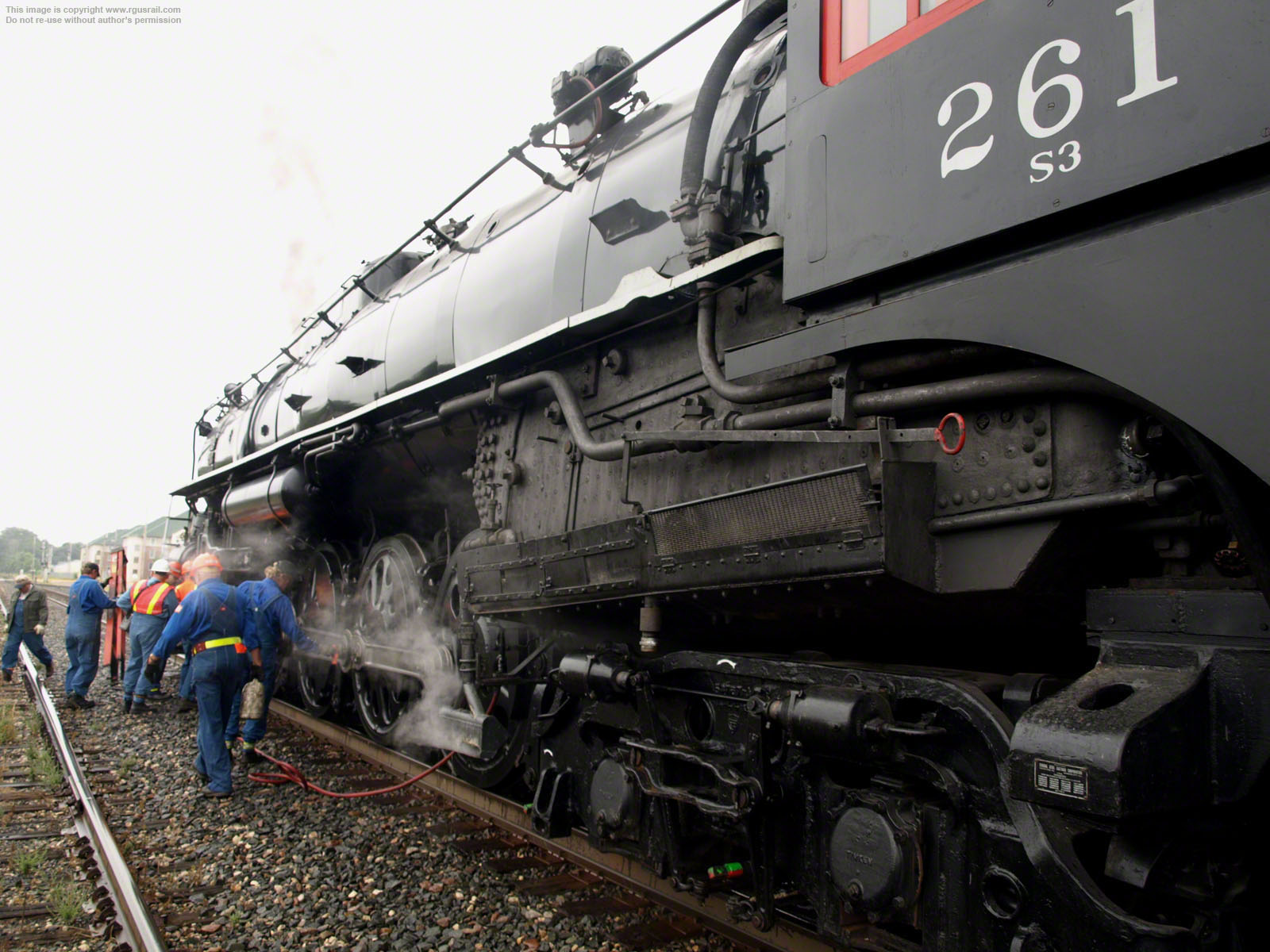
At Winona, the running gear was lubricated. A hand operated gun pumped grease sticks into the side rods to prevent overheating and burning of bearings.
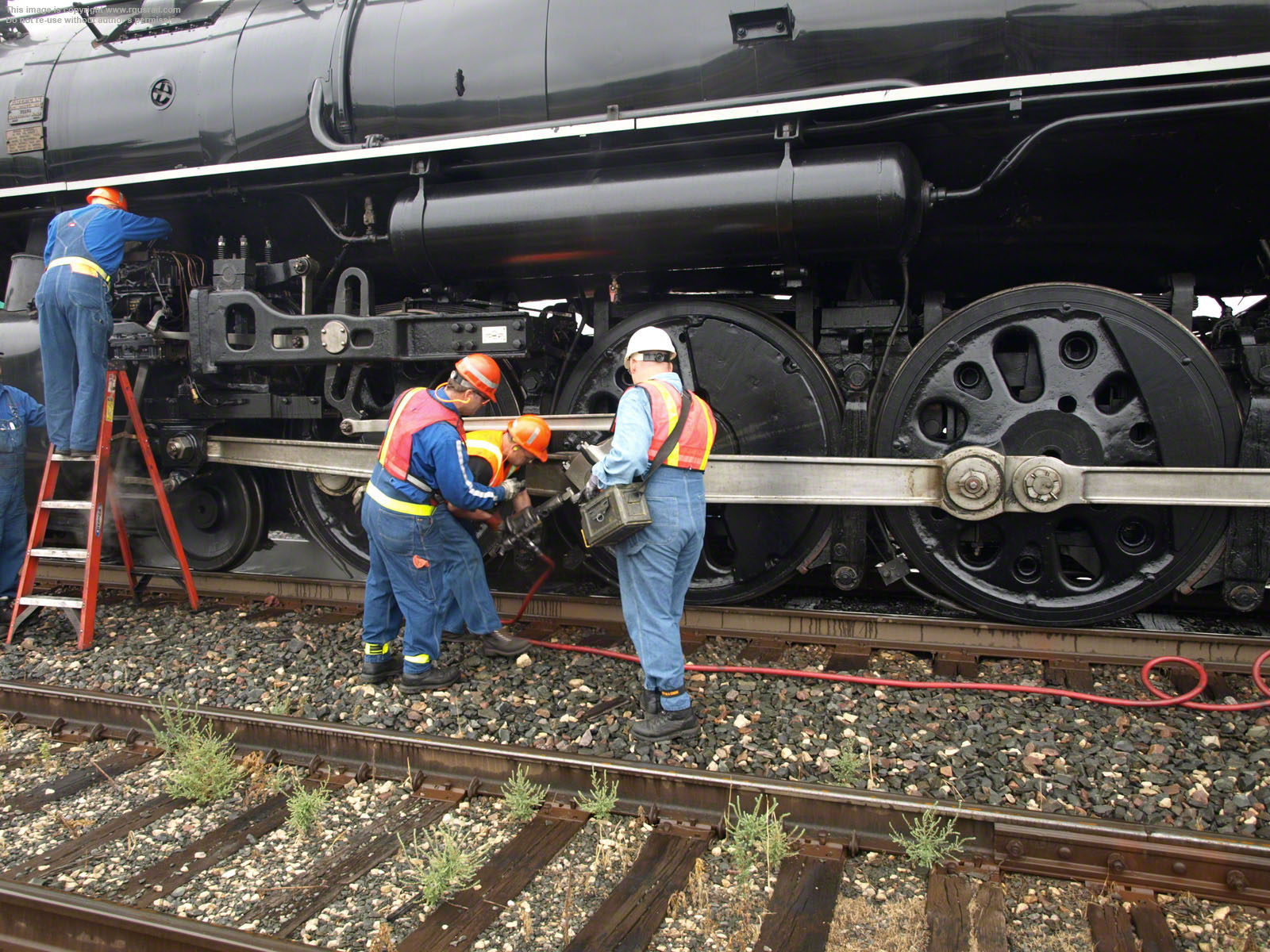
On the left of this picture, one of the crew is also filling the automatic lubricator just above the cylinder.
This would have been a regular occurrence during the S3s' early working life hauling passenger trains such as the Arrow between Chicago, IL, and Omaha, NE, and the Olympian and Pioneer Limited between Chicago, IL, and Minneapolis, MN.
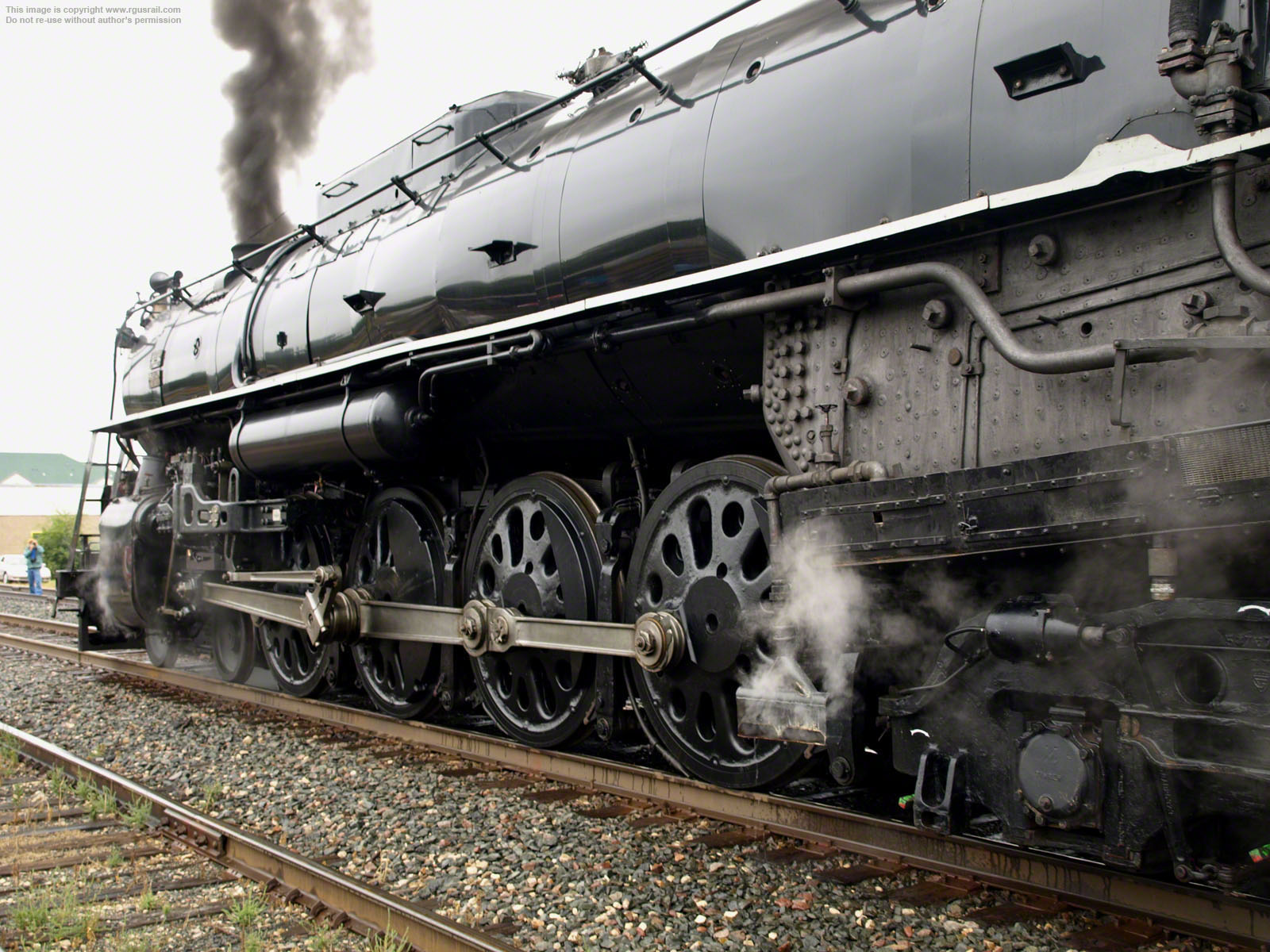
The locomotive weighs 259,300 lbs on its drivers, and all drivers have roller bearings and are fitted with compensating lateral driving-box devices.
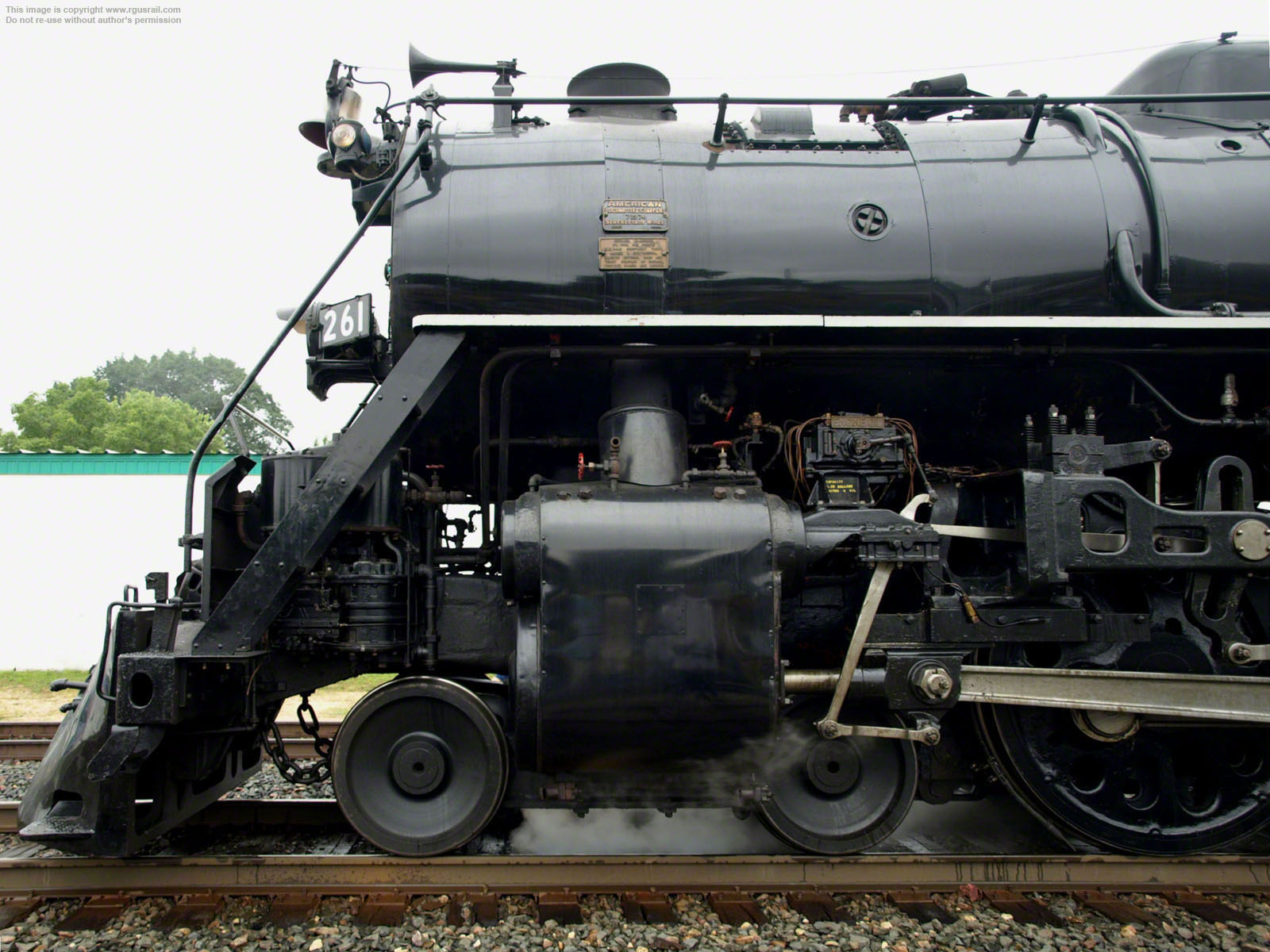
Above, a side on view of the left front end showing the jacketed smokebox, which contributes to the locomotive's smooth, clean profile. Note, also, the air pumps set behind the pilot, which helps de-clutter the locomotive's lines.
#261 has Walschaert valve gear. Its cylinders are 26" x 36" and the Boxpok drivers are 74" in diameter.
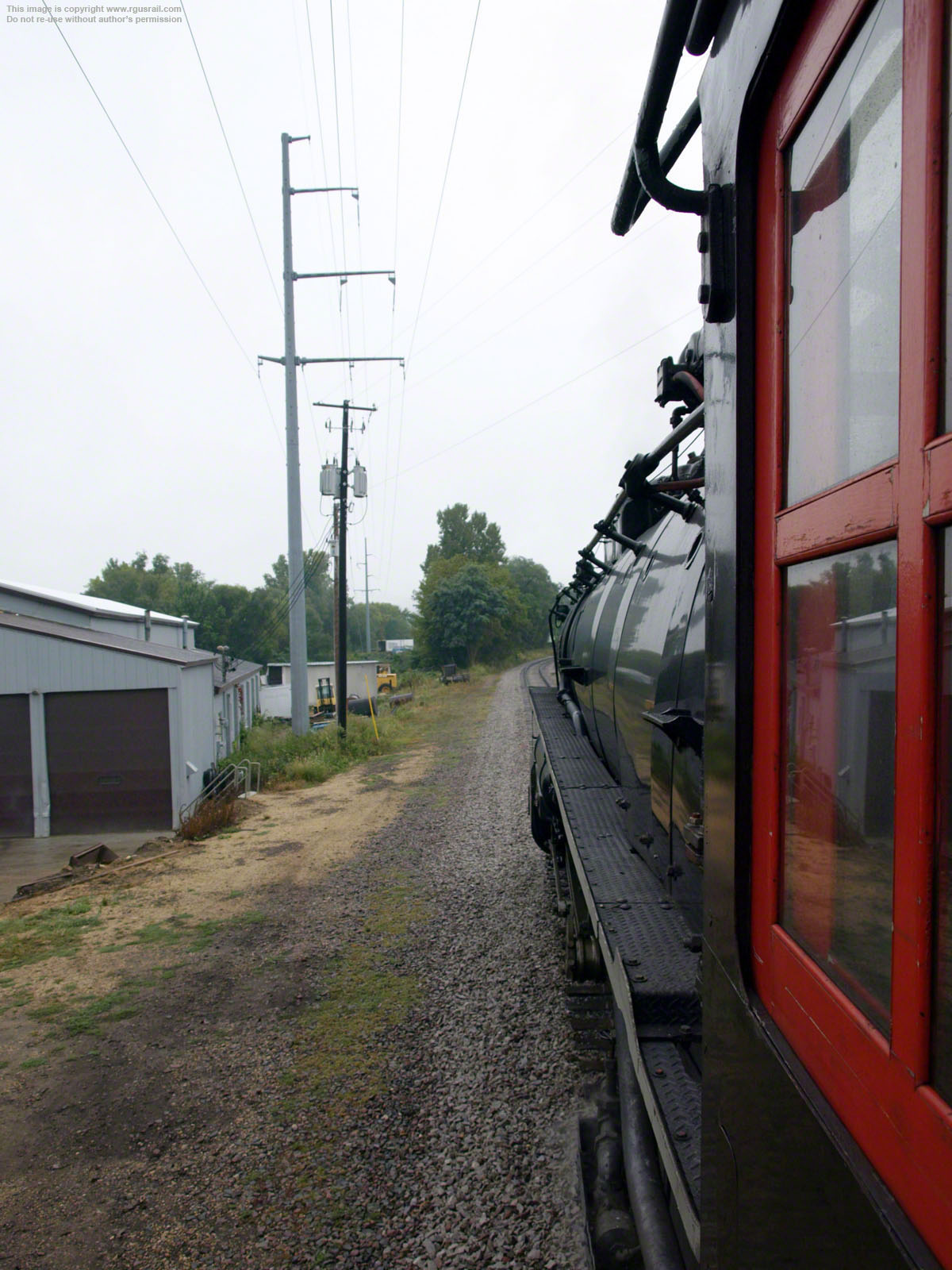
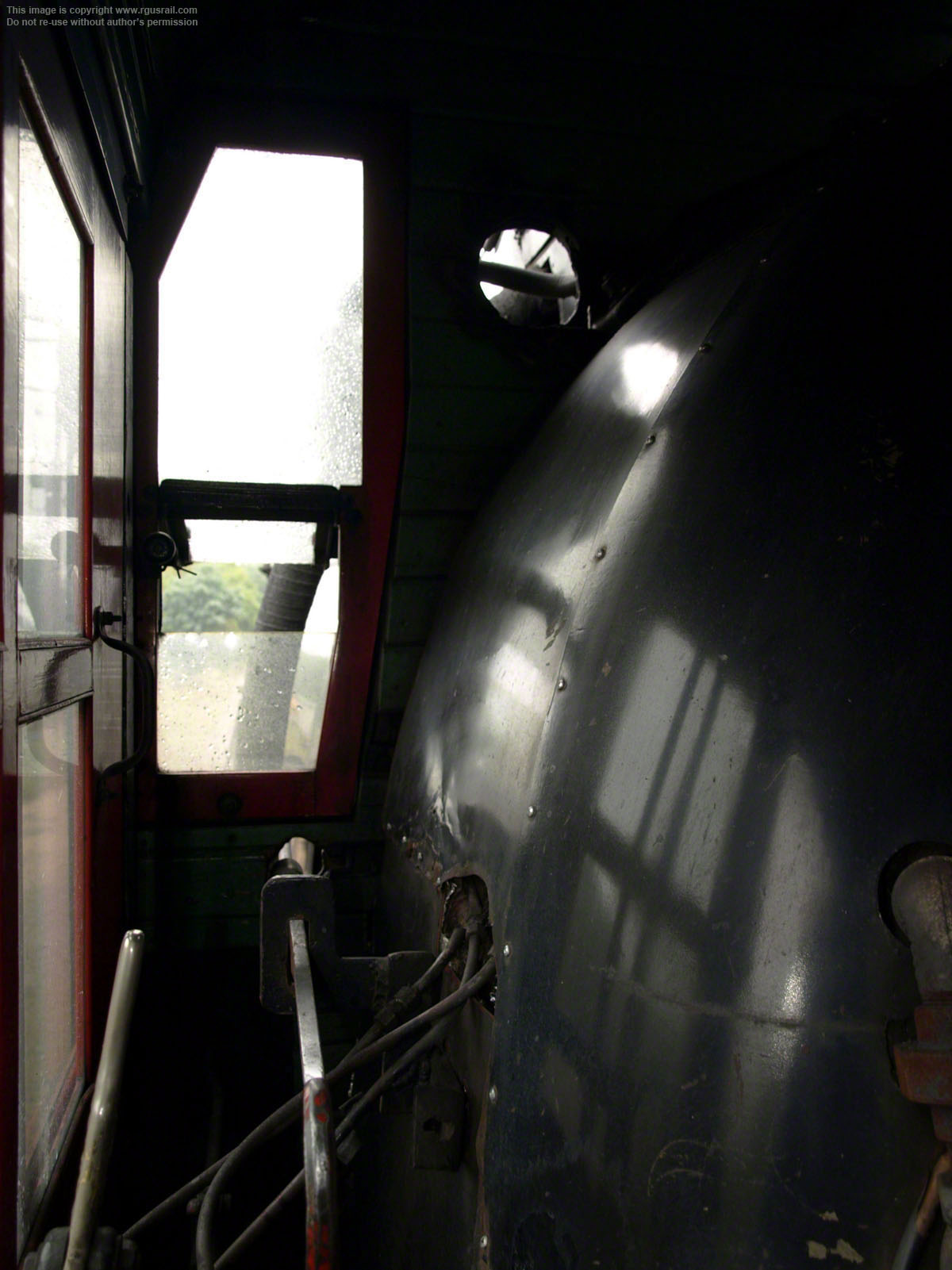
On the trip down from Minneapolis, I was allowed
to ride in the cab from Winona to La Crescent and back. Above, two views from the fireman's side of the cab.


There were two firemen on this run. While one kept his eye on the track ahead, as well as the pressure gauges, injector, feedwater and stoker controls, the other tended the fire.
#261 is a coal burner. Its grate area is 96.2 sq ft, and the firebox is a massive 505.5 sq ft. The firebox is fitted with circulators providing 80.5 sq ft of heating surface, and is stayed inside the boiler by a total of 3,800 staybolts.


Above and right, two views of the backhead. #261 operates at a boiler pressure of 250 psi and delivers tractive effort of 62,119 lbs. Its
total heating surface is 5,916 sq ft, including 1,438 sq ft superheating surface.
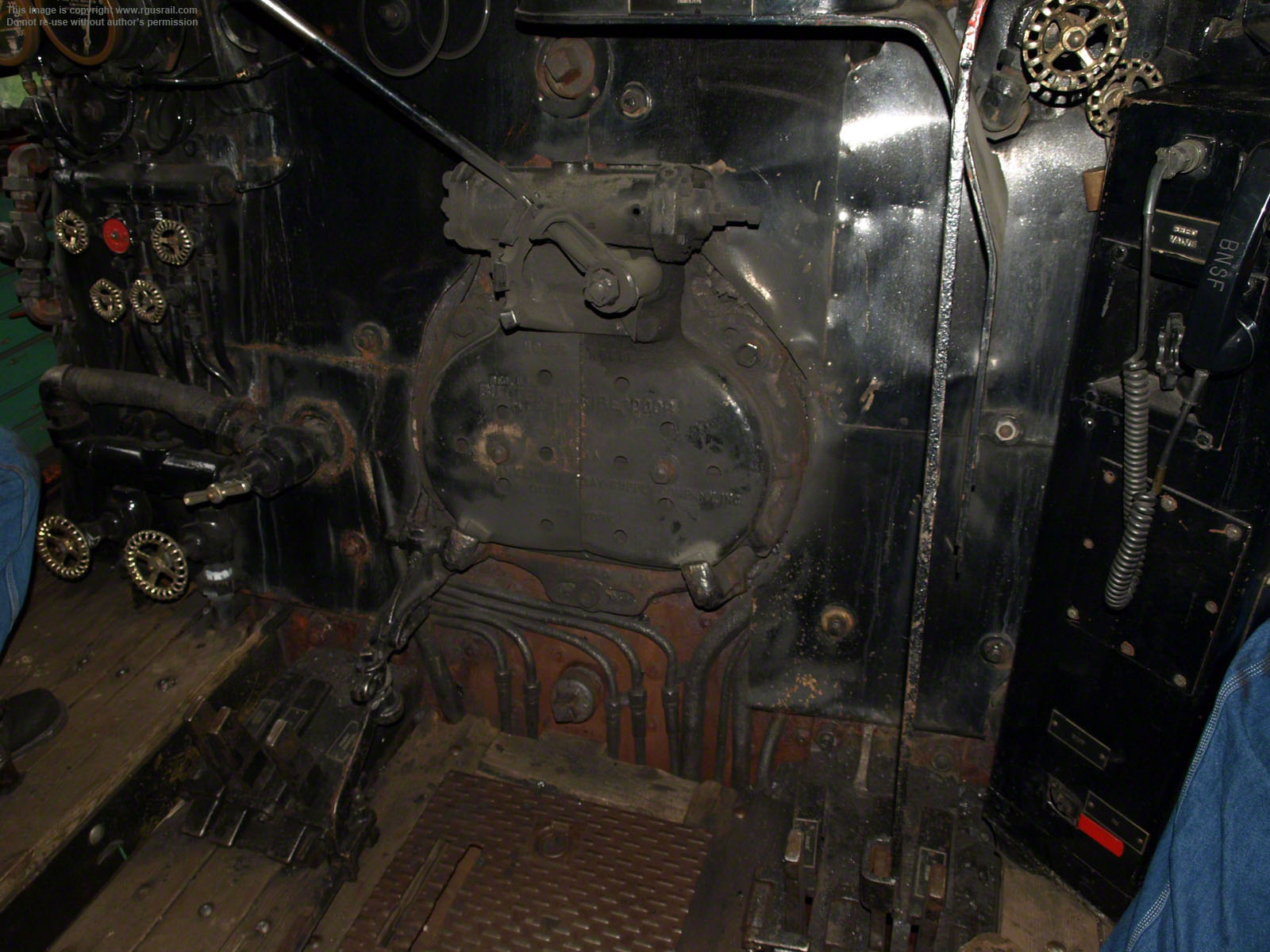
The fire doors are Franklin steam operated butterfly doors. The pneumatic pedal used to open and close them is on the lower left in the view above.
On the lower left and lower right of this photo, you can also see the levers for the grate shaker bar. This is the metal bar projecting up on the right of the photo, which is used to shake the grates.

Above, one of the firemen shakes the grates. This removes dead ash and clinker from the bottom of the fire, which ensures optimum air flow is maintained through the fire and the most economic use of fuel.

Above, the gold plated throttle, installed during restoration. The original BNSF radio is below.

With the fire doors open, the heat is intense. The fire is fed by an
automatic stoker, with lumps of coal forced into the fire by steam jets. The firing plate is at the lower edge inside the fire door in the photo above.

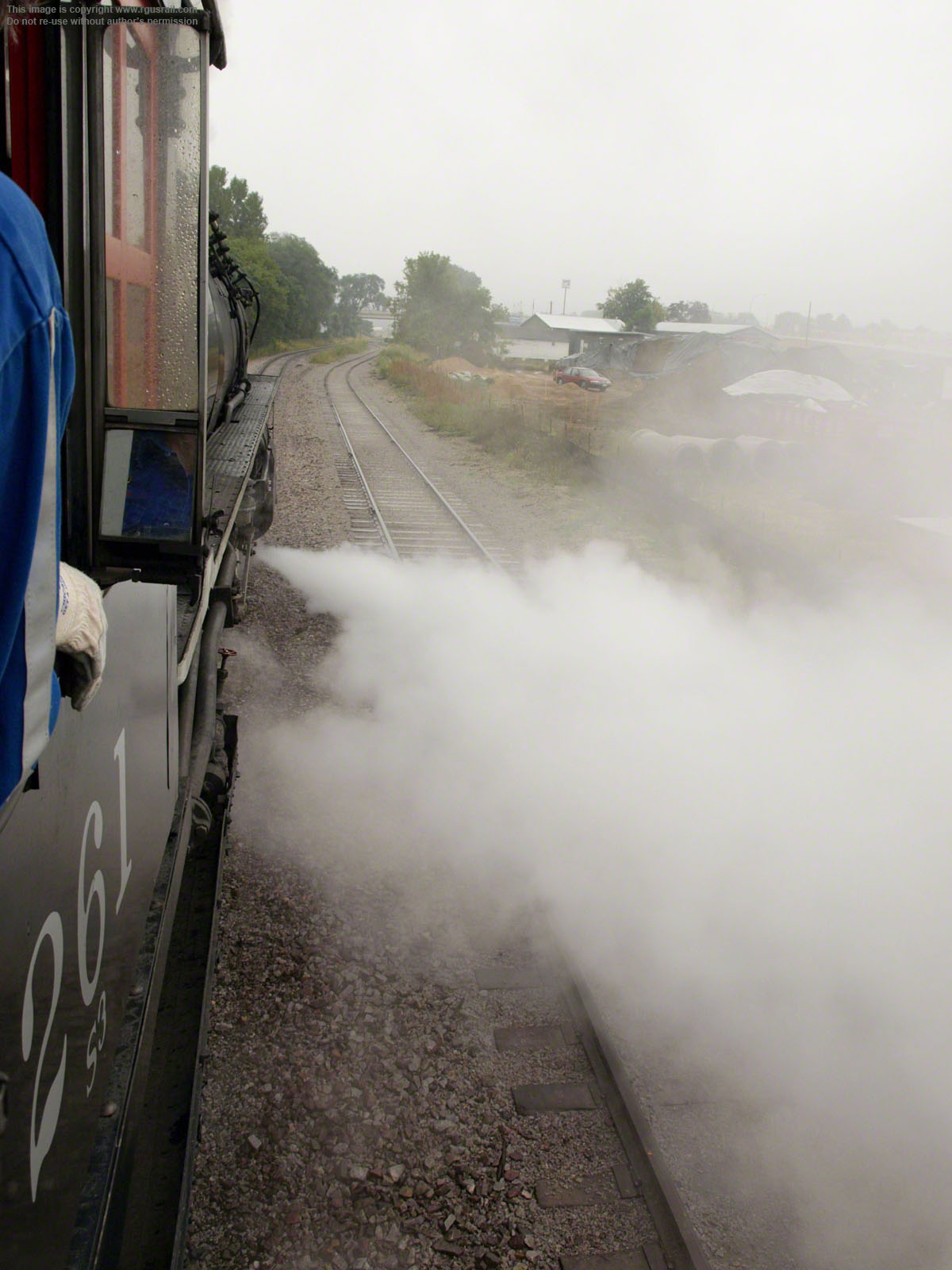
Above left is a view of the engineer's controls inside the cab. Above right is a view looking outside as we approached La Crescent with the steam cylinder cocks open.


Although there is an automatic stoker, the fireman must still pay attention to the condition of the fire and ensure it is of an even thickness, and free from holes and banks. Above, as well as shaking the grates, this necessitates hand firing coal to any parts of the fire that are uneven.
You can see more footplate action on the Sumpter Valley Railroad and Nevada Northern #93 pages of this website.
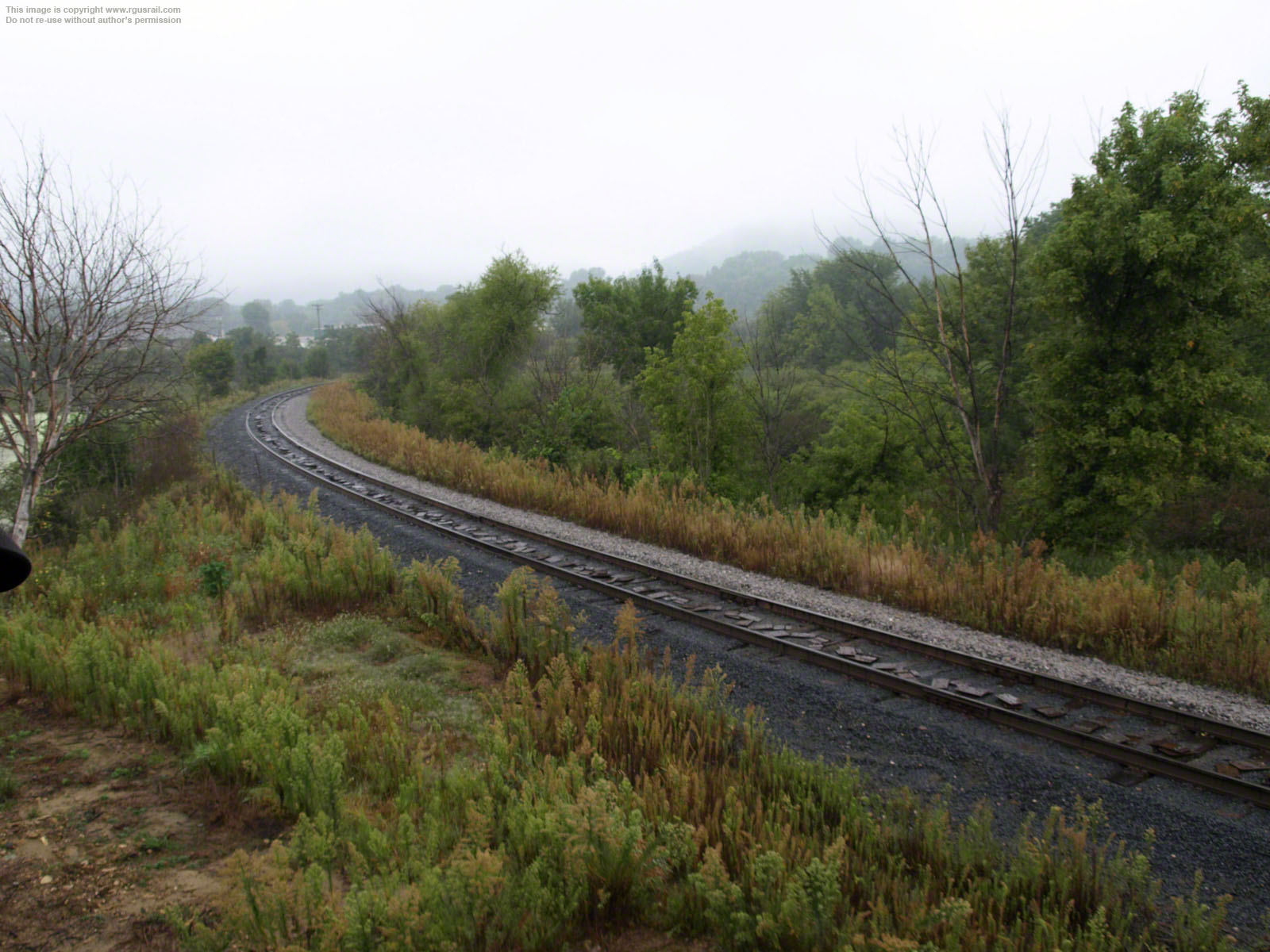
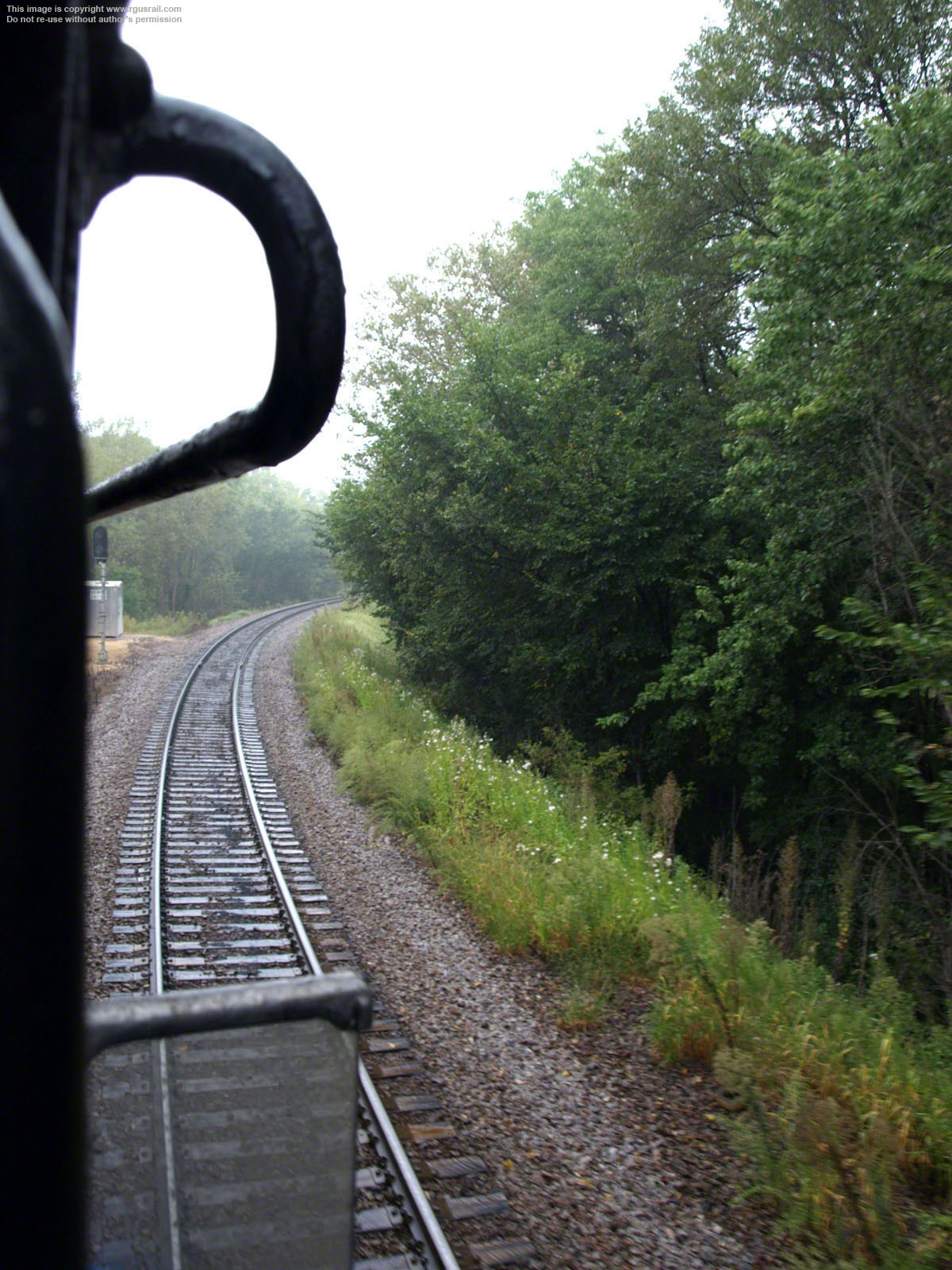
At La Crescent, we reversed through the long wye, out over Shore Acres Road and onto the La Crosse Rail bridge spanning the mighty
Mississippi River. Above, two views as we passed the north-east branch of the wye.
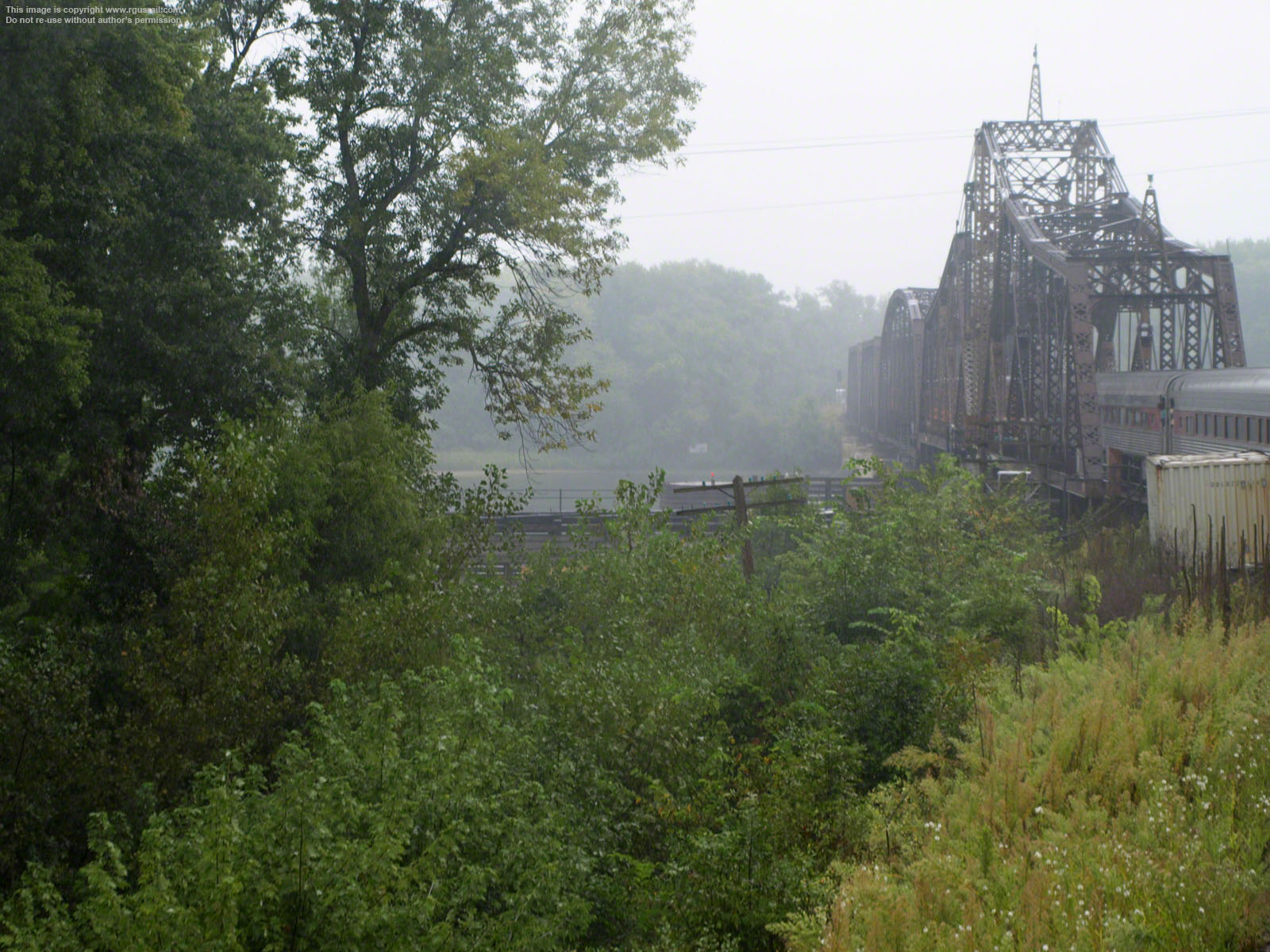
Above, backing onto the bridge.

Out on the bridge.
The La Crosse Rail bridge is a swing bridge connecting Minnesota and Wisconsin. It was built by the Milwaukee Road in 1876.
The S3s were apparently well liked by their crews, smooth running and easy to fire. As the Milwaukee Road increasingly dieselised its passenger trains in the late 1940s, however, the S3s were relegated to freight service. Six were retired in late 1954, including #261, and the remainder by 1956. All but two were scrapped: as well as #261, #265 survives at the Illinois Railway Museum in Union, IL.
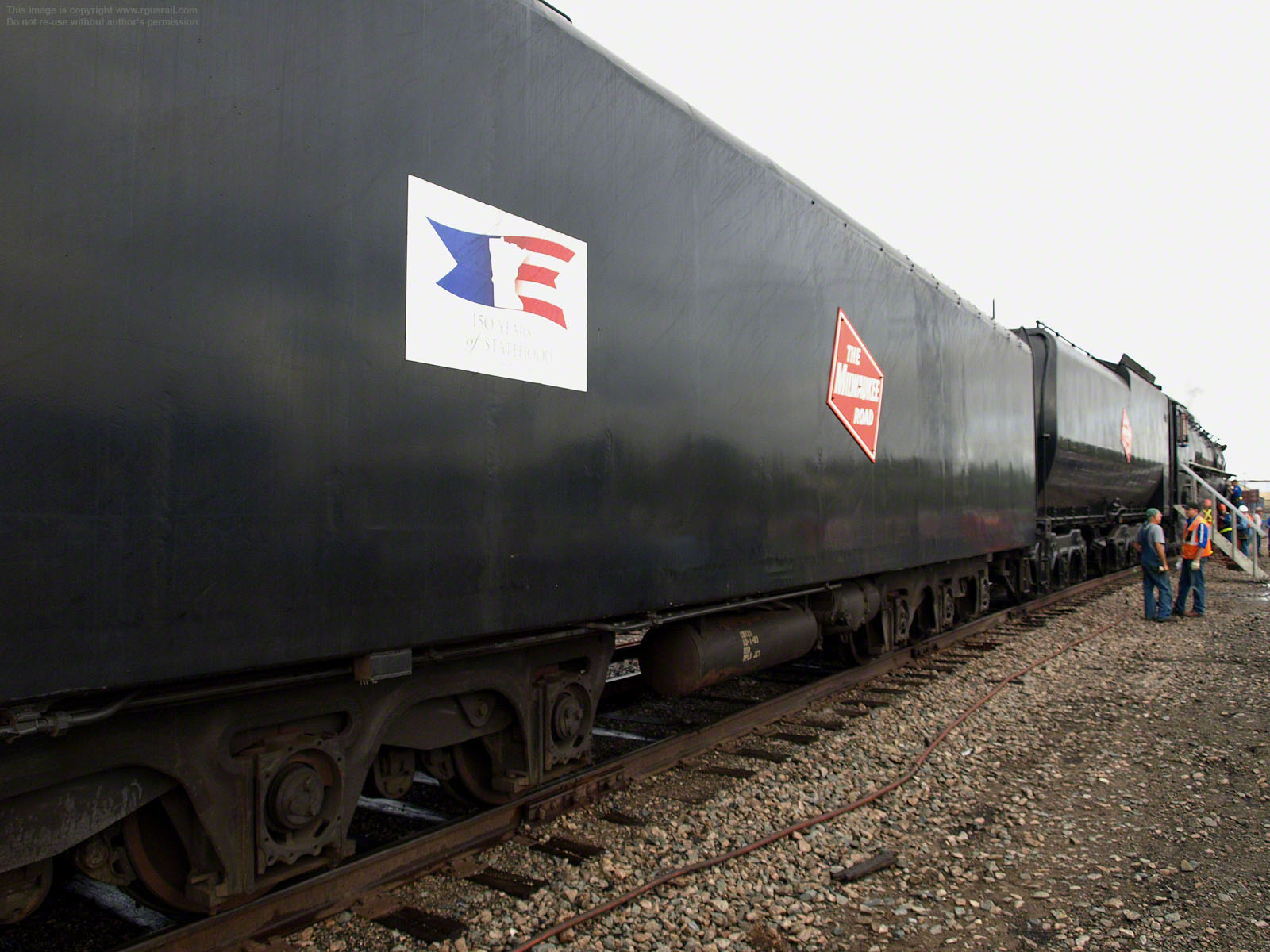
Above, because the infrastructure used to supply steam locomotives is now gone, #261 pulled an auxiliary tank or "canteen" to supply the water for the return trip.

Back at Minneapolis, the crew oiled #261, getting it ready to return to the engine house. It would be stored "warm" overnight in the former Great Northern diesel shop here at Minneapolis Junction.
The next day, the locomotive would haul its final excursion of 2008 out to La Crosse and then back to Minneapolis on the BNSF line via Wisconsin.
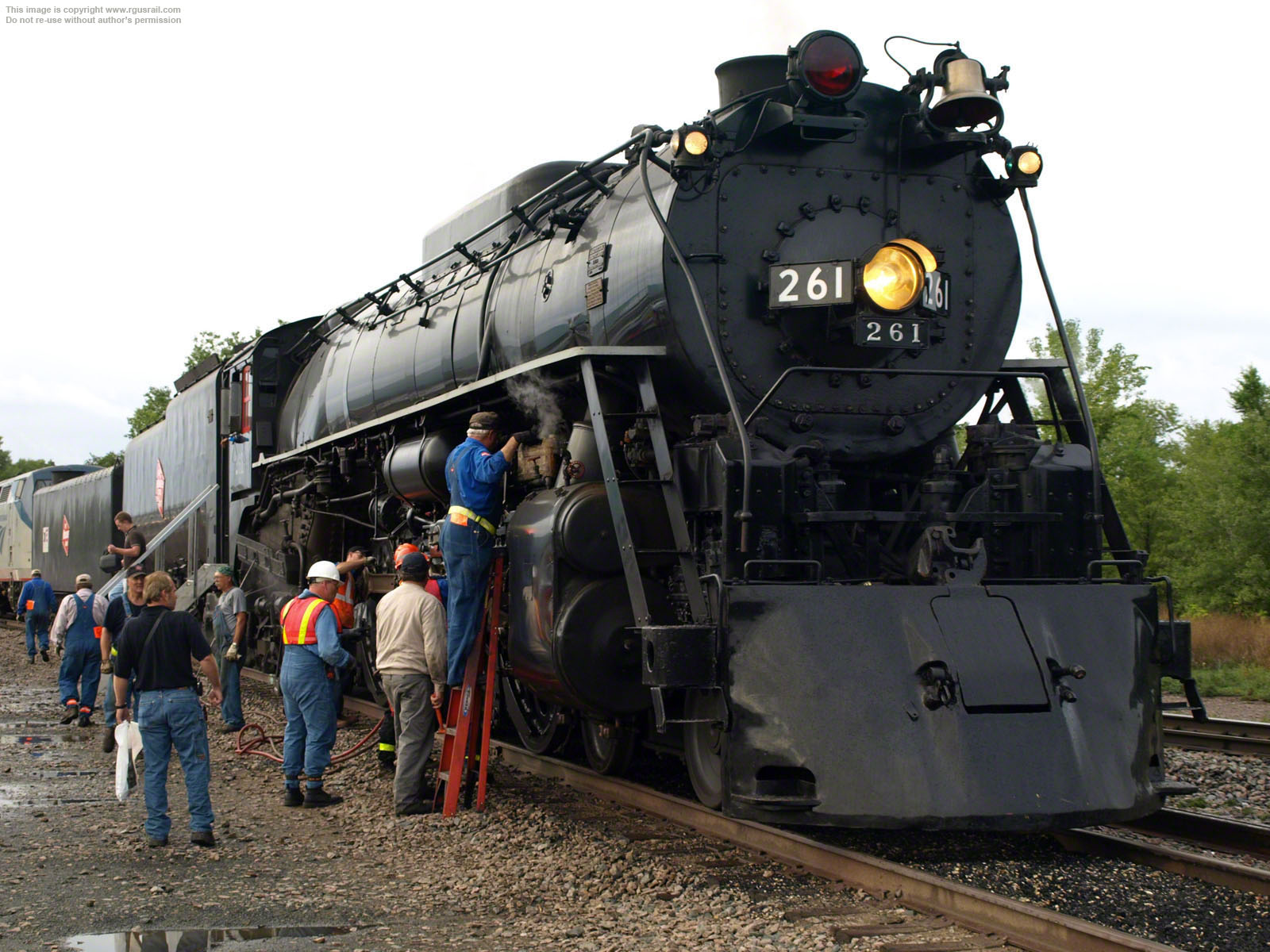

While the crew was working, passengers and visitors could go up a set of stairs and take a quick look inside the cab. The end of a really great day out! All the crew were very welcoming, knowledgeable and accommodating, and people just didn't seem to want leave.

I always feel that it's a sad occasion when any operating steam locomotive is taken out of service, so learning that the National Railroad Museum had agreed to sell the locomotive to the Friends of #261 in 2010 was great news.
Keeping #261 running is a win for both the Friends and railroad fans. The locomotive is a truly majestic piece of engineering, beautifully maintained and operated by a crew of dedicated volunteers, and it will give many more thousands of people enormous pleasure during its future excursion career.
Related Links:
Friends of the 261 Website
Milwaukee Road #261 Fan Site
Milwaukee Road Historical Association
Send a comment or query, or request permission to re-use an image.
Steve Glischinski's Milwaukee Road 261, A Steam Locomotive for the 21st Century, published by South Platte Press in 2004, details the history of #261. John Tigges' Milwaukee Road Steam Power, by Transportation Trails, 1994, explores the railroad's range of steam power (click on the cover to search for either of these books on Bookfinder.com).


SVS Film's Ride the Milwaukee Road with 261 has 1 hr 40 min colour coverage of #261's October 2006 Fall Colors Excursion from Minneapolis St. Paul to Winona and La Crescent (click on the cover to search for this DVD on Bookfinder.com).